

Sanctuary Housing Repairs
Disrepair Claims and Compensation
Reported the damp months ago and still nothing? Sanctuary is one of the largest housing associations in the country, and that scale is exactly why an individual repair stops moving. We force the works through and claim compensation for the time you have lived with it.
We act for Sanctuary tenants in England and Wales. Our guide to bringing a claim against a registered provider explains the route in full.
Sanctuary Repairs Not Being Done
Sanctuary did not grow organically. It grew by absorbing smaller housing associations over several decades, and the stock it holds today reflects that. A Victorian terrace that came in with one merger sits on the same asset register as a 1970s block from another and a purpose built supported scheme from a third, all now managed under one national repairs operation.
That history is the practical reason repairs stall. A centralised service handles very different buildings as a single category of job, and local knowledge about why a particular block always has damp on the same elevation was lost when the original landlord was absorbed. The job gets raised, attended, closed, and the defect survives into the next winter under a fresh reference number.
One national repairs service, decades of acquired stock
Upfront cost to start a claim
Success fee, agreed in writing first
Supported Housing and Why It Changes the Claim
Sanctuary holds a large amount of supported and older people's accommodation, and disrepair in those settings is treated differently in a claim.
Where a resident has a disability, a long term health condition or reduced mobility, the same defect produces a far greater impact. A failed lift in a block with older residents is not an inconvenience, it is confinement. A cold flat affects someone with a respiratory or circulatory condition in a way it does not affect a healthy adult.
The law recognises this. General damages are assessed on the actual effect the disrepair had on the people living there, so vulnerability increases the value of a claim rather than complicating it. Where a condition has been worsened by cold or damp, there is also a separate personal injury element to recover on top.
Households in this position are also the least likely to pursue a claim, often because reporting feels like making trouble for people who also provide care or support. The repairing duty and the support service are separate functions, and enforcing one does not put the other at risk.
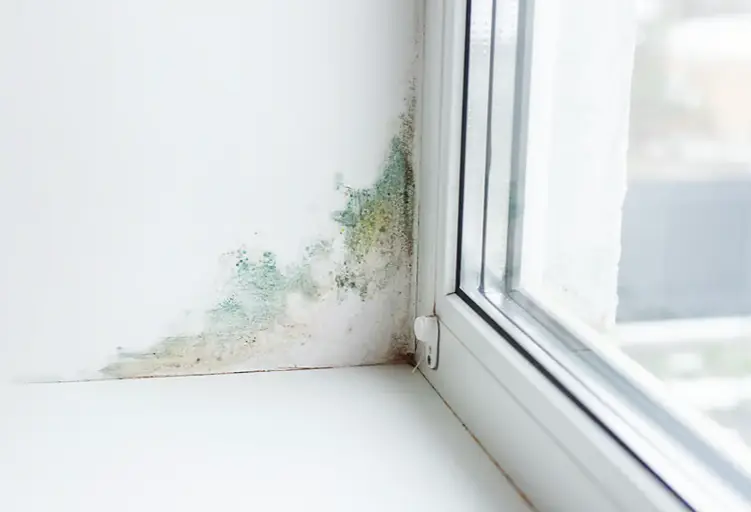
Damp and mould in a supported housing setting, where the health impact on residents is substantially greater
Sanctuary Repairs and Complaints, the Facts
What the landlord has published about its own service, and what it means when your repair has stalled.
How to report a repair
[INSERT: the published reporting routes and Sanctuary's own emergency, urgent and routine target timescales]
The complaints procedure
[INSERT: stage one and stage two deadlines, then the Housing Ombudsman route]
Stock size and regions
[INSERT: confirmed number of homes in England and Wales, and the general needs, supported and older people's split]
Ombudsman findings
[INSERT: determinations against this landlord with case references and dates]. The duties behind them are summarised in our note on the rights every social tenant holds.
The Duties Sanctuary Owes You
Section 11 of the Landlord and Tenant Act 1985 requires your landlord to keep the structure and exterior in repair and the installations for water, gas, electricity, sanitation, space heating and hot water in working order. Section 9A of the Homes (Fitness for Human Habitation) Act 2018 goes further, requiring the home to be fit to live in throughout the tenancy. The distinction matters, and our comparison of the two statutory routes explains which suits which defect.
As a registered provider of social housing, Sanctuary is also within scope of Awaab's Law, introduced under the Social Housing (Regulation) Act 2023, and subject to oversight from the Regulator of Social Housing. Awaab's Law sets fixed deadlines for investigating serious hazards, confirming findings in writing and beginning work, phased in by hazard type. Our breakdown of the deadlines at each stage sets out what the clock is running on.
One point specific to housing association tenants. You do not have the statutory Right to Repair scheme, which applies only to secure council tenants. What you do have instead is a regulated landlord answerable to the Regulator and the Housing Ombudsman, and a complaints process the Ombudsman can review. Different mechanism, comparable weight.
Where any duty is breached, you can recover damages for the distress, inconvenience, ruined belongings and health effects you suffered, and compel the outstanding works at the same time.
A National Landlord Is Not One Landlord
Two Sanctuary tenants with the same problem in different parts of the country can have completely different experiences, because repairs are delivered through regional teams and contractors rather than one uniform service. One tenant gets a surveyor in a fortnight, another waits eight months for the identical defect.
That inconsistency is useful to know, because it undercuts the standard response that resources are stretched everywhere. Where the landlord's own published standards say one thing and your experience shows another, the gap between policy and delivery is evidence in itself, and it is the kind of thing the Ombudsman treats seriously as service failure.
It is also why generic advice helps less here than elsewhere. What matters is your own record of what was reported and when, which our guide to recognising negligence in social housing explains how to assemble.
Worth Knowing
Much of Sanctuary's repairs work is carried out by contractors rather than direct employees. That does not divide the responsibility. The repairing duty sits with your landlord, and a contractor's failure to attend is your landlord's failure in law.
If you are unsure who to escalate to beyond the landlord itself, our overview of the bodies that oversee social landlords sets out what each one can do.
Case Examples From Large Association Stock
Illustrative examples of the case types we handle against national providers. Details are composite and do not describe a single identified client. Outcomes are described in our record of claims we have settled.
A household takes six days off work for appointments and the contractor attends three times, never with the right parts. The landlord treats this as a contractor performance matter. In law it is the landlord's failure, and the appointment record documents notice precisely across months.
An older resident with a diagnosed respiratory condition is left with unreliable heating across two winters. GP records show increased chest infections across the same period. The vulnerability substantially raises the general damages and supports a separate injury element.
A stage two complaint is upheld with an apology and a goodwill payment, and the complaint is closed as resolved while the mould remains. An upheld complaint is evidence rather than a remedy, and in practice it strengthens the claim that follows considerably.
A damp problem was first reported years before the stock transferred to Sanctuary. Liability transferred with the homes, so the earlier reports still count as notice subject to the limitation period, and disclosure of the historic record often reaches further back than tenants expect.
Why Sanctuary Tenants Instruct Us
How the costs work is set out on our page explaining claims funded without any payment from you.
We Assess Before We Accept
If the evidence will not carry a claim we say so at the assessment rather than after months of correspondence. An honest no is worth more than a hopeful maybe.
No Win No Fee
Nothing to pay upfront and nothing to pay if the claim does not succeed. The success fee is capped and agreed in writing before anything is signed.
We Request the Whole History
With acquired stock the repair record often predates the current landlord. Disclosure regularly shows a defect first reported years before the tenant remembers raising it.
Disrepair We Handle for Sanctuary Tenants
Damp and Black Mould
Routinely recorded as condensation. On older acquired stock the cause is usually structural and reappears after every surface treatment.
Heating and Hot Water
Ageing boilers repaired rather than replaced, leaving households without heat for days at a time through winter after winter.
Roof and Communal Leaks
Water entering through roofs, shared risers or the flat above. The source is rarely where the damage shows up.
Unsafe Electrics
Exposed wiring, repeatedly tripping consumer units and water reaching fittings are emergency category hazards, not routine jobs.
Lifts and Communal Access
In supported and older people's schemes a failed lift is not an inconvenience, it confines residents to their floor.
Rodents and Infestations
Entry through structural gaps and shared voids. Treating the infestation without sealing the defect guarantees it returns.
These problems appear in predictable combinations across large association stock, and our overview of disrepair in council and association properties covers what tends to occur together.
How a Sanctuary Disrepair Claim Works
Four stages, no cost to you at any point unless the claim succeeds. For an idea of value beforehand, try our estimate tool for disrepair damages.
Free Assessment
We review your repair history and the condition of the property, then tell you honestly whether the claim is worth running.
Evidence and Survey
We compile your reports, appointment records and photographs, and instruct an independent surveyor to establish the cause.
Letter of Claim
A formal letter of claim goes to the landlord's legal team under the pre action protocol, with a schedule of works and a deadline for full disclosure.
Repairs and Settlement
We press for the works to be completed and negotiate damages for the period you lived with the disrepair.
Where We Act for Sanctuary Tenants
We take claims from Sanctuary tenants across England and Wales. We do not act in Scotland or Northern Ireland, where housing law differs substantially, and we do not take private rented, leaseholder or shared ownership claims. If another provider is your landlord, or you want the picture for your area, start here.
The Evidence That Decides a Claim
What to Gather Now
- Every job reference number, with the date reported and whether the same defect has been attended before.
- Missed and abandoned appointments, including days you took off work, which carry real weight against a contractor led service.
- Complaint stage responses, which frequently concede delays the landlord later disputes.
- Health records for anyone vulnerable in the household, since the effect on them is what the damages are measured against.
What Most People Get Wrong
Tenants assume they need to prove the cause of the damp. They do not. That is the surveyor's job. What has to be proved is notice, meaning the landlord knew, and every job number does that work.
Mould also spreads behind furniture and inside voids well before it appears on a visible surface, so an inspection that finds nothing is not evidence that nothing is there. Our guide to finding mould you cannot see covers the signs.
Frequently Asked Questions
How long does Sanctuary have to carry out a repair
Sanctuary publishes its own target timescales for emergency, urgent and routine repairs, and separately it is bound by Awaab's Law deadlines for damp, mould and other serious hazards. Its internal targets are a service standard. The statutory deadlines are a legal obligation, and missing those is a breach you can rely on rather than simply poor service.
What counts as an emergency repair
Anything presenting an immediate risk to health, safety or the security of the property. Total loss of heating or hot water in winter, a significant uncontainable leak, exposed live wiring, water reaching electrical fittings, or a door or window that no longer secures the home. If a repair in that category has been logged as routine, that classification is worth challenging in writing.
Can I withhold rent until the repairs are done
We would strongly advise against it. Withholding rent does not force a repair, it puts you in arrears and hands the landlord a possession ground. There is a narrow, formal set off procedure, but it has strict requirements and should never be attempted without advice. A claim achieves the same outcome without the risk.
Does a housing association have to rehouse me while repairs are carried out
Where works make the home genuinely uninhabitable, the landlord should provide suitable temporary accommodation and bear the reasonable costs. Where it fails to, those costs form part of the claim. We do not take standalone rehousing cases, but the issue is dealt with inside a disrepair claim.
Can I claim if I have already moved out
Yes. A claim for the period you lived with the disrepair survives the end of the tenancy, subject to the limitation period, which is generally six years for the disrepair and three for any personal injury element. Former tenants frequently assume the right disappears on moving, and it does not.
Will making a claim affect my tenancy or my support services
No. As an assured tenant your landlord must establish a statutory ground and obtain a court order to end the tenancy, and bringing a disrepair claim is not a ground. Support and care services are provided under separate arrangements and are not contingent on you not complaining about the condition of the building.
What if the repairs are handled by a contractor rather than Sanctuary
The repairing duty rests with your landlord and cannot be contracted away. A contractor failing to attend, attending without parts or carrying out work badly is the landlord's failure in law, and the claim is brought against the landlord regardless of who was sent to the property.
The Sanctuary Complaints Procedure and What Comes After It
Dealing with a landlord that holds more than a hundred thousand homes is a different experience from dealing with a small local provider. There is no housing officer who knows your block, no one who remembers that this is the third time, and the person answering today has the same screen in front of them as the one who closed the job last winter. The team who would act for you are introduced on our page about the firm.
Always Report in Writing
Calling is the weakest route in a disrepair claim. A call may generate a job number, but the note on the system rarely reflects what you described, and by the time anyone reviews the file it reads as two words. Put it in writing through the portal or by email, describe the location precisely, and state clearly that the problem is recurring rather than new. What a first report needs to contain is covered in our step by step guide to starting a claim.
Keep the Appointment Record
This matters more with a contractor led service than people realise. Note every appointment offered, every one missed, every visit where the operative arrived without the right parts and every day you took off work for a visit that achieved nothing. That record is specific, dated and very hard for a landlord to dispute, and it demonstrates sustained notice better than almost any other evidence.
Escalate to a Formal Complaint With a Deadline
Once repairs reports stop producing results, move to the formal complaints process rather than raising another job. It forces a dated response at defined stages, puts someone above the repairs desk in front of the file, and the Housing Ombudsman expects it to be completed first. Give it the published deadlines plus a short margin, and treat a second missed stage as the point to escalate. How to word one so it cannot be closed as a general enquiry is covered in our guide to raising a formal complaint properly.
Ombudsman or Claim
Both routes are open once the complaints process is exhausted, and they do different jobs. The Ombudsman can find maladministration, order an apology and award compensation that is typically modest. A claim enforces the repair itself with a schedule of works and recovers damages assessed against the rent you paid. Our comparison of the Ombudsman route and a legal claim sets out which fits which situation, and pursuing one does not automatically close the other.
What Happens When We Take Over
Once instructed we move the matter out of the customer service queue entirely. A letter of claim under the pre action protocol goes to the landlord's legal team with a schedule of works, a deadline for disclosure of the full repair history including anything inherited from a previous landlord, and a request for survey access. National providers that absorbed a year of unanswered emails usually respond inside the protocol deadline, because the costs consequences are quantifiable in a way a tenant complaint is not.
What You Actually Recover
A successful claim has two halves and the first is consistently underestimated. The works are enforced, normally under a schedule with dates attached, so the defect is resolved rather than patched again. Damages then cover the period you lived with it, calculated largely as a proportion of the rent you paid, plus belongings ruined by damp or water, plus any injury element. Where the effect has been on mental health rather than physical health that is also recoverable, as our guide to distress caused by living in disrepair explains.
If your repair has been outstanding for months, or the same job keeps being closed and reopened, get it assessed rather than wait for another winter. Contact our team and we will tell you within 24 hours whether the claim is worth running.
Start Your Claim Today
Free assessment. No obligation. Housing association specialists.
Start Free Assessment → 📞 Call 07460 754041Submit Your Enquiry
Use the quick form to send your details directly.
Claim Pages
Ready to Get the Repairs Done
Free assessment, no obligation, and an honest answer about whether your claim is worth running.
What Could Your Claim Be Worth
Damages depend on how long the disrepair has run, the rent paid during it, the belongings damaged and the effect on everyone in the household. We give you a realistic range once we have seen the evidence, not before.
Use the compensation calculator