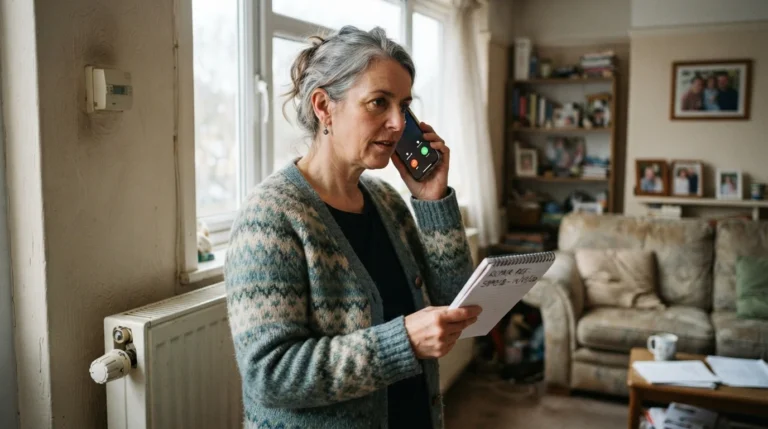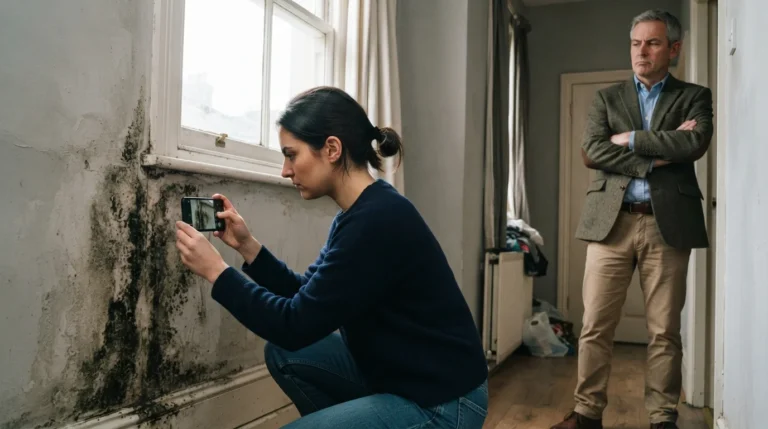


You have asked your landlord to fix a leaking roof, tackle black mould, or restore your heating. They have done nothing. Now you need to know who can I report my landlord to. The answer depends on your tenancy type and where you live in the UK. This guide sets out every reporting body in the order you should approach them.
We have helped thousands of tenants across England, Scotland, Wales, and Northern Ireland hold landlords to account. The most common mistake we see is tenants giving up after the first refusal. The second is not knowing all their options. The system is larger than most people realise. Use the table below to find your starting point.
| Your Situation | Where to Report First | When to Escalate |
|---|---|---|
| Private tenant, disrepair ignored | Local council Environmental Health | 14 days after landlord’s non-response |
| Social tenant, complaint finished | Housing Ombudsman | After both complaint stages exhausted |
| Letting agent poor service | Property Ombudsman or Property Redress Scheme | 8 weeks after complaint to agent |
| Gas safety concern | Health and Safety Executive (HSE) | Immediately if landlord refuses annual check |
| Unregistered landlord | Your local council | As soon as you suspect it |
| Illegal eviction or harassment | Council housing team or police | Immediately |
| Deposit not protected | Tenancy Deposit Protection scheme | After tenancy end or during dispute |
If you want to understand what your disrepair situation might be worth, use our housing disrepair compensation calculator. It gives a clear, realistic estimate before you start reporting.
Always Report to Your Landlord First
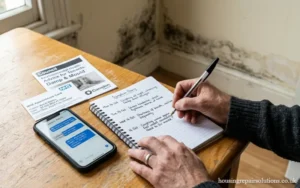
You must report the problem to your landlord in writing before you contact anyone else. Every council, ombudsman, and tribunal will ask for this evidence. If you skip this step, they will send you back to do it.
The Houses of Parliament library confirms this. Tenants should raise complaints directly with the landlord or agent first. Shelter provides free template letters. Send them by email or post. Keep copies. Take dated photographs. Give your landlord 14 days for non-urgent repairs and 24 hours for emergencies. After that, you can escalate.
If your landlord has ignored every repair request, our guide for tenants on housing disrepair claims explains your full legal rights.
Report Your Landlord to the Council: Environmental Health
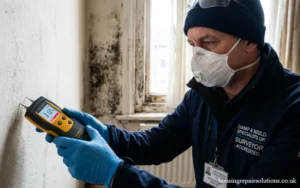
Your local council’s Environmental Health team is the most powerful free resource. They must investigate conditions that harm health or cause a statutory nuisance. This duty comes from the Environmental Protection Act 1990 and the Housing Act 2004. Damp, mould, structural hazards, excess cold, and pests all fall within their remit.
Environmental Health officers investigate serious repair problems. They step in when your landlord ignores your reports or fails to fix things within a reasonable time. They can order your landlord to act and serve legal notices.
Shelter advises tenants to contact the council’s private rented housing team first. Most councils have one. They can speak to your landlord with your permission. They can also refer you to Environmental Health if the problem is serious. When you contact the council, be clear. Shelter provides a template: state your address, your landlord’s name, the dates you reported repairs, and that nothing has been done.
How Environmental Health Inspections Work
An officer will visit your home. They use the Housing Health and Safety Rating System (HHSRS) to score hazards. If they find a Category 1 hazard, the council must act. The council can serve an improvement notice. This tells the landlord what to fix and sets a deadline. In very serious cases, they can issue an emergency remedial action notice. The council can even carry out the work and bill the landlord.
For council tenants, the process is slightly different, but Environmental Health still has jurisdiction. Our council housing disrepair claims page explains the extra steps involved.
Report Your Landlord to the Housing Ombudsman
Social housing tenants can use the Housing Ombudsman. This free, independent body investigates complaints about councils and housing associations. It is set up by law to look at these complaints.
Contact them on 0300 111 3000, Monday to Friday, 9am to 5pm. You can also email info@housing-ombudsman.org.uk or write to PO Box 1484, Unit D, Preston, PR2 0ET.
A critical rule applies. The Ombudsman can only investigate after your landlord’s own two-stage complaints process finishes. At stage 1, the landlord must acknowledge your complaint within 5 working days and provide a written response within 10 working days. At stage 2, they have 20 working days to give a final response. After both stages, you can bring your complaint to the Ombudsman.
The Ombudsman can order your landlord to pay compensation, apologise, review policies, and complete outstanding repairs. Its investigations go through four stages: enquiry, assessment, investigation, and review. It also examines whether systemic failures exist.
If damp and mould is your specific issue, our damp and mould claims page explains your rights under Awaab’s Law. This law now imposes strict timeframes on social landlords: 24 hours for emergency hazards and 10 working days for serious damp and mould.
The New Private Rented Sector Landlord Ombudsman
Private tenants will soon gain a powerful new reporting route. The Renters’ Rights Act 2025, which received Royal Assent on 27 October 2025, creates a Private Rented Sector Landlord Ombudsman. All private landlords in England must join. This will provide free, independent dispute resolution without court action. The Ombudsman’s decisions will be legally binding. The government expects the service to be ready in 2028.
In the meantime, private tenants can use Environmental Health and formal legal action. Our no win no fee solicitors page explains how to pursue a claim without upfront costs.
Report Your Landlord for Gas and Electrical Safety Breaches
Landlords have strict safety duties. Failure to meet them opens additional reporting routes beyond Environmental Health.
Gas safety. Under the Gas Safety (Installation and Use) Regulations 1998, landlords must arrange an annual gas safety check by a Gas Safe registered engineer. They must give you a copy of the record within 28 days. If they cannot or will not provide this, report them to the Health and Safety Executive. Call the HSE Gas Safety Advice Line on 0800 300 363. In a gas emergency, always call the free 24-hour national gas emergency number on 0800 111 999 first.
Electrical safety. In England, landlords must provide an Electrical Installation Condition Report (EICR) at the start of a new tenancy and every five years. The EICR must come from a qualified electrician registered with NICEIC or an equivalent body. If your landlord fails to provide an EICR or ignores an unsafe report, report them to your local council’s Environmental Health team. In serious cases, you can also report them to the HSE.
Report Your Landlord Through a Letting Agent Redress Scheme
If your complaint concerns the letting agent rather than the landlord, all agents in England must belong to one of two redress schemes: the Property Ombudsman or the Property Redress Scheme. These provide free, independent dispute resolution.
You can complain to a redress scheme if the agent does not resolve your issue within eight weeks or if you are unsatisfied with their response. The council can fine any agent who is not registered with an approved scheme up to £5,000.
Report Your Landlord in Scotland
Housing law is devolved. In Scotland, all private landlords must register with their local authority. Letting property without registration is a criminal offence. If you suspect your landlord is unregistered, contact the registration team at your local council. They investigate and can take enforcement action.
To check registration, ask your landlord or agent for the number. If they do not give clear information, contact your local council. They keep records and can confirm the status.
For serious disrepair, follow the same first steps. Report in writing. If nothing happens, contact your council’s Environmental Health team. If the council cannot resolve the matter, you can apply to the First-tier Tribunal for Scotland (Housing and Property Chamber). Shelter Scotland provides free advice on 0808 800 4444, Monday to Friday, 9am to 5pm.
Report Your Landlord in Wales
In Wales, landlords must register with Rent Smart Wales. If your landlord is unlicensed or failing management standards, report them using the Rent Smart Wales online service. Include the property address, landlord or agent name if known, your contact details, a summary, and your evidence.
Rent Smart Wales can investigate unlicensed landlords, serious repair or safety failures, and failures to provide required documents. It can impose fines, issue compliance notices, or apply for banning orders. Shelter Cymru provides free advice for Welsh tenants on 08000 495 495, Monday to Friday, 9am to 4pm.
Report Your Landlord in Northern Ireland
In Northern Ireland, the Private Tenancies (Northern Ireland) Order 2006 governs private tenancies. Landlords must carry out necessary repairs promptly, maintain safe conditions, and register with the Landlord Registration Scheme. If your landlord breaches these duties, report them to Environmental Health at your local council.
All private landlords must be registered. To report an unregistered landlord, use the Report an Unregistered Landlord Form on nidirect. For Houses in Multiple Occupation, contact the NI HMO Unit at Belfast City Council. If your landlord threatens you, changes locks, or evicts you without valid notice, this may be harassment or illegal eviction, which is a criminal offence. Report it to your local council or the Police Service of Northern Ireland. Housing Rights provides free advice on 028 9024 5640, Monday to Friday, 9.30am to 4.30pm.
Protection Against Retaliatory Eviction
Many tenants hesitate to ask who can I report my landlord to because they fear eviction. This fear is understandable, but the law provides specific protections.
In England, if you make a written complaint about disrepair and the council serves an improvement notice or emergency remedial action notice, any Section 21 eviction notice served within six months of that council action is invalid. The key is to report in writing before the eviction notice arrives. Document everything. Send a clear written complaint. Contact the council if safety is affected. Seek advice on formal options.
For social housing tenants, the Housing Ombudsman investigates how landlords handle repair requests. Making a complaint to the Ombudsman does not affect your security of tenure.
When to Take Formal Legal Action
If every reporting route fails and the landlord still refuses to act, formal legal action is your final option. The Homes (Fitness for Human Habitation) Act 2018 gives tenants the right to take legal action without relying on their local authority.
The Pre-Action Protocol for Housing Disrepair Cases requires your landlord to respond to a formal letter of claim within 20 working days. If they fail to respond adequately, you can issue court proceedings. For tenants who cannot afford upfront legal fees, genuine no win no fee arrangements provide a route to compensation and repairs.
If you are considering this step, our contact page connects you with a team that has handled thousands of UK housing disrepair cases. Our reviews page lets you read what previous clients have said.
A Final Word
The question who can I report my landlord to has many answers. Environmental Health, the Housing Ombudsman, Rent Smart Wales, landlord registration schemes in Scotland and Northern Ireland, and the forthcoming Private Rented Sector Ombudsman all exist for one reason. The law recognises that tenants need independent bodies to hold landlords accountable.
Start by reporting to your landlord in writing. If nothing happens within 14 days, escalate. The table at the top of this page is your roadmap. Follow it, and you will find the right body to force the repairs you need.