

Newcastle City Council Repairs
Disrepair Claims and Compensation
Reported the damp months ago and nothing has changed? Housing management came back in house from Your Homes Newcastle, but your rights did not change with it, and neither did the council's responsibility for repairs that were already outstanding. We force the works through and claim compensation for the time you have lived with it.
We act for council and housing association tenants across the city. Our overview of what a council tenant can claim for covers the route in full.
Newcastle City Council Repairs Not Being Done
Your Homes Newcastle managed the council's housing for years as an arm's length organisation before the service was brought back in house. The point tenants most often miss is that the council was always the legal landlord throughout. YHN delivered the service, the council owned the homes and held the repairing covenant, and that never moved.
What this means in practice is straightforward. A repair you reported to YHN before the transition is still a repair the council had notice of, and the clock on that notice did not restart when the service changed hands. Tenants across Byker, Walker, Fenham, Elswick and Kenton who were told to start again after the handover were told something that is not legally correct.
Management changed hands, the repairing duty never moved
Upfront cost to start a claim
Success fee, agreed in writing first
The Tyneside Flat and Why It Complicates a Claim
A building type almost unique to this part of the country, with a disrepair profile to match.
A Tyneside flat is a two storey terraced house divided into two self contained flats, each with its own front door at street level. Tens of thousands of them were built across the city and they remain a large part of the housing stock, in council ownership, housing association ownership and private hands on the same street.
For disrepair that creates a specific problem. The upper flat's floor is the lower flat's ceiling, the roof covers both but belongs to neither exclusively, and the drainage and rainwater goods are shared. When water appears in a lower flat the source is frequently upstairs or in the roof, and when ownership is split between the council and a private owner the two sides spend months attributing it to each other.
None of that is your problem to resolve. Your landlord's duty runs to the structure and exterior of your home, which includes the roof above you and the shared drainage, regardless of who owns the other half. Establishing the true source is what the survey does, and our page on leaks and water ingress claims covers how those cases are built.
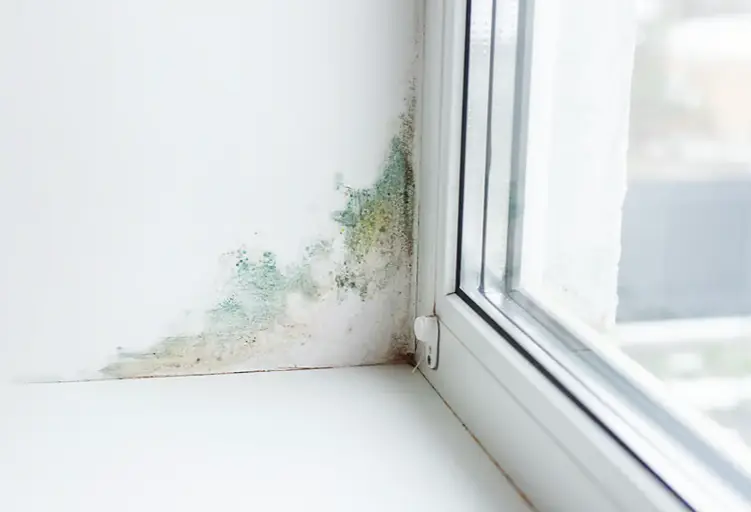
Ceiling damage in a lower flat, where the source almost always sits above or in the shared roof structure
Newcastle City Council Repairs and Complaints, the Facts
What the council has published about its own service, and what it means when your repair has stalled.
How to report a repair
[INSERT: the reporting routes since the service came back in house, and the published emergency, urgent and routine timescales]
The complaints procedure
[INSERT: stage one and stage two deadlines under the corporate complaints policy, then the Housing Ombudsman route]
Stock, estates and the transition
[INSERT: confirmed stock figure, the date management returned in house, and the main estates]
Damp and mould position
[INSERT: published damp and mould policy and any Housing Ombudsman determination with case reference, including any against YHN]. The duties behind it are set out in our note on the rights a social tenant holds.
The Duties Newcastle City Council Owes You
Section 11 of the Landlord and Tenant Act 1985 requires the council to keep the structure and exterior in repair and the installations for water, gas, electricity, sanitation, space heating and hot water in working order. Structure and exterior is the phrase that matters most in a city of shared roofs and divided terraces, because it covers the roof above you and the rainwater goods whether or not the flat below or beside you is in the same ownership.
The Homes (Fitness for Human Habitation) Act 2018 added Section 9A, requiring the home to be fit to live in throughout the tenancy rather than only at the start. That matters where there is no single defect to point at but the property is plainly unfit, for instance where it cannot be heated to a reasonable temperature. Our comparison of the two statutory routes and when each applies explains which fits which problem.
Awaab's Law, under the Social Housing (Regulation) Act 2023, adds fixed deadlines for investigating serious hazards, confirming findings in writing and starting work, replacing the old reasonable time standard. Those deadlines are being phased in by hazard type, and the detail of what applies when is set out in our guide to the statutory timescales at each stage.
As a secure council tenant you also have the statutory Right to Repair scheme for smaller urgent jobs, with prescribed timescales and an entitlement to a second contractor if the first misses them. It does not reach large structural work, but for the jobs it covers it is considerably faster than a claim.
The Money a Cold Home Costs You
Newcastle has longer, colder heating seasons than most of England, and the cost of that falls on the household rather than the landlord. Where a property has failed insulation, draughty windows or a heating system that cannot hold temperature, the tenant pays for it twice, once in discomfort and again on the meter.
That second cost is recoverable and tenants routinely leave it out. Keep the bills. Where a property has been underheated because of a defect the landlord failed to fix, the excess energy spent trying to heat it forms part of the special damages, alongside the ruined carpets and furniture that people do think to claim for.
Cold and damp are also the same case rather than two. An underheated home cannot dry out, so condensation and mould follow within weeks of a heating failure, and the landlord then attributes the mould to the household. Where a boiler or heating system is the root of it, our page on heating and electrical disrepair sets out what counts as an emergency.
Worth Knowing
A simple indoor thermometer reading, photographed with the date visible, is cheap evidence and very hard to argue with. Take them during a cold spell while the heating is on.
If a heating failure has already produced mould, our guide to how fast mould spreads once it starts explains why acting early matters.
Case Examples From Newcastle Social Housing
Illustrative examples of the case types we handle in the city. Details are composite and do not describe a single identified client. Outcomes appear in our record of settled claims.
A household reports damp repeatedly to the ALMO, then is told after the service moved in house that the new team has no record and the report should be raised afresh. The council held the repairing duty throughout, so the earlier reports still count as notice, and disclosure of the historic record is what establishes the full period.
Water comes through a lower Tyneside flat ceiling. The upper flat is privately owned and the council says it cannot access it. The duty to the structure above the tenant remains the council's, and a survey identifying the source is what moves it, rather than the tenant mediating between two owners.
An ageing system is serviced each autumn and declared working while the property sits well below a reasonable temperature through winter. Thermometer readings and the energy bills across the same period evidence both the breach and the household's financial loss from trying to compensate for it.
Mould in a bedroom is treated and painted on four occasions, each logged as a completed repair. A survey finds failed insulation at the external wall. The four closed jobs are the strongest evidence in the file, because each one independently proves the council had notice.
Why Newcastle Tenants Instruct Us
The costs position is explained on our page about claims brought at no cost to you.
We Assess Before We Accept
If the evidence will not carry a claim we say so at the assessment rather than after months of correspondence. An honest no is worth more than a hopeful maybe.
No Win No Fee
Nothing to pay upfront and nothing to pay if the claim does not succeed. The success fee is capped and agreed in writing before anything is signed.
We Request the Pre Transition Record
Repairs reported before the service came back in house still count. That history exists and is disclosable, and it frequently doubles the period a claim covers.
Disrepair We Handle Across Newcastle
Damp and Black Mould
Recorded as condensation almost by default. In solid wall terraces and poorly insulated flats the cause is usually the building.
Leaks From Above
In divided terraces and Tyneside flats the source is rarely in the affected home, and tracing it is the landlord's job rather than yours.
Cold Homes and Heating
Long heating seasons make failed insulation and tired boilers expensive as well as uncomfortable, and both costs are recoverable.
Unsafe Electrics
Exposed wiring, repeatedly tripping consumer units and water reaching fittings are emergency category hazards, not queued jobs.
Rodents and Infestations
Shared voids between divided properties give pests a route between homes, so treating one flat alone achieves nothing.
Roofs and Structure
Slipped slates, failed flashing and blocked gutters on terraces where the roof spans properties in different ownership.
Where prolonged damp has affected someone's breathing, the claim can also carry a personal injury element alongside the repair and the general damages.
How a Newcastle Disrepair Claim Works
Four stages, nothing to pay at any point unless the claim succeeds. For a rough figure beforehand, try our tool for estimating an award.
Free Assessment
We review your repair history, including anything reported before the service moved in house, and tell you honestly whether the claim is worth running.
Evidence and Survey
We compile your reports and photographs and instruct an independent surveyor to establish the cause, including sources outside your own home.
Letter of Claim
A formal letter of claim goes to the council's legal team under the pre action protocol, with a schedule of works and a deadline for full disclosure.
Repairs and Settlement
We press for the works to be completed and negotiate damages for the period you lived with the disrepair.
Not a Newcastle City Council Tenant
Tyneside is split across several authorities and a number of housing associations, and the picture changes from one side of the river to the other. If your landlord is someone else, start from the page that covers you.
We act for council, ALMO and housing association tenants in England and Wales. We do not take private rented sector, leaseholder or shared ownership claims.
The Evidence That Decides a Claim
What to Gather Now
- Reference numbers from before and after the transition, since the earlier ones still count and are the ones most often overlooked.
- Dated indoor temperature readings taken during cold weather with the heating on, which are cheap to produce and hard to dispute.
- Energy bills across the affected period, which evidence the cost of trying to heat a property with a defect.
- GP records where damp or cold has triggered or worsened a condition in the household.
What Most People Get Wrong
Tenants assume they have to prove the cause of the damp. They do not. That is the surveyor's job. What has to be proved is notice, meaning the landlord knew, and every reference number does that work.
The second mistake here is assuming the pre transition history is gone. It is not, it is disclosable, and it frequently extends a claim by years.
Frequently Asked Questions
I reported repairs to Your Homes Newcastle, who do I claim against now
Newcastle City Council. It was the legal landlord throughout, including while the service was delivered by the ALMO, so the repairing duty and liability for earlier failures sit with the council. Reports you made before the service moved in house still count as notice, and the council holds that record even if the frontline team cannot see it.
The council says there is no record of my old reports
A frontline team not being able to find something is not the same as it not existing. Repair records are disclosable in a claim, and historic systems are regularly produced during the pre action process. In practice disclosure often shows more reports than the tenant remembered making.
The leak is coming from the flat above and it is privately owned
Your landlord's duty covers the structure and exterior of your home regardless of who owns the neighbouring property. It is for the council to trace the source and deal with the other owner, not for you to negotiate between them. A survey identifying the source is usually what breaks the deadlock.
Can I claim for higher energy bills caused by a cold home
Yes, as part of the special damages. Where a defect the landlord failed to fix meant you spent more trying to heat the property, that is a financial loss caused by the breach. Keep the bills for the affected period, and ideally dated indoor temperature readings alongside them.
Can I be evicted for complaining about repairs
As a secure council tenant the council cannot simply end your tenancy because you complained. It must establish a statutory ground and obtain a court order, and bringing a disrepair claim is not a ground. Our guide on eviction and repair complaints covers it in more detail.
Should I use the complaints procedure or go straight to a claim
Both have a place. A complaint builds a dated record and is normally required before the Housing Ombudsman will consider anything, while a claim enforces the repair and recovers damages. You do not have to finish a complaint before taking advice. Our comparison of the Ombudsman route and a legal claim sets out which suits which situation.
Is there a time limit
Generally six years from when the disrepair began, and three years for any personal injury element. On a long tenancy spanning the ALMO years the earliest period may fall outside the window even though the defect continues, which is a reason not to wait for another complaint cycle.
The Complaints Procedure and What Comes After It
Taking action against your own council feels uncomfortable when it is also your landlord. Set that aside. The duties are statutory, the authority budgets for disrepair as a known cost of holding housing stock, and enforcing a repairing obligation is the mechanism Parliament provided rather than an attack on a public service. The people who would act for you are introduced on our page about the practice.
Dig Out the Old Reference Numbers First
This step matters more in Newcastle than almost anywhere, because of the change in how the service is run. Before you do anything else, look through old emails, texts and letters for repair references from the ALMO years. Those reports are the difference between a claim covering eighteen months and one covering five years, and the damages scale with the period. If you cannot find them, say so at the assessment rather than assuming the claim starts from your most recent report.
Report in Writing From Now On
Phone calls are the weakest evidence in a disrepair claim. A call generates a reference but the system note rarely reflects what you described, and months later it reads as a few words. Put it in writing, name the room and the wall, and state explicitly that the problem is recurring rather than new. What a first report needs to contain is covered in our walkthrough of how a claim is built.
Escalate With a Deadline
Once repairs reports stop producing results, raise a formal complaint instead of repeating them. It forces dated responses at defined stages and the Housing Ombudsman will expect it to have been completed. Give it the published deadlines plus a short margin, and treat a second missed stage as the point to escalate rather than the point to complain again. A goodwill payment without a repair is not a resolution, and accepting one does not prevent a claim.
Know Who Else Can Act
Most tenants assume the council is the only body involved. Environmental health can act on serious hazards even in the authority's own stock, which surprises people, and councillors can escalate internally on constituents' behalf. Neither replaces a claim but both add pressure, and our overview of the organisations that can act against a landlord explains what each one can actually do.
What Happens When We Take Over
Once instructed we move the matter out of the customer service queue entirely. A letter of claim under the pre action protocol goes to the council's legal team with a schedule of works, a deadline for disclosure of the full repair history including the pre transition record, and a request for survey access. Authorities that absorbed a year of unanswered emails usually respond inside the protocol deadline, because the costs consequences are real in a way a tenant complaint is not.
What You Actually Recover
A successful claim has two halves and the first is consistently underestimated. The works are enforced, normally under a schedule with dates attached, so the defect is resolved rather than patched again. Damages then cover the period you lived with it, calculated largely as a proportion of the rent paid, plus belongings ruined by damp or water, the excess energy costs, and any injury element. How those figures are reached is set out in our explanation of how a disrepair award is worked out.
If your repair has been outstanding for months, or the same job keeps being closed and reopened, get it assessed rather than wait for another winter. Contact our team and we will tell you within 24 hours whether the claim is worth running.
Start Your Claim Today
Free assessment. No obligation. Council disrepair specialists.
Start Free Assessment → 📞 Call 07460 754041Submit Your Enquiry
Use the quick form to send your details directly.
Claim Pages
Ready to Get the Repairs Done
Free assessment, no obligation, and an honest answer about whether your claim is worth running.
What Could Your Claim Be Worth
Damages depend on how long the disrepair has run, the rent paid during it, the belongings damaged, the energy costs absorbed and the effect on your household. We give you a realistic range once we have seen the evidence, not before.
Use the compensation calculator