
Mould symptoms in home UK are often the first sign that something is wrong with your living environment. In our experience across thousands of UK properties, many residents notice health changes long before they see visible mould growth. Recognising these signs early allows you to act before the problem worsens.
Mould releases spores and toxins that affect the body in multiple ways. The latest official guidance highlights that damp and mould can cause or worsen a range of health issues, particularly in children, older people and anyone with existing respiratory conditions.
Common Mould Symptoms in Home UK
| Symptom Category | Specific Signs | Who Is Most Affected |
|---|---|---|
| Respiratory | Persistent cough, wheezing, shortness of breath, frequent chest infections | Children, asthma sufferers, older adults |
| Eye & Skin | Itchy or watery eyes, skin rashes, eczema flare-ups | People with allergies or sensitive skin |
| General | Fatigue, headaches, sore throat, sinus problems | Anyone living in affected homes |
| Mental Health | Increased anxiety, low mood, sleep disturbance | Those already vulnerable to stress |

Mould symptoms in home UK often appear gradually. You may first notice a musty smell or feel more tired than usual. Over time, respiratory issues can develop or existing conditions such as asthma can become harder to control.
Why Mould Symptoms Appear in UK Homes
Mould needs moisture, warmth and organic material to grow. Poor ventilation, condensation on cold walls, leaking roofs or rising damp all create ideal conditions. In older properties and social housing, these issues are especially common. The Homes (Fitness for Human Habitation) Act 2018 makes it a legal requirement for rented homes to be free from hazards that affect health, including persistent damp and mould.
When mould spores are inhaled or come into contact with skin, they can trigger allergic reactions and inflammation. In some cases, prolonged exposure has been linked to more serious lung infections. Early recognition of mould symptoms in home UK is therefore essential for protecting long-term health.
What to Do When You Notice Mould Symptoms
If you or anyone in your household experiences the symptoms listed above, take these steps immediately:
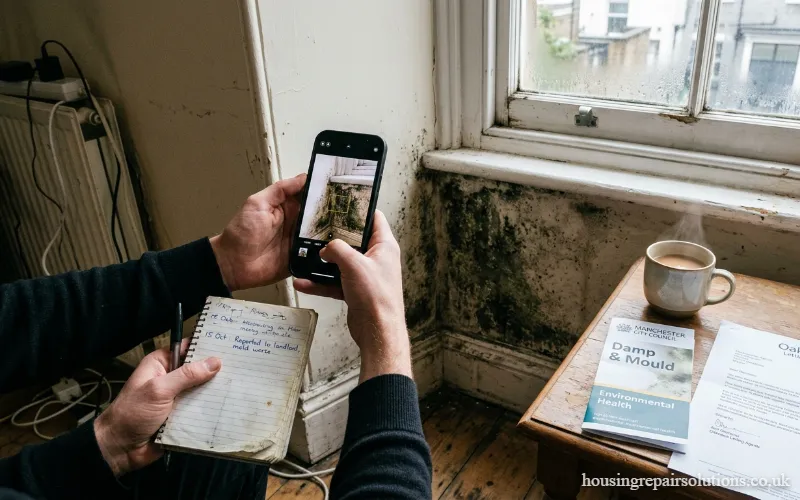
- Document everything – note dates, symptoms and any visible damp or musty smells.
- Improve ventilation straight away – open windows daily and use extractor fans.
- Reduce humidity – dry clothes outdoors or in a vented dryer and avoid overfilling wardrobes against external walls.
- Report the issue – tenants should inform their landlord in writing as soon as possible.
For full guidance on tenant rights when health is affected by damp and mould, read our damp and mould claims guide.
When to See a Doctor
See your GP promptly if symptoms persist for more than a few weeks, worsen despite ventilation improvements, or if anyone experiences severe breathing difficulties, coughing up blood or significant weight loss. Mention that you suspect mould exposure so the doctor can consider appropriate tests or referrals.
Children and older people should be seen earlier, as they are more vulnerable. In some cases, blood tests or allergy assessments may be recommended to confirm whether mould is contributing to the symptoms.
Legal Rights and Next Steps for Tenants
Landlords have a legal duty to investigate and fix the cause of mould when it affects health. Under the Homes (Fitness for Human Habitation) Act 2018, failure to act can result in enforcement action by the council or compensation claims. Keep detailed records of all symptoms, communications with your landlord and any medical advice received.
If your landlord does not respond within a reasonable time, contact your local council environmental health team. They can inspect the property and, if necessary, serve an improvement notice. Tenants can also explore compensation for health impacts and inconvenience using our housing disrepair compensation calculator.
For tenant-specific support on housing disrepair, visit our for tenants housing disrepair claims page.
Professional Assessment and Testing
When symptoms continue despite basic steps, arrange a professional mould survey. Qualified surveyors use moisture meters, thermal imaging and air sampling to identify hidden growth and confirm the source. A full survey typically costs between £300 and £800 depending on property size.
Professional testing provides the evidence needed for landlord disputes, insurance claims or council action. It also ensures that any remediation work targets the real cause rather than just visible patches.
Common Mistakes That Delay Recovery
Many people assume symptoms are caused by seasonal colds or allergies and delay reporting the issue. Others try to mask the smell with air fresheners instead of fixing the moisture problem. Both approaches allow mould to spread and can make health effects worse over time.
Another frequent error is attempting to clean large areas of mould without professional help, which can release more spores into the air and increase exposure.
Regional Differences Across the UK
Protections are broadly similar but with minor variations. In England the Homes (Fitness for Human Habitation) Act 2018 and HHSRS apply directly. Scotland operates under the Repairing Standard, while Wales has parallel fitness requirements. Always check your local council’s guidance if you live outside England.
Prevention and Long-Term Protection
Once the source of moisture has been fixed and any mould removed, focus on prevention. Wipe condensation from windows daily, run extractor fans for at least twenty minutes after cooking or showering, and maintain a small gap between furniture and external walls. Consistent heating and good ventilation are the most effective ways to stop mould returning.
Our home maintenance checklist provides a simple seasonal routine that helps prevent recurrence. Landlords should consider regular professional inspections, especially in older or poorly ventilated properties.
Mould symptoms in home UK should never be ignored. Early action protects your health, strengthens your legal position and prevents costly repairs later. If you are experiencing any of the symptoms described, start with improved ventilation and report the issue to your landlord today. For urgent cases or to explore all housing disrepair options we handle, visit our see all housing disrepair issues page.
Frequently Asked Questions