
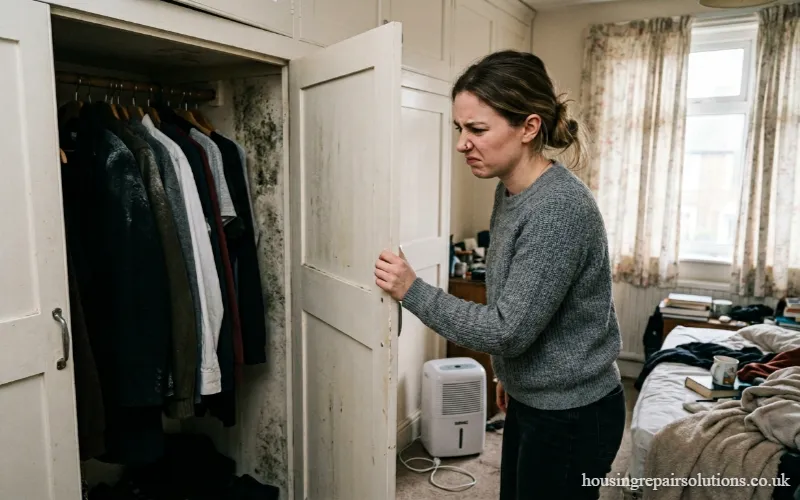
If you have a leaking ceiling, black mould on your wall, or a broken heating system that remains un-repaired for months, your home or your office is essentially being damaged, but that’s not all. It causes damage to people. Housing disrepair claims based upon emotional distress acknowledge a truth already known to neglected tenants. Living in unsafe and unhealthy environments can take a measurable toll on mental health. Under UK housing law, it is recognized that anxiety, depression, sleeplessness and the ongoing pain of being neglected by the person you expect to keep your home safe all counted as harm.
We have sat across kitchen tables from tenants in Glasgow to London that were at breaking point. The leaking roof was one thing. The tenant had grown to disheartened when, for years on end, the landlord ignored them. The emotional distress of housing disrepair is a central part of a claim. The leading injury of many of the tenants we represent, and the law does too.
If you want to understand the full value of your situation before you read on, use our housing disrepair compensation calculator for a realistic estimate.

What Emotional Distress Housing Disrepair Means in Legal Terms
The phrase involving emotional distress housing disrepair is used in a specific context. The law in England and Wales includes psychological injury as part of a housing disrepair cause of action.
General damages will compensate you for the inconvenience, discomfort, and loss of enjoyment of your home. These create the baseline. Housing difficulties cause more emotional distress. This occurs when the abuse you experienced results in a diagnosable psychological or psychiatric injury. This will become a separate head of damage claim. Courts place an independent value on it, which often increases total compensation.
The courts make a clear distinction. A common inconvenience experienced by any tenant or landlord is one thing. Another example is a psychiatric condition that requires treatment from a medical doctor, such as clinical depression, an anxiety disorder, or post-traumatic stress disorder. Both attract compensation, the second attracts much higher awards.
The Judicial College Guidelines set out brackets with clear values for psychiatric injury according to which all judges in the UK operate. The brackets directly apply to housing disrepair claims made for emotional distress where medical evidence supports the diagnosis.
| Psychiatric Injury Severity | Typical Compensation Range (JCG 17th Ed.) | What It Reflects |
|---|---|---|
| Severe psychiatric damage (not PTSD) | £66,920 to £141,240 | Marked impact on ability to work, relationships, and coping |
| Moderately severe psychiatric damage | £23,270 to £66,920 | Significant problems across life, but some prospect of recovery |
| Moderate psychiatric damage | £7,150 to £23,270 | Improvement by trial, with ongoing effects not grossly disabling |
| Less severe psychiatric damage | £1,880 to £7,150 | Minor symptoms, often resolved within months |
| Severe PTSD | £73,050 to £122,850 | Permanent effects preventing function at pre-trauma level |
| Moderately severe PTSD | £28,250 to £73,050 | Significant disability for the foreseeable future |
| Moderate PTSD | £9,980 to £28,250 | Largely recovered, any ongoing effects not majorly disabling |
| Less severe PTSD | £4,820 to £9,980 | Virtually full recovery within one to two years |
These figures cover the psychiatric injury element alone. Your emotional distress housing disrepair claim can also include a rent reduction award, damages for belongings, and compensation for any physical health conditions caused by the same disrepair.
How Emotional Distress Differs from Ordinary Inconvenience
Disrepair inconveniences every tenant residing there. The evidence and consequences of a claim determine the distinction between an inconvenience claim and a housing disrepair emotional distress claim.
It’s usually quite a simple calculation. They constitute a proportion of your rent during the time of disrepair. The court will ask how much the property was worth after it became defective when compared to what you paid? Your prize is the difference. The courts often award a percentage of the rent for the affected period, frequently in the vicinity of 25–50%. This depends on the severity of the situation.
In addition to this, emotional distress damages result from housing disrepair. Compensation is given for the particular psychological damage you have suffered. You need medical evidence to recover this damage. In normal circumstances, your GP or a consultant psychiatrist must confirm a diagnosed condition that the living conditions caused or materially worsened.
We have seen tenants develop anxiety disorders from their children being in an environment with toxic black mould. Other clients suffered panic attacks in the rain, fearing that it would leak through the ceiling. These are not trivial matters. They are psychiatric harms, and the law treats them as such.
If damp and mould is the specific cause of your distress, our damp and mould claims page explains how to build these cases.

The Legal Framework That Supports Your Claim
Various laws allow for making claims for emotional distress caused by damaged housing. They all strengthen each other.
According to Section 11 of the Landlord and Tenant Act 1985, the landlord has the duty to maintain in repair that part of the property that is being let. This duty also includes installation of the water, gas, electricity, and sanitation. A tenant can make a claim when the landlord breaches his or her duty.
The 2018 Act strengthened matters. It means that a tenant can expect the property to be suitable for living at all times during the tenancy. The Act expanded the definition of unfit. It is now relevant to any hazard under the Housing Health and Safety Rating System (HHSRS) that explicitly recognises hazards that cause mental harm. An example of how the courts apply this Act can be seen in Dezitter v Hammersmith & Fulham Homes in 2023. The judge granted rent reductions ranging from 35 to 50 percent over a 13-year stretch.
The Environmental Protection Act 1990 offers another method. A local authority can enforce against a landlord for disrepair that constitutes a ‘statutory nuisance’ which prejudices health or causes a nuisance. Evidence of statutory nuisance helps prove an emotional distress housing disrepair claim.
The Psychological Toll of Specific Disrepair Types
Different types of damages have different psychological effects. Grasping patterns assists in framing a claim.
Moist and mildew. Claims associated with housing disrepair are most correlated with emotional distress. Constant exposure to mould does not only cause breathing problems. Seeing those black patches spreading, smelling that must and knowing your home is making your children sick is an utterly helpless feeling. According to the Housing Ombudsman, tenants are filing more complaints these days. Tenants are experiencing anxiety, depression and loss of trust in landlords.
Heating and hot water not working. It erodes your mental health after weeks of being cold at home. Sleep is affected. Not being able to wash right affects self-image. Fear of the next cold snap creates chronic background anxiety. In fact, we’ve come across sturdy people who cried at just the thought of facing yet another winter without heat.
Instabilities in the structure. Experiencing the fear of your ceiling collapsing, or the cracks in your walls widening, creates a tiring alertness. Persons living in these houses often do not feel at ease. They are always on the lookout for new signs of deterioration in something or the other. In the one place where you would expect to feel safe, they often feel unsafe.
Pest Invasion. Rats, roaches, and bedbugs do more than repulse. They attack or invade your place of residence. A feeling of shame, social withdrawal, and hyper-vigilant. One client no longer invited her grandchildren over due to the rats. The most painful thing that’s happened to her is losing contact with family.
If your disrepair caused personal injury beyond psychological harm, our personal injury from housing disrepair claims page covers the full scope.

How to Prove Emotional Distress in Your Claim
Proving emotional distress housing disrepair requires a chain of causation. This chain links the landlord’s failure to repair directly to your psychological injury. We build it using several categories of evidence.
Health records Your GP record is the most important evidence in any emotional distress housing disrepair claim. If you went to the doctor with anxiety, low mood, sleep disturbance and stress during the period of disrepair, that contemporaneous evidence is strong. Don’t hesitate to reach out if you haven’t already. If a condition has been formally diagnosed, it would fall within a more serious area of compensation according to the Judicial College Guidelines.
Communication with your landlord When you email or write to us to report on the disrepair, you are doing more than informing us of the physical problem. They also expose the mental strain. When you stated that the mold was affecting your child’s health, that you were unable to sleep or that you had reached your breaking point, you are recording at the time.
Witness Statements. Your personal account and that of your family, friends or colleagues who have noticed the change in your mental health helps contribute to this. These statements help our clients document the full impact of what they went through.
Evidence obtained from an expert psychiatrist. In cases of moderate to severe psychiatric injury we obtain an independent psychiatric report. A formal report will be created after you are assessed and examined by a consultant psychiatrist. This report provides a diagnosis, assesses severity, and gives a view on causation. This report is used by court or the landlords’ insurers to assess the emotional distress part of your claim.
Independent surveyor’s report. The physical disrepair must be proven. An independent chartered building surveyor inspects the property and produces a report detailing the defects, their causes, and the timeline of deterioration. This report establishes the landlord’s breach of duty and links the conditions to the health consequences.
Compensation Amounts: What You Can Expect to Recover
The total compensation in an emotional distress housing disrepair claim consists of several components. Each compensates a different type of loss.
| Component of Claim | Typical Range | What It Covers |
|---|---|---|
| General damages (inconvenience and discomfort) | £1,000 to £5,000 per year of disrepair | Daily disruption, loss of amenity, discomfort |
| Rent reduction claim | 25% to 50% of rent paid during disrepair | Refund for paying full rent for a defective property |
| Psychiatric injury damages | £1,880 to £141,240 depending on severity | Diagnosed mental health condition caused by disrepair |
| Damage to belongings | £250 to £3,000+ | Possessions ruined by damp, water ingress, or pests |
| Increased costs | Actual amount | Higher heating bills, laundry costs, temporary accommodation |
These figures are cumulative. For example, a tenant who endured two years of severe damp and mould that caused moderate depression might recover £6,000 in general damages, a 40 percent rent reduction, and £12,000 for psychiatric injury, alongside other heads of loss. Every case turns on its own facts, but the legal framework remains consistent.
The Housing Ombudsman Route for Emotional Distress
Many tenants can seek redress from Housing Ombudsman before litigation. This option is especially effective if your landlord belongs to the council or housing association. The Ombudsman can require payment for distress and inconvenience. Its published rulings show that emotional distress housing disrepair is taken seriously.
A Notting Hill Genesis resident claimed £4,000 for emotional distress arising from damp, mould, and conditions she encountered after being decanted to carry out repair works. The Ombudsman investigated not only the physical disrepair but also the landlord’s complaint handling and the cumulative impact on the resident’s wellbeing.
The Housing Ombudsman has the power to recommend compensation up to £5,000 for maladministration, such as when a landlord mishandles repairs and causes distress. Although this amount is less than what you would recover in the courts, it is a free service and does not require a solicitor.
If you want to explore the legal claim route instead, our no win no fee solicitors page explains how you can pursue compensation without paying upfront legal fees.
The Pre-Action Protocol: How We Start Your Claim
We are required to send a formal letter of claim to the landlord under the Pre-Action Protocol for Housing Disrepair Cases before court proceedings. We have set out in this letter the defects, how they affect you and our initial estimate of compensation.
The part about housing disrepair that causes emotional distress must be pleaded with clarity. We describe any medical diagnosis, summarize your symptoms, and indicate which compensation bracket we consider appropriate. In that case, the landlord has 20 working days to respond substantively.
At pre-action stage many claims were settled. When the landlord sees a well-prepared claim, with medical evidence, an independent surveyor’s report and clear witness evidence, his legal team has a strong commercial reason to settle.
Why You Should Not Delay Your Claim
You can claim for disrepair in a home within six years from when it first started. The time limit to claim for personal injury including psychiatric injury is 3 years. Yet, waiting until the last minute harms your case in 2 ways.
To begin with, proof deteriorates. Smith’s answer tells us everything that we could hope to hear. Moreover, your health suffers further, and more serious. If a property makes you ill, there’s only so much you can do. You are not staying in it forever. In fact, every month in that home is a month you can never have back again. Your claim for tenants compensation is not only about compensation. The landlord must make the repairs that will allow you to start your recovery.
If you have been reporting disrepair for months or years without a proper response, our guide for tenants on housing disrepair claims sets out the steps you can take today.

The Impact on Families and Vulnerable Tenants
Housing disrepair can cause emotional distress to not only the tenant identified on the agreement but also the whole household. Statistically more kids in mouldy damp homes have behaviour issues and anxiety and depression disorders. Substandard living conditions affect almost every aspect of family life.
We’ve represented parents who have talked about the guilt of not being able to provide their children with a safe, warm, dry home. The landlord bore all the blame, yet they felt guilty inside. Guilt is a type of emotional distress and it is something that is compensable.
The effect on vulnerable tenants is greater. An adult who’s not sick can cope with a broken boiler. For an elderly tenant suffering arthritis it means months of intense discomfort and seclusion. The courts acknowledge this increased impact. As a consequence, emotional distress housing disrepair damage claims increase to take the tenant’s specific vulnerability into account.
How We Approach Your Emotional Distress Claim
When a tenant contacts us describing the psychological impact of their living conditions we listen first before we talk about law. We need to understand your experience because it is that human story that sits at the centre of every claim we bring.
Following the first consultation, we develop the case step by step. The defects are initially documented by an independent surveyor. Next, the medical evidence collect is done. After which we send the letter of claim to the landlord. From here on out, we push hard for the repairs and compensation. You can find evidence of this in our reviews, where you can hear from tenants themselves that have been through this process.
If you are ready to discuss your own situation, our contact page connects you with a team member who can give you an honest assessment of your prospects.
A Final Word
The law was designed to protect you from the situation you find yourself in right now. You shouldn’t have to put up with your landlord not maintaining your home forever. The psychological harm you experience is genuine. This is recognised by the courts. This can be made up.
Housing disrepair claims for emotional distress are not exploiting. It is about holding landlords accountable for the full impact of their negligence, even the aspects you cannot see but feel every single day.