
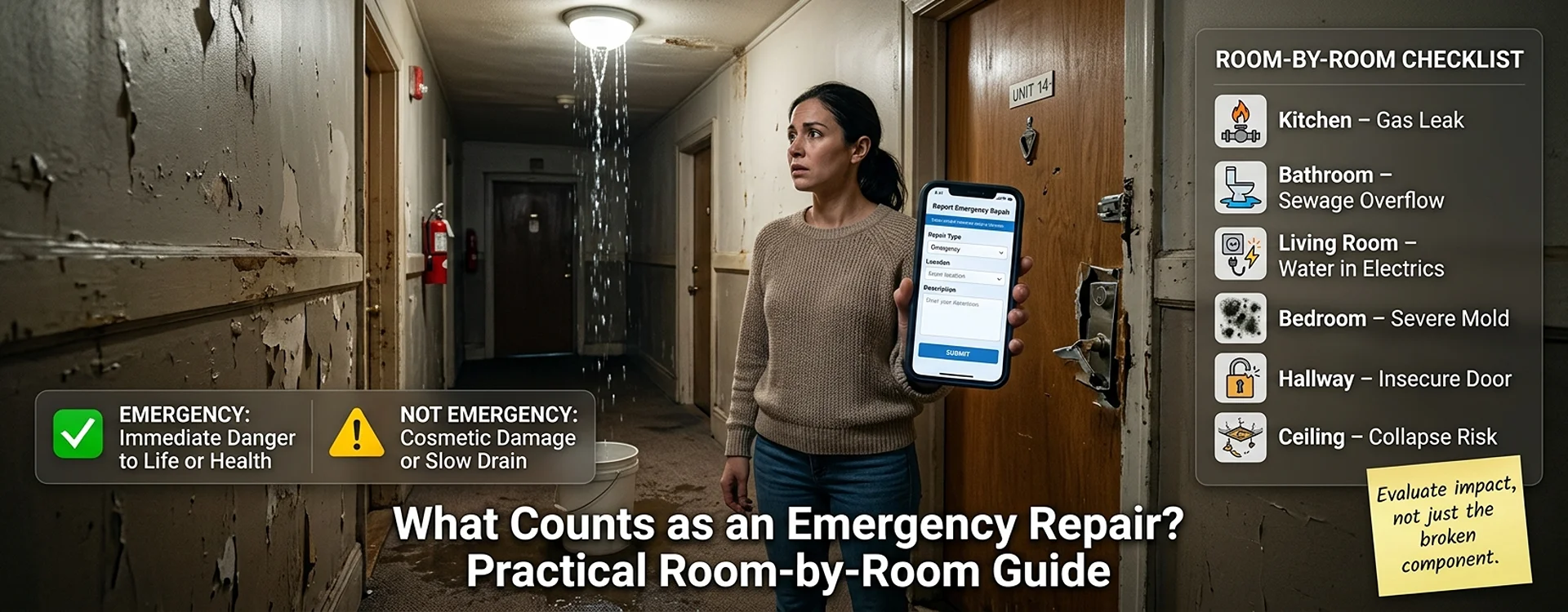
A quick repair is when a fault immediately endangers life or health or accelerates an already occurring fault. When considering whether something is worth an emergency repair, evaluate its impact, not just the broken component. A major leak, faulty electrics, unsecured entry, and others qualify; household vulnerability can make an issue urgent.
This provides general guidance and not legal advice. The deadlines of Awaab’s Law listed below are for social housing in England, not all UK tenancies.
What services can I contact to repair each room?
When reporting the danger, use this table instead of a room name or repair label to describe it. The emergency classification relies on real danger and domestic situations.
| Room or area | Potential emergency | Usually less urgent | Detail to report |
|---|---|---|---|
| Kitchen | Suspected gas escape or dangerous electrical fault | Dripping tap without flooding | Gas smell, sparks, or active water escape |
| Bathroom | Sewage overflow or loss of usable sanitation | Slow drainage with another usable facility | Whether another toilet is available |
| Living room | Water entering electrical fittings | Cosmetic staining without an active hazard | Where water meets electrical equipment |
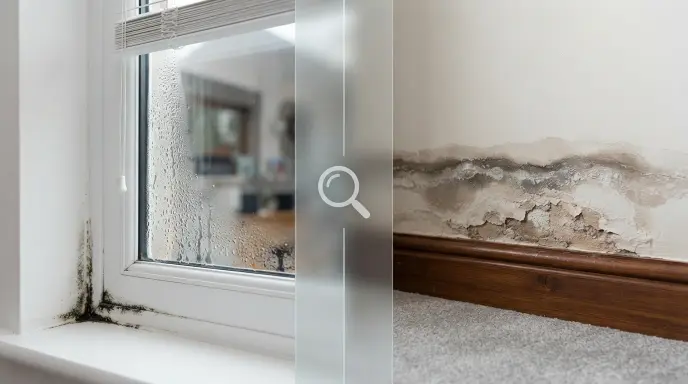
| Bedroom | Severe mold creating an immediate health risk | Minor damage without a safety risk | Breathing problems and affected occupants |
| Hallway | The external door cannot secure the home. | Sticking internal door | Whether the property is exposed to entry |
| Ceiling or roof | Collapse risk or major water ingress | Old staining with no active leak | Sagging, falling material, or worsening leakage |
The noted instances are for triage and not legal categories by default. In most cases, repairs will be done by the landlord for plumbing, sanitation, heating, wiring, roof, and outer door. Whenever this could cause danger, repairs must be carried out as soon as possible.
Kitchen: suspected gas needs a different response.
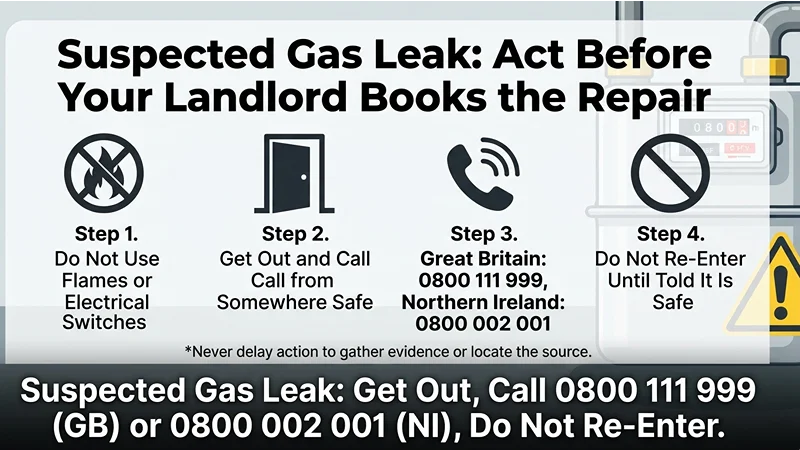
Act Before Your Landlord Books the Repair. No matter what the situation, don’t use flames or electrical switches. Get out and call from somewhere safe. If you are in Great Britain, call the National Gas Emergency Service on 0800 111 999. If you are in Northern Ireland, call on 0800 002 001. Do not re-enter your home until told it is safe to do so.
Bathroom: explain whether facilities are usable
With the “blocked toilet,” there is one important question to ask: is it the only usable toilet? Describe any sewage overflow and whether anyone from the house can use another facility. It provides the landlord with information to assess the health risk rather than treating every blockage alike.
The varieties of rooms having an impact on people
We need the context for the heating failure and the mold. Physical, mental, sensory, and intellectual disabilities are all kinds of disabilities. A hazard assessment needs to take into consideration the people who are actually living there. If there is an immediate risk of breathing in something harmful, don’t just say “there is some mold.” If the problem is left unfixed and affects your health, you may be able to make a damp and mould compensation claim.
How to report an emergency repair: 3-step implementation plan
1. Safety before evidence.
Step away from the hazard. Use the right emergency service. If you suspect gas, follow the specialist instructions above. Photograph the problem only from a safe place. The common error is delaying action to gather better evidence or going into a dangerous place to locate the source of the fault.
2. Report the risk and the circumstances in the household.
Use your landlord’s emergency reporting route. Give your address and your contact number. When did the fault start? What makes it a danger? Who is affected? Is any essential facility still usable? What damage are you expecting? Get a reference number and ask when they will be there. “Water is entering a light fitting” communicates more than “there’s a leak.”
3. Check what happens next after roll call.
Keep the file, messages, and contractor’s info together. Inquire about what has been safeguarded, what is still open, and when a follow-up will occur. Temporary works can remove imminent risk but not repair. If you encounter a new threat, report it instead of assuming the original job still actively checks it.
Practical reporting tips
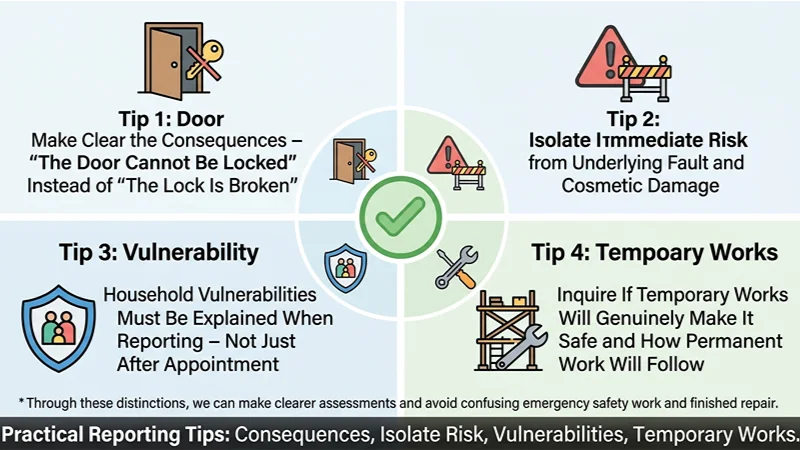
- Make clear the consequences: “the door cannot be locked”, instead of “the lock is broken”.
- Isolate any immediate risk from underlying fault and cosmetic damage.
- Household vulnerabilities must be explained when reporting not just after appointment.
- Inquire on if the temporary works will genuinely make it safe and how permanent work will follow.
Through these distinctions, we can make clearer assessments and avoid “mistakenly” confusing emergency safety work and finished repair.
Frequently asked questions
What qualifies as an emergency repair with a rental property?
The key factor is whether the problem presents an immediate or serious danger, not just an inconvenience. This is reserved for serious electrical faults, dangerous leaks, and damaged doors or windows. A defect can have a different impact level based on severity, alternatives, and the actors in the dwelling.
Does a landlord need to remedy an emergency within 24 hours?
Under Awaab’s Law, for social housing in England, landlords must investigate potential emergency hazards and make confirmed hazards safe within 24 hours of becoming aware. Not every UK tenancy has the same deadline, and not every repair does either. Making it safe may not require finishing the work, just some of it.
Is a toilet blockage an emergency?
A blockage is considered worse if there is no other toilet available for use or sewage is escaping. When reporting it, mention both points. Usually, sanitation installations are the landlord’s responsibility, but it depends on the actual health risk and the availability of facilities, not just the word “blocked.”
Is mold considered an emergency repair?
An emergency mold scenario is when it poses an immediate and serious threat of harm. Some patches do not meet that. Detail its scope, impacted rooms, and health effects. In sheltered English social housing, emergency mold hazards follow the emergency timetable, not the slower timetable for non-emergency significant hazards.
Can I set up a repair in an emergency and charge my landlord?
Don’t underestimate the reimbursement. Do not ask for anything to be done until you have written permission and advice about your tenancy and circumstances. Having a maintainer on an installation does not determine the funding source for privately arranged work. If you have to, call the safety services; make sure to save proof of contact with the landlord.
How is the job safe if the contractor does not finish it?
Ask for the temporary measure, remaining work, and next appointment to be recorded. Under Awaab’s Law, making safe may precede permanent repairs. If a covered English social home cannot be made safe within the required emergency timeframe, the landlord must secure suitable alternative accommodation at its expense.
Your next action
If you’re deciding what counts as an emergency repair right now, report the danger and household circumstances first; organize evidence afterwards. Keep your repair reference and follow-up commitments together. You can also get a free case review from Housing Repair Solutions.