

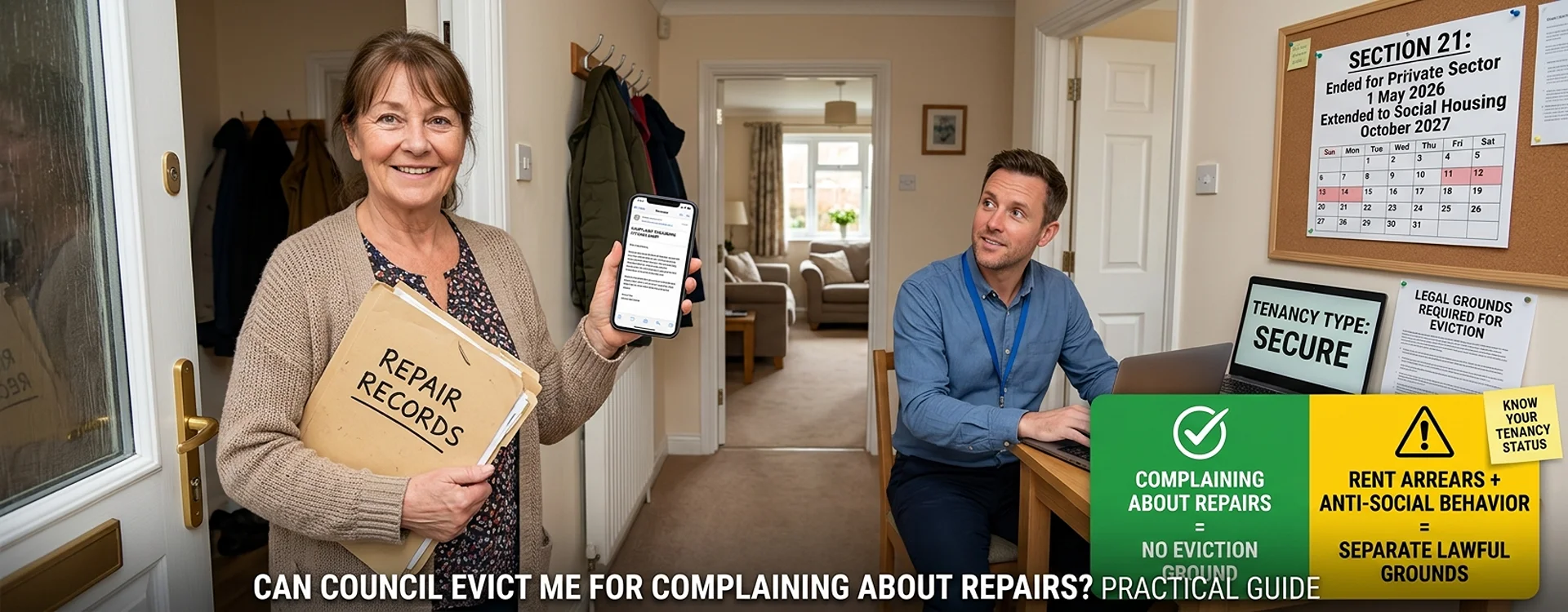
No, the act of complaining about repairs or bringing an actual disrepair claim, in and of itself, is no ground for evicting a secure or assured tenant. Your landlord needs to have a legal ground and follow the legal process. The starter, introductory, or demoted tenancy may give you less protection, so don’t assume it offers the same safeguards. If you’re searching “can council evict me for complaining about repairs,” the key issue is your tenancy, not whether you have sought compensation.
This guidance only applies to England. Wales, Scotland, and Northern Ireland have different housing laws; get nation-specific advice. This is general information, not individual legal advice.
Can council evict me for complaining about repairs?
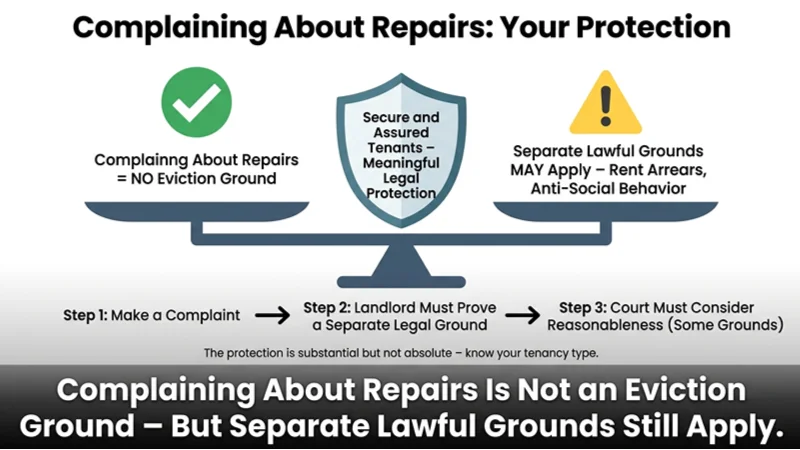
For secure council tenants and most assured housing association tenants, making a complaint does not create a ground for possession. Reporting mold, asking for a repair, or instructing a solicitor to pursue damp and mold compensation claims will not, as a matter of course, put your tenancy at risk in England. That protection is substantial, but it is not absolute. A landlord can still rely on separate lawful grounds, such as rent arrears or anti-social behavior, and for some grounds the court must also decide whether it is reasonable to make a possession order.
Check which tenancy you have.
| Tenancy | Typical landlord | Protection | Important limitation |
|---|---|---|---|
| Secure periodic | Council | Statutory possession grounds are required. | Separate lawful grounds remain possible |
| Assured, not short-term | Housing association | A legal reason is required. | Arrears or other grounds may apply. |
| Flexible | Council | Secure tenancy during a fixed term. | Non-renewal has separate rules. |
| Introductory | Council | Less protection during trial | Seek advice about review rights. |
| Starter assured short hold | Housing association | Less protection | Section 21 may remain available. |
| Demoted | Council or association | Reduced security | Eviction is easier |
These distinctions follow government and shelter guidance. Read the agreement and any later notices: your landlord’s name alone does not establish your tenancy type.
The section 21 change readers must understand.
Section 21 ended for England’s private rented sector on 1 May 2026. However, the government’s timetable extends the relevant reforms to social housing assured tenancies provided by private registered providers from October 2027. Until then, existing rules continue for those tenancies. Consequently, some housing association starter tenancies can still face section 21 proceedings in October 2026. However, ordinary, secure, or non-assured tenants cannot be evicted without grounds.
Protect Your Tenancy With This 3-Step Implementation Plan.
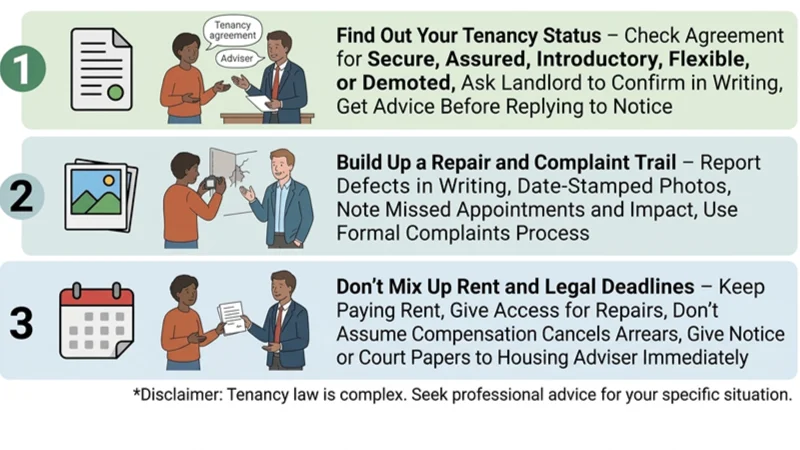
1. Find out your tenancy status.
Find your tenancy agreement and check for “secure,” “assured,” “assured shorthold,” “introductory,” “flexible,” or “demoted.” If it’s not clear, ask your landlord to confirm your status in writing. Don’t assume an old tenancy agreement reflects later changes. Get advice before you reply to a possession notice.
2. Build up a repair and complaint trail
Report defects in writing and keep every reference number. Take date-stamped photos, and note missed appointments and the impact on your household. If repairs stall, use your landlord’s formal complaints process. The right to repair scheme for council tenants sets fixed timescales for certain urgent repairs.
3. Don’t mix up rent and legal deadlines.
Keep paying rent and giving access for agreed repairs. Don’t assume a claim for compensation means your arrears are cancelled or any possession proceedings are suspended. If you get a notice or court papers, give them to a housing adviser without delay. Disrepair may help your counterclaim if you are taken to court, but the outcome depends on the facts of your case.
Practical safeguards worth remembering
Ask for any eviction threat, its reasons and the proposed legal basis in writing.
Keep repair reports separate from formal complaints so both remain traceable.
Don’t treat a solicitor’s letter as proof that court proceedings have started.
Don’t assume a future compensation award has already cleared your rent account.
Landlords should remain aware that the difference between pre-action correspondence and issued proceedings matters. Just because the housing conditions pre-action protocol has begun does not mean they should abandon complaints.
FAQS
Can I be evicted for requesting compensation from my housing association?
An assured tenant cannot be evicted for possession based merely on a genuine compensation claim. Still, your landlord can deal with unrelated matters like unpaid rent and damage. A claim can be costly, so ask your adviser what a claim will cost and what counterclaims are possible.
Are tenants secure and assured of being protected from eviction?
Yes, they have meaningful legal protection. The landlord needs a lawful reason and must follow the possession process. Having immunity is not the same. Eviction can still ensue based on rent arrears, anti-social behavior, and certain other grounds, depending on the tenancy and other facts.
May I cease paying rent until repairs are done?
Don’t withhold rent without seeking expert advice. Rent payment noncompliance can constitute an eviction threat even where the repair complaint has merit. Choose repairs or compensation or an agreed reduction in rent. Any suggested deduction or set-off must be looked at legally, not taken on trust.
What If I Have An Introductory or Starter Tenancy?
Seek guidance before depending on the protections stated for secure and assured tenants. The termination procedure is different for introductory council tenancies and housing association starter tenancies, which are less secure. It’s still okay if repairs are reported, but a threatened eviction requires immediate tenancy-specific assessment more than reassurance.
Are social housing tenants protected by Section 21?
At times, a qualifying assured shorthold social tenancy (including some starter tenancies) can still be made under section 21 by a private registered provider in October 2026. Most tenants in social housing do not have an AST. Be sure to check both your landlord’s status and your tenancy before concluding.
Is it possible to complain during my claim?
Initiation of the housing conditions pre-action protocol does not itself bar a complaint. After a court case has been actually commenced, exclusions can deal with overlap issues. Ensure your lawyers are in coordination so that the complaint and claim are consistent, and identify the specific matters each can deal with.
Here’s what to do if you receive an eviction notice.
Store together the notice, envelope, tenancy agreement, rent statement, and repair records. Get in touch with Shelter, Citizens Advice, or a housing solicitor as soon as possible. Never ignore court papers or assume the repairs dispute defeats the notice. Being asked to leave is not an order to leave.
What to do today
Find your agreement, save your repair evidence, and request written reasons for any threat. Use GOV.UK’s tenancy guide to check your tenancy type, and if your landlord keeps ignoring repairs, Housing Repair Solutions can review your case for free. When it comes to “can council evict me for complaining about repairs,” your tenancy status determines the protection, not the fact that you complained.