
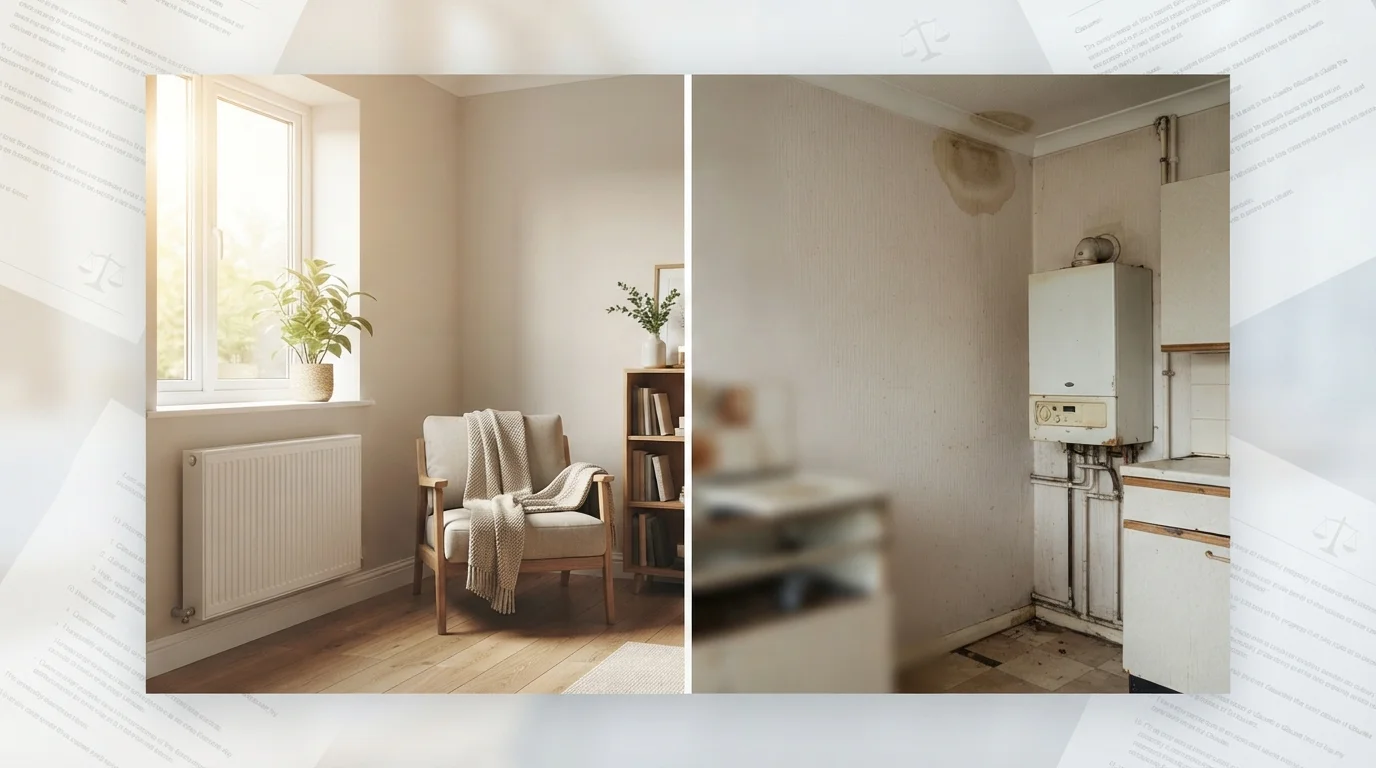
When comparing section 11 vs section 9A, Section 11 of the Landlord and Tenant Act 1985 usually covers repairs to a rented home’s structure, exterior and core installations such as heating, hot water, pipes and electrics. Section 9A is wider. It requires homes in England to be fit for human habitation, including where damp, poor ventilation or a safety hazard makes the property unsuitable to live in.
A repair issue can fall under both sections. That is where confusion often starts.
The short answer
Think of Section 11 as the landlord’s specific repair duty. Think of Section 9A as the wider safe and habitable home duty.
A broken boiler is the straightforward example. It will usually be a Section 11 issue because the landlord must keep space heating and hot water installations in repair and proper working order. If the lack of heating means the home is dangerously cold or no longer reasonably suitable to occupy, it may also be a Section 9A issue.
The law is not asking tenants to pick one section before reporting a problem. That would be unrealistic. The useful question is simpler: what has gone wrong, how serious is it, and what effect is it having on the home?
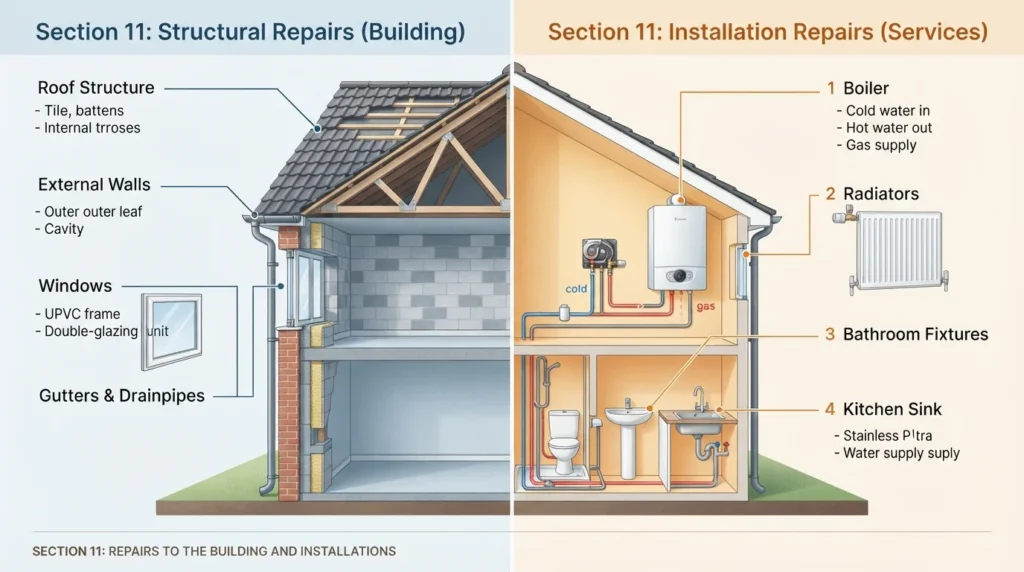
Section 11: repairs to the building and installations
Section 11 applies to most residential tenancies in England where the term is less than seven years. It places implied repairing obligations on private landlords and social landlords, meaning the duties apply even if the tenancy agreement says little about repairs.
Landlords are generally responsible for keeping the following in repair:
So, a leaking roof, cracked external wall, faulty boiler, blocked drain, broken toilet or damaged water pipe will commonly sit under Section 11.
There is an important detail here. Section 11 is not a promise that a property will be modern, attractive or free from every inconvenience. It is about keeping the specified parts of the property in repair and keeping essential installations in proper working order.
For instance, an old kitchen is not automatically a Section 11 breach simply because it looks dated. A kitchen with unsafe electrical wiring, no working water supply or a serious drainage problem is another matter entirely.
Section 9A: fitness for human habitation
Section 9A was inserted into the Landlord and Tenant Act 1985 by the Homes Fitness for Human Habitation Act 2018. It applies to qualifying homes in England and requires the landlord to ensure that the property is fit for human habitation when the tenancy begins and remains fit throughout the tenancy.
That sounds broad because it is.
The legal test looks at whether the home is so defective that it is not reasonably suitable for occupation in its current condition. Relevant issues include repair, stability, damp, ventilation, natural lighting, water supply, drainage, sanitation, cooking facilities and prescribed hazards under housing legislation.
Some Section 9A problems are repair issues. Others are not.
Poor ventilation is a good example. If a bathroom has no effective extraction, moisture repeatedly builds up and mould develops, the answer may require more than patching and repainting. The underlying issue could be ventilation, building design, thermal performance or water ingress. Section 9A gives the wider legal framework for addressing the effect on habitability.
Section 11 vs Section 9A at a glance
The most common mistake is treating Section 9A as a replacement for Section 11. It is not. The two duties sit alongside each other.
Why the distinction matters in practice
A landlord may respond to a damp complaint by asking whether the tenant is drying clothes indoors or opening windows. Sometimes lifestyle and condensation do contribute. But that does not end the enquiry.
What often gets missed is the condition of the property itself. Is there a leak? Is the extractor fan working? Are windows closing properly? Is insulation inadequate? Is there sufficient heating? Does the mould return quickly after cleaning? These details help show whether the issue is a repair matter, a fitness matter, or both.
For social housing tenants, the Awaab’s Law phases may also be relevant when damp, mould or other hazards are reported.
The same point applies to a boiler. A contractor might restore hot water quickly, which is essential, but an investigation may still be needed if the failure is recurring, the system is unsafe or the home remains too cold to occupy reasonably.
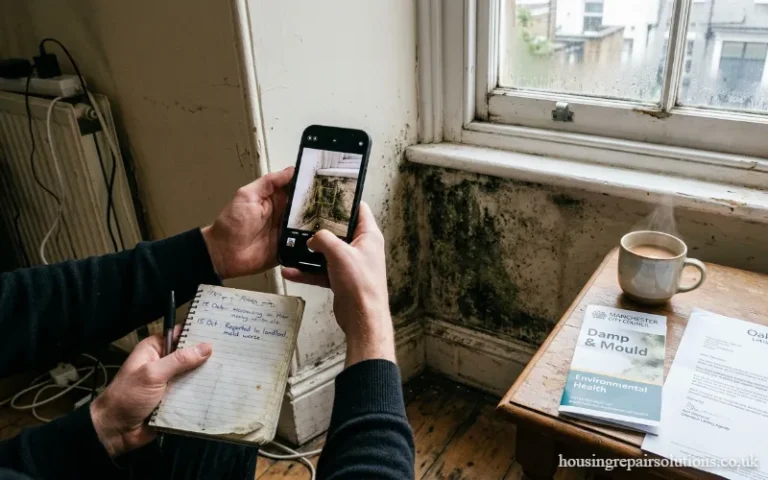
A sensible report should describe the effect, not just name the defect. Instead of writing “there is mould,” explain where it is, when it appeared, whether it is spreading, whether a child or adult has breathing difficulties, and whether ventilation or heating is working.
What tenants should do first
You do not need to quote legislation perfectly in your first message. Clear evidence is more useful.
Written notice matters because a landlord will often need to know about a defect before they can reasonably be expected to put it right. There can be exceptions, especially for common parts or where the landlord already knew, but reporting promptly avoids an unnecessary argument about when notice was given.
Do not stop paying rent simply because repairs have not been completed unless you have received specialist legal advice. That step can create a separate risk.
Where responsibility can end
Neither Section 11 nor Section 9A makes a landlord responsible for every problem in every circumstance.
Landlords are generally not required to repair damage caused by a tenant’s failure to act in a tenant like manner. They are also not normally obliged to rebuild after destruction caused by events such as a fire, storm or flood, although insurance, tenancy terms and other legal duties may still be relevant.
Tenant damage is not always obvious, though. A landlord should not simply label an issue “condensation” or “tenant lifestyle” without checking whether the building, heating, ventilation or plumbing has contributed.
Support with repair disputes
If you are dealing with unresolved damp, mould, leaks, heating failures or structural disrepair in [Service Area], [Service/Business Name] can help you organise the evidence, understand the likely legal basis of the issue and take the next sensible step. You may also wish to read our guides to [reporting a landlord repair problem] and [dealing with damp and mould in a rented home].
The central point is straightforward. Use Section 11 when the issue involves the property’s structure, exterior or essential installations. Use Section 9A when the wider condition of the home may make it unsuitable to live in. In many serious cases, especially damp, mould, cold and water damage, both will matter. Housing Repair Solutions supports tenants with unresolved housing disrepair.

Frequently asked questions
What is the difference between Section 11 and Section 9A?
Section 11 covers defined repair duties, including the building structure, exterior, plumbing, sanitation, heating and hot water. Section 9A is broader and requires the property to be fit for human habitation. A defect can breach both sections if it is disrepair and makes the home unsafe or unsuitable to occupy.
Does Section 11 cover damp and mould?
Section 11 can cover damp and mould where they are caused by disrepair, such as a leaking roof, defective gutter, burst pipe or damaged window. It may not cover every condensation problem on its own. Section 9A may still apply if damp and mould make the home unfit for habitation.
Can a landlord be responsible under both sections?
Yes. A leaking roof is a simple example. The roof repair is likely covered by Section 11 because it concerns the structure. If ongoing water penetration causes serious damp, mould or unsafe conditions, the same issue may also engage Section 9A.
Does Section 9A apply to private landlords?
Yes. Section 9A applies to qualifying residential lettings in England, including many private rented homes and social housing tenancies. It generally applies where the property is let wholly or mainly for human habitation and the tenancy falls within the statutory scope.
Do I need to tell my landlord about the repair first?
Usually, yes. Report the issue promptly and in writing, then keep a copy. Landlords will often need notice before they are legally responsible for a repair delay. Clear reporting also creates a timeline, which can be important if the issue later becomes a formal complaint or dispute.
What repairs are tenants responsible for?
Tenants are usually responsible for using the property in a tenant like manner, keeping it reasonably clean and avoiding damage caused by negligence or misuse. They are not normally responsible for the landlord’s core obligations relating to structural repairs, plumbing, electrics, heating or sanitation.