
A small black speck on the bathroom ceiling. A faint earthy smell in the spare bedroom. A patch of wallpaper that suddenly feels cold and clammy to the touch. These are the subtle signs of black mould in house that many tenants and homeowners overlook, dismissing them as condensation or dirt. Yet catching mould in its earliest stages can prevent a serious infestation that damages both your health and your home.
In our decades of investigating damp across the UK, from Victorian terrace houses in Manchester to modern flats in London, we have learned that mould rarely appears overnight. It whispers before it shouts. This guide will teach you exactly what to look for, what to smell for, and what questions to ask yourself before the problem escalates.
The Early Warning Signals: A Quick Summary
| Sign | What You Notice | Why It Matters |
|---|---|---|
| Musty, earthy odour | Damp soil-like smell, stronger in certain rooms or cupboards | Gases from active mould growth, even if invisible |
| Black speckled dots on walls or ceilings | Tiny dark specks, often in corners or near windows | Early-stage mould colonies before they merge into patches |
| Cold, damp patches on walls | Areas that feel cooler and damper than surrounding plaster | Condensation point where moisture feeds mould |
| Persistent condensation on windows | Water beading on the inside of glass, especially in the morning | High indoor humidity driving mould growth |
| Discolouration on paint or wallpaper | Yellow, grey, or faint green staining, often along edges | Water damage that will encourage mould to bloom |
| Health symptoms that ease away from home | Coughing, sneezing, itchy eyes that improve when you go out | Your body reacting to airborne mould spores |
| Peeling or bubbling paint | Paint lifting away from the surface, sometimes with a soft texture beneath | Moisture trapped beneath the paint layer |
These signs of black mould in house environments are often visible months before a full-blown mould problem develops. Pay attention to them, and you can intervene early.
The Smell: A Warning You Cannot Ignore
Before you ever see a single black spot, you will almost certainly smell it. Actively growing mould releases microbial volatile organic compounds, and the resulting odour is unmistakable: stale, musty, damp, like old wet cardboard or rotting wood. If you walk into a room and detect this smell, even faintly, there is mould somewhere, probably hidden behind furniture, under carpet, or inside a wall cavity.
The smell is often stronger after rain or on humid days, and it rarely goes away on its own. Opening a window may temporarily mask it, but unless the source is removed, it returns. Tracking down the exact source of a musty smell is one of the most reliable ways to identify hidden mould.
Early Stages of Mould on Walls
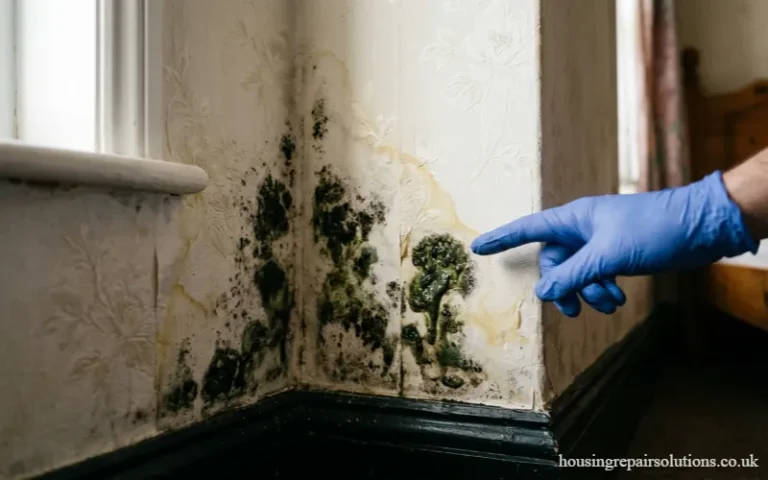
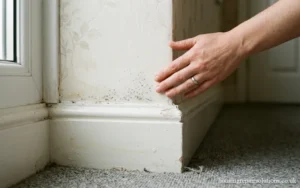
One of the most common questions we hear is how to spot mould when it is just beginning. In the early stages, mould on walls may appear as tiny black or dark green speckles, often clustered in the corners of a room, along the top edge of a skirting board, or around a window frame. The affected area may feel slightly damp to the touch. If you wipe the specks with a dry cloth, they may smear slightly, and the surface underneath may be soft or chalky.
At this stage, the mould has not yet penetrated deeply into the plaster, and quick action can prevent it from spreading. If you see early-stage mould on walls, cleaning it with a mould-specific spray is possible, but only if you also address the underlying moisture source. Left untreated, those tiny specks will merge, darken, and spread into the unmistakable slimy black patches that are much harder to eradicate.
Where Black Mould Hides in UK Homes
Knowing where to look is half the battle. In British properties, the following locations are the most common hiding spots:
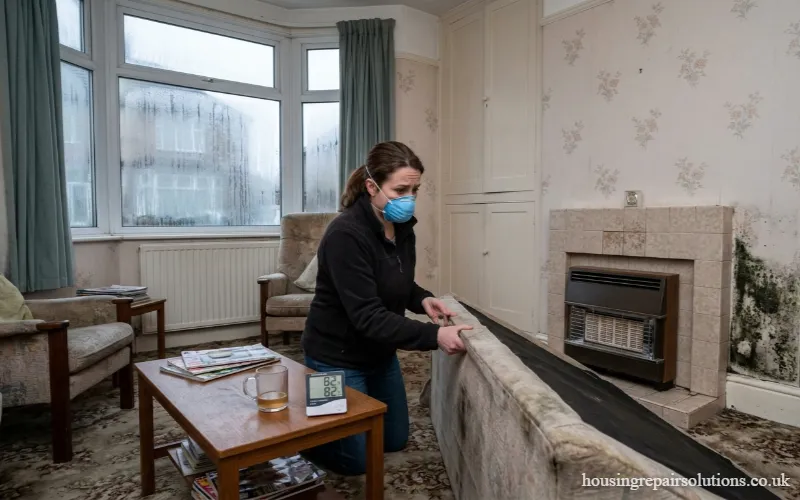
- Behind large furniture placed against external walls, especially sofas and wardrobes
- On bathroom ceilings and around extractor fans
- In the corners of bedrooms where outside walls meet
- Around window frames and on window sills where condensation collects
- Under kitchen sinks where a slow leak may go unnoticed
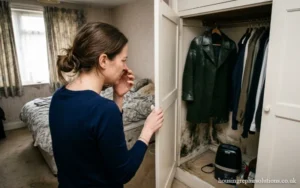
- Inside built-in wardrobes on external walls
- In basements, cellars, and under-stair cupboards
- On loft hatches and in eaves with poor insulation
Pull furniture away from walls once a season, open cupboard doors, and check behind curtains. A torch is your best tool. If you find black spots, take a photograph and note the date. Our guide on black mould symptoms in UK homes explains the health risks in detail and what to do if you or your family are already feeling unwell.
Airborne Mould: Spores You Cannot See
Mould reproduces by releasing microscopic spores into the air. Even if you cannot see a single patch of mould, mould spores in the air can be present in dangerous concentrations, particularly in homes with hidden damp problems. These spores are what you breathe in, and they are the reason you may feel unwell even in a room that looks clean.
A persistent musty smell combined with unexplained respiratory symptoms is a strong indicator that airborne mould spores are present. Professional air sampling can measure the spore count, but for most households, the smell and the health effects are enough to warrant a thorough investigation. For a deeper look at the illness mould can cause, our article on symptoms of mould exposure covers the full range of physical and neurological effects.
The Health Warning Signs
Your body can be one of the most sensitive detectors of mould. If you regularly experience a runny nose, coughing, sneezing, sore throat, or itchy eyes, and these symptoms noticeably improve when you leave the house only to return when you come home, mould is a likely trigger. In children, watch for increased asthma attacks, night-time coughing, and frequent chest infections. For a detailed explanation of how mould toxins affect the body, see our guide to mould toxicity and mycotoxins.
Condensation: The Root Cause
Condensation is the leading cause of black mould in UK housing. When warm, moisture-laden air from cooking, showering, or drying laundry meets a cold surface such as a window, external wall, or poorly insulated corner, water droplets form. These droplets soak into paint, plaster, and wallpaper, creating the damp environment mould needs to thrive.
If you regularly wipe water from your windowsills in the morning, your indoor humidity is too high. A simple hygrometer will confirm it: relative humidity consistently above 60 percent is mould’s sweet spot. Addressing condensation by improving ventilation, using extractor fans, and avoiding drying clothes indoors without opening a window is essential.
What to Do If You Spot the Signs
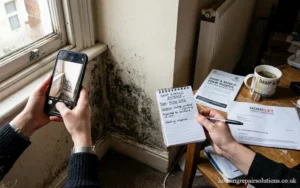
If you have identified one or more signs of black mould in house conditions, act immediately. First, document everything with photographs and notes. If you rent, formally notify your landlord in writing. Under the Homes (Fitness for Human Habitation) Act 2018, your landlord is legally required to ensure the property is free from damp and mould that could harm your health. Our guide to landlord mould responsibility and tenants’ rights explains these obligations in full.
For small areas of surface mould on non-porous surfaces, careful cleaning may be possible, but always wear a mask, gloves, and goggles. However, cleaning will not solve the underlying damp. For larger infestations, or if you suspect mould is hidden within walls or under floors, professional remediation is the safest route. You can learn more about this in our guide on how to remove mould from walls.
Preventing Mould After Detection
Once mould has been treated and the moisture source addressed, prevention is key. Improve ventilation, use dehumidifiers in problem areas, keep furniture slightly away from external walls to allow airflow, and maintain a consistent indoor temperature of at least 15 degrees Celsius, even in unused rooms. Regular inspections, particularly in autumn and winter when condensation is at its worst, will catch any recurrence early. Our article on how to fix a damp house offers practical, long-term strategies.
Frequently Asked Questions