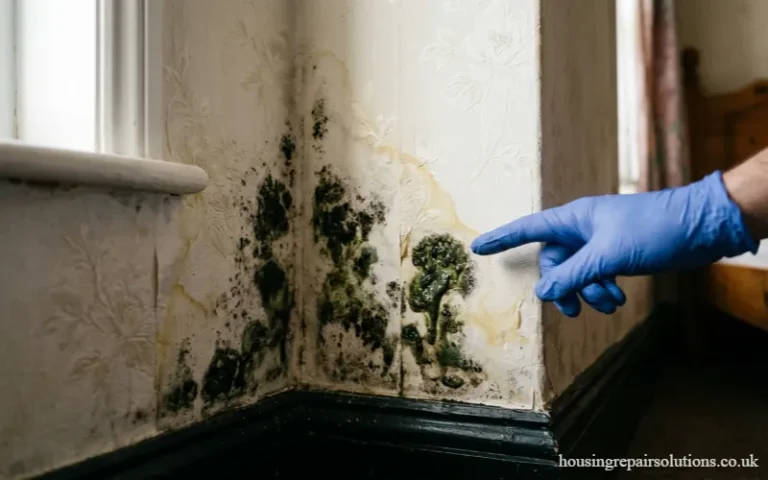

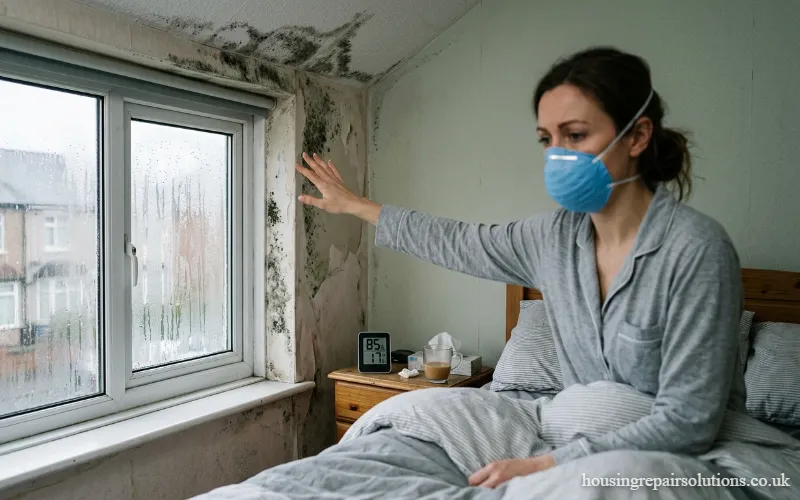
If you have ever spotted fuzzy black patches creeping across a bathroom ceiling or clustering around a bedroom window frame, you have almost certainly wondered whether it is making you or your family unwell. In our experience surveying thousands of British properties, from Victorian terraces in Manchester to post-war council blocks in Glasgow, black mould symptoms are consistently one of the most under-reported yet widespread health concerns in UK housing.
Black mould (the species most often referred to in UK media is Stachybotrys chartarum) releases microscopic spores into the air you breathe every day. The NHS confirms that inhaling or touching these spores can cause an allergic reaction such as sneezing, a runny nose, red eyes, and a skin rash. More seriously, mould can trigger asthma attacks and cause coughing, wheezing, and breathlessness.

How Quickly Do Black Mould Symptoms Appear?
One of the most common questions we hear from tenants and homeowners is how long it takes to feel unwell after exposure to black mould. According to medical experts, a person can feel the effects of mould exposure in as little as two hours, with symptoms lasting one to three days. For those living with mould on a daily basis, the impact is cumulative: persistent shortness of breath, frequent coughing, and chronic sore throats can become the norm.
The respiratory effects of damp and mould can cause serious illness and, in the most severe cases, death. The tragic case of two-year-old Awaab Ishak, who died in 2020 following prolonged exposure to mould in his Rochdale home, brought this into sharp national focus and ultimately led to the creation of Awaab’s Law.
Recognising the Most Common Black Mould Symptoms
| Symptom | Description | Typical Onset |
|---|---|---|
| Persistent coughing and wheezing | Airway irritation from inhaled spores; worse indoors | Within hours to days |
| Sinus congestion and sneezing | Nasal inflammation mimicking hay fever; year-round | Gradual |
| Red, itchy, or watery eyes | Allergic conjunctivitis triggered by airborne spores | Within hours |
| Skin rashes and eczema flare-ups | Contact or airborne irritation | Days to weeks |
| Shortness of breath | Especially in those with asthma or COPD | Can be acute |
| Fatigue and brain fog | Neurological impact of mycotoxin exposure | Weeks to months |
| Recurrent chest infections | Immune suppression from prolonged exposure | Months |
| Headaches | Mycotoxin-related neuroinflammation | Variable |
Many of these symptoms improve noticeably when you leave the affected property, which can be a key diagnostic clue. If your cough clears up on holiday and returns within hours of coming home, black mould is a strong suspect.
Who Is Most at Risk from Black Mould?
The UK government guidance is clear: everyone is vulnerable to the health impacts of damp and mould, but people with certain health conditions, children, and older adults are at greater risk of more severe health impacts. Specifically:
-
Babies and young children (whose lungs are still developing)
-
People with existing respiratory conditions (asthma, COPD)
-
Those with weakened immune systems
-
Individuals with eczema or other skin conditions
Children living in damp homes are up to three times more likely to have breathing problems, according to NHS data.
Is Black Mould in Your Home Dangerous?
Yes. Black mould is classified as a Category 1 hazard under the Housing Health and Safety Rating System (HHSRS), the most serious classification. This means local authorities in England and Wales have a legal duty to take enforcement action where Category 1 damp and mould hazards are identified.
On average, 3.6% of private rented sector properties were estimated to have Category 1 damp and mould hazards, according to government surveys. That translates to tens of thousands of homes across the UK where occupants are living with dangerous levels of mould.
What the Law Says: Landlord Responsibilities for Black Mould
If you are a tenant in England, your landlord has clear legal obligations to address black mould. These duties come from multiple pieces of legislation:
-
Landlord and Tenant Act 1985 (Section 11): Requires landlords to keep in repair the structure and exterior of the dwelling.
-
Homes (Fitness for Human Habitation) Act 2018: Requires properties to be fit for habitation at the start and throughout the tenancy.
-
Housing Act 2004 (HHSRS): Classifies damp and mould as a Category 1 hazard requiring enforcement action.
Crucially, Awaab’s Law, which came into force for social housing landlords in England, now imposes legally binding timescales: emergency hazards must be investigated within 24 hours, significant damp and mould must be investigated within 10 working days, and properties must be made safe within five working days.
For private tenants, while Awaab’s Law does not yet apply directly, the existing legal framework still requires landlords to act. We have seen successful housing disrepair claims where tenants received compensation and repairs after landlords ignored black mould symptoms and their underlying causes.
Can You Sue Your Landlord for Black Mould?
Yes. Tenants can bring housing disrepair claims where a landlord has failed to address damp and mould that is caused by structural disrepair, leaking pipes, inadequate ventilation, or building deficiencies. Compensation may cover:
-
Personal injury (respiratory illness, skin conditions, mental distress)
-
Damage to belongings (clothing, furniture)
-
Inconvenience and loss of enjoyment of your home
-
Rent reduction for the period the property was unfit
If you have reported black mould to your landlord and received no adequate response, document everything: photographs with dates, GP records of symptoms, correspondence with your landlord or letting agent, and any council environmental health reports.
When to See a Doctor
Seek medical advice promptly if you experience:
-
Persistent cough or wheeze that worsens at home
-
Asthma symptoms that are harder to control
-
Recurrent chest infections
-
Unexplained skin rashes
-
Your child has breathing difficulties or persistent coughing
GP records are also valuable evidence if you later pursue a housing disrepair claim. Tell your doctor explicitly that you suspect mould in your property may be contributing.
The Mental Health Impact
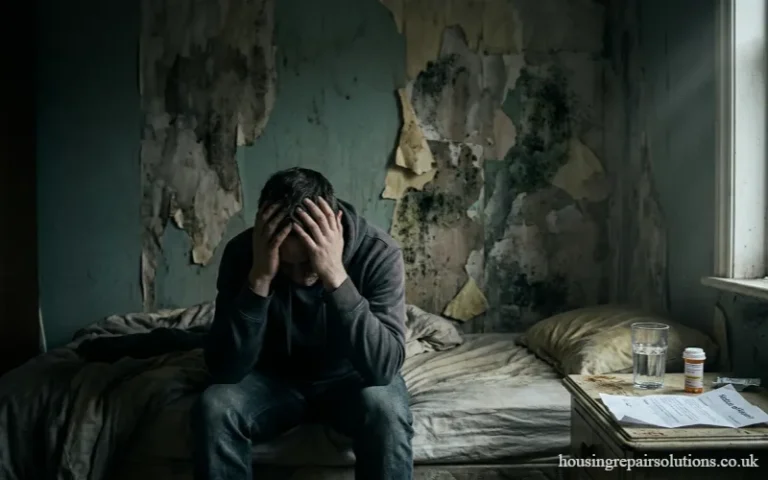
Beyond the physical symptoms, living with black mould takes a psychological toll. Government guidance acknowledges that damp and mould can affect tenants’ mental health due to worries about health impacts, unpleasant living conditions, and destruction of property and belongings. In our work with tenants across the UK, we regularly encounter anxiety, stress, and feelings of hopelessness linked directly to unresolved damp and mould in their homes.
What About Mycotoxins?
Certain mould species, including Stachybotrys chartarum, produce toxic compounds called mycotoxins. Prolonged inhalation of mycotoxins has been linked to neurological symptoms including brain fog, difficulty concentrating, dizziness, mood swings, and chronic fatigue. While the scientific debate continues on the precise clinical significance of mycotoxin exposure in domestic settings, the precautionary principle is clear: no one should be living with significant black mould in their home.
Frequently Asked Questions
Read Also:
- https://housingrepairsolutions.co.uk/plumbing-repairs/
- https://housingrepairsolutions.co.uk/electrical-repairs-and-safety/
- https://housingrepairsolutions.co.uk/boiler-repair-and-servicing/
- https://housingrepairsolutions.co.uk/roof-and-gutter-repairs/
- https://housingrepairsolutions.co.uk/kitchen-and-bathroom-refurbishments/
- https://housingrepairsolutions.co.uk/gas-safety-and-carbon-monoxide/