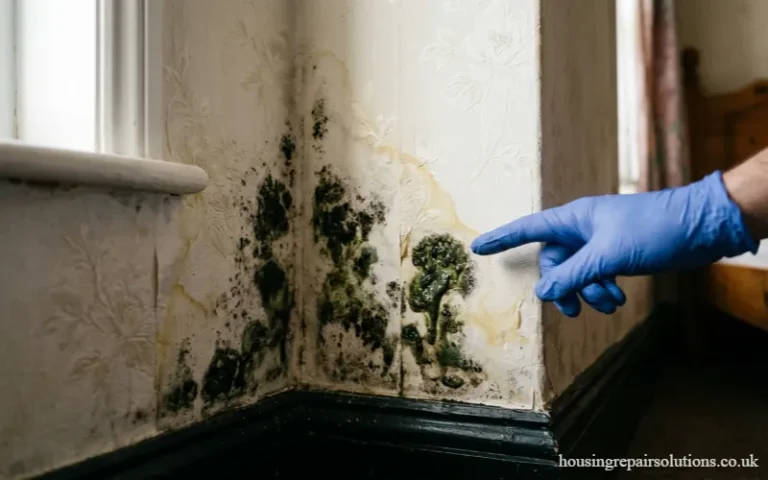

Many tenants and homeowners across the UK share the same niggling worry: a strange smell in the hallway, a patch of discolouration behind the sofa, or a persistent cough that only bothers them at home. Knowing how to tell if you have mould in your house early can save your health and your property. Mould is often hidden until it has become a serious problem, and by the time you see a big black patch, the infestation may be well established.
In our work across thousands of British homes, from Glasgow tenements to London flats, we have learned that mould detection is part observation, part investigation, and part knowing your property’s weak spots. This guide will walk you through every sign you should look for, from obvious visual clues to the subtle sensory hints that many people miss.
The Ultimate Mould Detection Checklist
| Sign | What to Look For | Typical Location |
|---|---|---|
| Visible black or green spots | Clusters of dark spots, often slimy or sooty, spreading along walls or ceilings | Window reveals, external walls, bathroom ceilings, behind furniture |
| Musty, earthy smell | A persistent damp, stale odour like wet soil or rotting wood, often stronger in certain rooms | Cupboards, under stairs, basements, poorly ventilated rooms |
| Discolouration on walls or ceilings | Yellowish, brown, or grey water stains, often with blurred edges | Below leaking pipes, around chimney breasts, top-floor ceilings |
| Peeling or bubbling paint | Paint lifting away from the surface, often with a soft or crumbly texture underneath | Bathroom walls, kitchen ceilings, around windows |
| Condensation on windows | Water droplets running down the inside of window panes, especially in the morning | Bedroom windows, living room bay windows, kitchen glass |
| Damp, cold patches on walls | Areas that feel colder and damper to the touch than the surrounding wall | External walls, corners of rooms, behind wardrobes |
| Health symptoms that improve when you leave | Coughing, sneezing, itchy eyes, or asthma symptoms that fade when away from home | Anywhere in the property |
Even one or two of these indicators warrant a closer look. Together, they paint a picture of a property with a moisture problem that could be feeding black mould.
The Musty Smell: Your First Warning
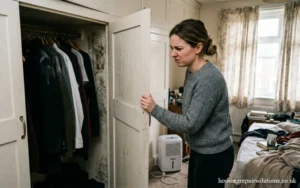
One of the earliest and most reliable signs of black mould in house settings is something you sense before you see it. A musty, earthy smell, similar to damp soil or wet cardboard, is caused by microbial volatile organic compounds released by actively growing mould. This odour is often stronger in enclosed spaces such as cupboards, wardrobes, and under-stair storage, and it tends to worsen on humid days or after rain.
If you walk into your home and detect that stale damp smell, do not ignore it. Even if you cannot see any mould, the odour means it is there somewhere, possibly behind furniture, under carpets, or inside wall cavities.
Where to Look in a British Home
Mould favours cold, damp, poorly ventilated spaces. In UK properties, the following spots are the most common hiding places:
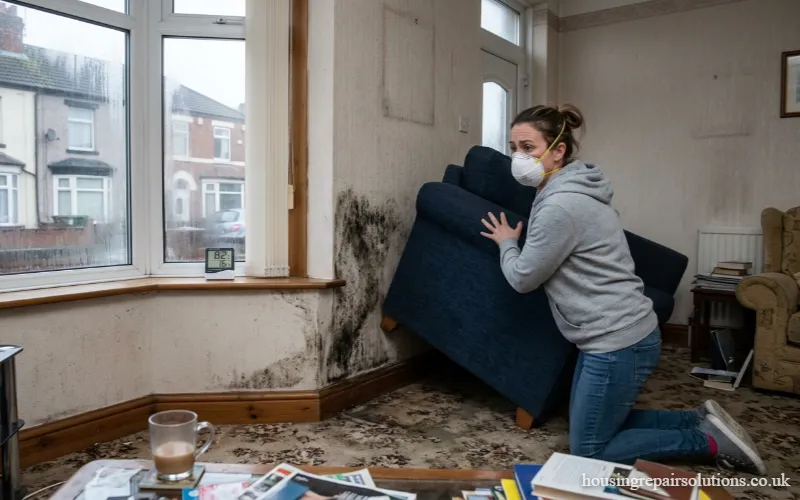
- Behind furniture placed against external walls. Sofas, wardrobes, and beds pushed tightly against cold walls restrict airflow and create perfect conditions for hidden mould.
- Window reveals and frames. Condensation on single-glazed or poorly insulated windows drips down and soaks into the surrounding plaster.
- Bathroom ceilings and around extractor fans. Steam from showers, combined with inadequate ventilation, leads to rapid mould growth on painted surfaces and grout.
- Kitchen walls near the hob or kettle. Cooking steam without proper extraction can condense on cold walls and feed mould.
- Under sinks and behind washing machines. Undetected slow leaks create perpetually damp areas that are rarely seen.
- Loft hatches and eaves. Poor loft insulation or blocked ventilation can cause condensation to form on the cold hatch and surrounding timber.
- Basements and cellars. In older UK homes, rising damp through solid floors and walls creates an environment mould thrives in.
Pull furniture away from walls, lift rugs, open cupboard doors, and use a torch to inspect dark corners. You are looking for black mould patches, often slimy or powdery, but also for grey, brown, green, or white fungal growths. For a detailed look at the health implications of what you might find, our guide on black mould symptoms in UK homes is essential reading.

The Health Clue: Symptoms That Track Your Location
Your body can be an early warning system. If you or a family member experiences coughing, sneezing, a runny nose, irritated eyes, or worsening asthma that improves when you leave the house and returns soon after you come back, mould is a strong suspect. Children, the elderly, and those with respiratory conditions are often the first to show signs. Record symptoms in a diary and note whether they correlate with time spent at home. If you already know the warning signs, our article on symptoms of mould exposure can help you connect the dots.
Checking for Condensation and Humidity
Condensation is the single biggest cause of mould in UK homes. If you regularly wake up to streaming windows, puddles of water on the windowsill, or moisture on the walls, your indoor humidity is too high. A simple digital hygrometer costs a few pounds and will tell you exactly what you are dealing with. Relative humidity consistently above 60 percent creates ideal conditions for mould growth.
Drying clothes indoors on radiators, showering without an extractor fan, and cooking without opening a window are common British habits that dump litres of moisture into the air every day. Addressing these sources of humidity is often the first step in controlling mould.
Visible Mould: What It Looks Like
Black mould (Stachybotrys chartarum) is the type most feared, and understandably so. It appears as dark greenish-black slimy patches, often spreading in a circular pattern. It may have a slightly shiny or wet surface when active, turning dry and powdery when older.
But not all mould is black. You may see:
- Greenish-grey powdery mould (often Aspergillus or Penicillium)
- White fluffy or crystalline mould on walls or furniture
- Brown or yellow patches on ceilings from water leaks
- Pink or orange slime in bathrooms (often a bacterial film rather than mould, but still a sign of excess moisture)
Any discolouration that appears gradually and does not simply wipe away as ordinary dust is worth investigating.
Hidden Mould: When You Cannot See It
A significant proportion of mould problems are invisible. They lurk behind wallpaper, under floorboards, inside partition walls, and within HVAC systems. Signs that you may have hidden mould include:
- A persistent musty smell with no visible source
- Unexplained health symptoms that worsen at home
- Known water damage history (a past leak, flood, or roof problem)
- Warped or discoloured skirting boards
- Damp readings on a moisture meter
If you suspect hidden mould but cannot find it, a professional damp surveyor or mould inspector may be needed.
When to Call a Professional
You can investigate the obvious yourself, but there are times when professional help is essential. Call a damp specialist or mould remediation company if:
- The mould covers an area larger than one square metre
- You suspect mould is growing inside wall cavities or under floors
- There is a persistent musty smell you cannot locate
- You or a family member has a diagnosed respiratory condition
- The mould returns quickly after cleaning
Professionals can deploy moisture meters, borescopes, and air sampling to map the full extent of the problem without unnecessary destruction of your home.
Tenant Rights: Making Your Landlord Act
If you rent, your landlord is legally responsible for addressing the underlying causes of damp and mould that arise from structural disrepair, leaking pipes, or inadequate ventilation. Under the Homes (Fitness for Human Habitation) Act 2018, the property must be fit to live in throughout your tenancy, and damp and mould that harms your health makes it unfit. Our guide to landlord mould responsibility and tenants’ rights sets out exactly what your landlord must do and what steps to take if they refuse.
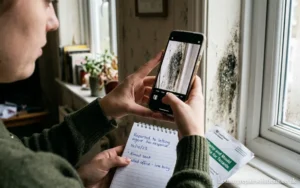
Document everything: photographs, GP letters, correspondence with your landlord, and any environmental health report. If your health has been affected, speak to a solicitor about a housing disrepair claim. Many firms offer no win no fee housing disrepair representation.
Preventing Mould Once You Have Found It
Finding mould is only half the battle. Once you have identified the problem, the source of moisture must be eliminated. This may involve repairing leaks, improving insulation, upgrading ventilation, or simply changing daily habits. For practical mould removal advice, see our step-by-step guide on how to remove mould from walls safely and effectively. And to understand the bigger picture of damp control, our article on how to fix a damp house is worth a careful read.
Frequently Asked Questions