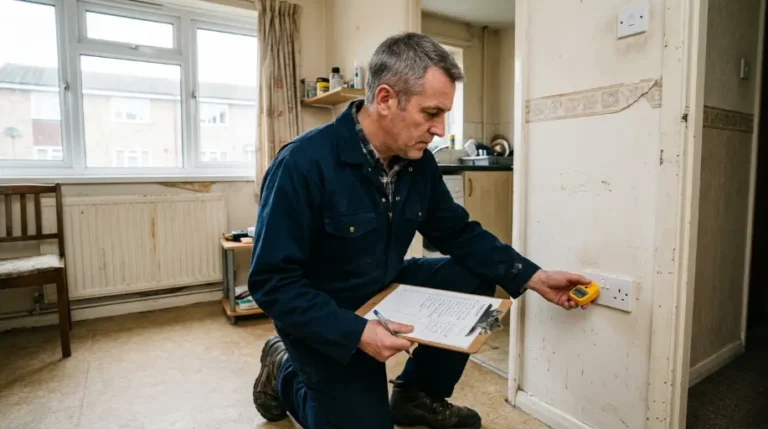

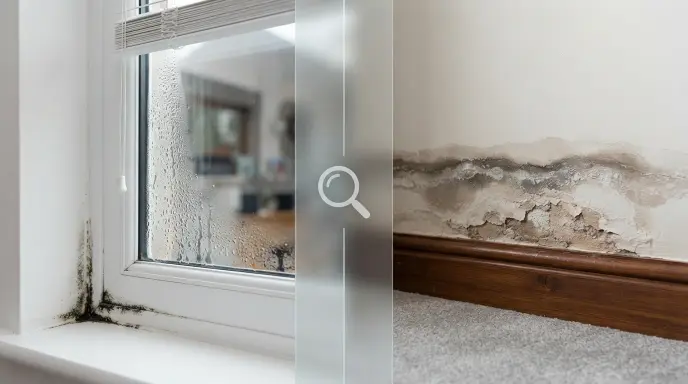
Condensation or damp how to tell the difference comes down to three questions: where does the moisture appear, when does it get worse, and what does the wall feel like underneath? Condensation forms on cold surfaces from indoor moisture, usually in winter and mornings, leaving sound plaster beneath. Structural damp (rising or penetrating) shows year-round with tide marks, salt deposits, or soft crumbling plaster, and points to a building defect that decides whether your claim succeeds.
Getting this diagnosis right matters because it decides who pays. Landlords and insurers treat condensation and structural damp very differently under UK law. If you are unsure about your position, our guide to damp and mould claims explains the key tests used to establish liability.
Why the distinction actually matters
Most people use “damp” as a catch-all word. In building terms, damp is the umbrella category and condensation is just one cause. The other main causes are rising damp from ground moisture and penetrating damp from leaks or defective walls.
This is not just semantics. Under the Homes (Fitness for Human Habitation) Act 2018 and Section 11 of the Landlord and Tenant Act 1985, landlords must fix structural defects and provide adequate ventilation and heating. Tenants must use the property in a tenant-like manner, which includes reasonable ventilation and heating.
If the root cause is structural, the landlord carries the repair bill and you may have grounds for a disrepair claim. If it is purely lifestyle condensation in a sound property, the day-to-day management falls more on you. In practice, pure lifestyle condensation is the exception. Most cases involve some combination of tenant behaviour and inadequate building provision.
Condensation: what it looks like and why it happens
Condensation forms when warm, moisture-laden air from cooking, showering, drying clothes or breathing meets a cold surface and turns back into water. It is by far the most common moisture problem in UK homes.
Typical signs include:
- Water droplets on windows and cold tiles, especially in the morning
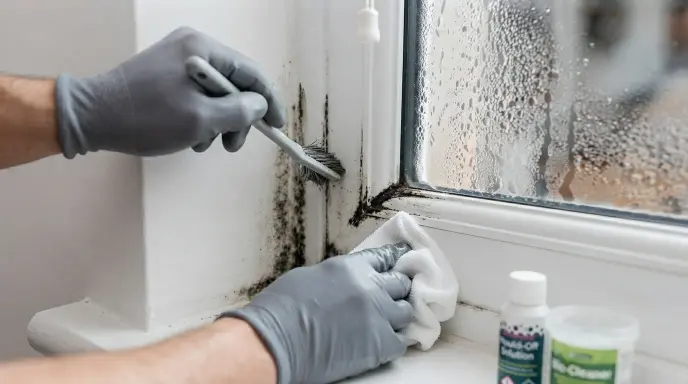
- Black spot mould in corners, on window reveals, and behind furniture against external walls
- Musty smells in poorly ventilated rooms like bathrooms, kitchens and bedrooms
- Worse in winter and overnight, better in summer
- Appears upstairs as readily as down, not limited to ground floors
The pattern matters. Condensation lives on cold surfaces. It clusters in corners, around frames, and where air cannot circulate. If you wipe it, the wall beneath feels sound. The plaster does not crumble.
Rising damp and penetrating damp: the structural tells
Rising damp is groundwater drawn up through brickwork. It shows as a horizontal tide mark low down on internal walls, usually within the bottom metre. You will often see salt deposits, crumbling plaster, and damage near skirtings. It appears on ground-floor external walls and never upstairs.
Penetrating damp comes from outside the building fabric. Think damaged roofs, cracked pointing, failed flashings, or leaking pipes. The damp patch holds a defined shape tied to the defect. It may worsen after heavy rain. Salt staining and soft blown plaster are common.
Unlike condensation, structural damp is present year-round. It does not follow a daily pattern of worse in the morning and better by afternoon.
A simple decision guide you can use today
Before calling anyone, run through these checks. They will save you time and money.
Location and height
- Low down on ground-floor internal walls with a clear upper edge: likely rising damp.
- Anywhere, including upstairs, especially in corners and around windows: likely condensation.
- A specific patch tied to an external wall defect or roof area: likely penetrating damp.
Timing and pattern
- Worse in winter and overnight, better in summer: points to condensation.
- Present all year with no clear daily or seasonal pattern: points to structural damp.
- Worsens after rainfall: think penetrating damp.
What the wall feels like
- Wipe the area. If the surface clears temporarily and the plaster beneath feels firm: condensation.
- If the wall feels persistently cold or wet, and the plaster is soft, crumbly or blown: structural damp.
The foil test
This is a classic field trick. Dry the patch thoroughly. Tape a sheet of kitchen foil firmly over it. Leave it for 24 to 48 hours.
- Water droplets on the room side of the foil: condensation.
- The wall side of the foil feels wet: moisture is coming through the fabric, so rising or penetrating damp.
Salt and tide marks
White powdery salts and a horizontal tide mark near the floor are strong indicators of rising damp. Condensation does not produce these.
Why people get this wrong (and what it costs)
In practice, the most common mistake is treating condensation as rising damp and paying for a damp-proof course that was never needed. Another frequent error is assuming all black mould is tenant fault, when the real driver is inadequate ventilation, missing extractor fans, or a property that is hard to keep warm.
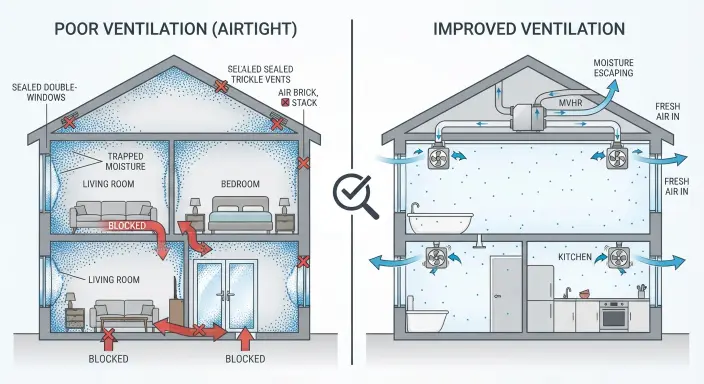
What often gets missed is that double glazing and draught-proofing can make condensation worse if ventilation is not upgraded at the same time. The house becomes tighter, moisture builds up, and cold spots turn into mould magnets.
For tenants, misdiagnosis can sink a claim. Landlords and insurers will seize on the wrong label to argue lifestyle condensation. For homeowners, it means spending thousands on the wrong fix.
When to bring in a specialist
If you see tide marks, salt deposits, or soft crumbling plaster, get a proper survey. A qualified damp and timber surveyor will use moisture meters, thermal imaging, and sometimes dewpoint calculations to separate condensation from structural damp.
For rental properties, document everything from day one. Take dated photos and videos, note when the problem worsens, and report issues in writing. Keep copies. Under current rules, landlords in England must respond to damp and mould reports within 14 days.
If you are in London or the South East and need help establishing the cause, our damp and mould survey team can provide an independent diagnosis and a clear report you can use with your landlord or insurer. [internal: Damp Survey Page][internal: Mould Claims Page]
In some properties, mould grows behind furniture or inside cupboards where it is easy to miss. Our page on hidden mould detection in the UK covers the signs and tools professionals use to find it.
Condensation or damp: quick FAQ
Is all mould the landlord’s responsibility?
Usually yes. In the UK, mould is almost always the landlord’s responsibility unless they can clearly prove it is caused solely by tenant lifestyle in an otherwise sound property. Even then, the burden of proof sits with the landlord.
Can I claim compensation for damp and mould?
Yes, if the damp or mould results from disrepair or makes the home unfit under the Homes (Fitness for Human Habitation) Act. Compensation depends on severity, duration, and impact on health.
How do I prove it is not just condensation from my lifestyle?
Keep a simple timeline with dated photos, note patterns like worse after rain or overnight, and show whether ventilation and heating are adequate. A professional survey report carries significant weight.
What if my landlord says it is my fault?
Ask them to specify the exact defect they allege and provide evidence. If the property lacks adequate ventilation, insulation, or heating capacity, that is a structural issue they must fix. You can escalate via the Housing Ombudsman or county court if needed.
Does the foil test really work?
It is a useful first check but not definitive. Water on the room side points to condensation, wet behind the foil points to structural damp. For claims, pair it with photos, a timeline, and ideally a professional report.
Will home insurance cover damp and mould?
Often no, unless there is a sudden insured event like a burst pipe. Gradual damp, condensation, and mould are typically excluded. Check your policy wording carefully.
Getting the diagnosis right is the difference between a routine ventilation fix and a major structural repair. It also decides whether your claim has legs. Start with the checks above, document everything, and do not let anyone label it lifestyle condensation without proper evidence.
For more on your rights, see the UK government guidance on damp and mould in rented homes and the Homes (Fitness for Human Habitation) Act. You can also find practical support and templates at Housing Repair Solutions.