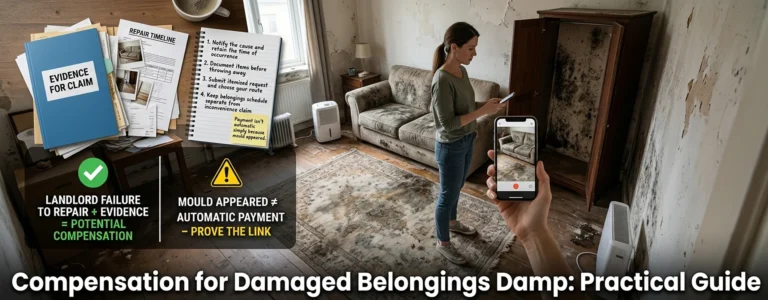


To complain about repairs in England under the council complaint stages, start with stage 1. If you’re unhappy with your landlord’s response, request stage 2, then go to the Housing Ombudsman. Stage 1 responses are due within 10 working days of acknowledgement, and stage 2 responses within 20 working days. Those are deadlines for answering your complaint, not for finishing the repair. This is general information, not legal advice for your situation.
Check which country’s procedure applies
The dates below come from England’s Housing Ombudsman Complaint Handling Code, which became statutory on 1 April 2024. Don’t assume they carry across the UK. In Scotland, unresolved complaints about council landlords go to the Scottish Public Services Ombudsman. In Wales, the Public Services Ombudsman for Wales looks into complaints about repairs by councils or housing associations. For the route and deadlines where you live, check your landlord’s own published process.

Council complaint stages: repairs deadlines at a glance
The Code in England requires two complaint stages. An extra “informal” stage that slows things down isn’t allowed. Someone other than the stage 1 handler also needs to assess stage 2. If your complaint stalls, weigh up the Housing Ombudsman or solicitor route before deciding what to do next.
| Point in the process | What must happen | Deadline | What to check |
|---|---|---|---|
| Stage 1 received | Acknowledge, define and log the complaint | Within 5 working days | Complaint reference and scope |
| Stage 1 acknowledged | Provide a written response | Within 10 working days | Findings, remedy and outstanding actions |
| Stage 1 extension | Explain the reason and give a revised date | Normally no more than 10 additional working days | Longer extensions need a good reason |
| Stage 2 requested | Acknowledge, define and log the escalation | Within 5 working days | Escalation recorded correctly |
| Stage 2 acknowledged | Issue a final written response | Within 20 working days | Findings and Ombudsman referral details |
| Stage 2 extension | Explain the reason and give a revised date | Normally no more than 20 additional working days | Longer extensions need a good reason |
Every time limit and extension above comes from the Complaint Handling Code. When a landlord tells you about an extension, it also has to give you the Ombudsman’s contact details.
A 3-step implementation plan to escalate a repair complaint
If your landlord keeps ignoring a repair, Housing Repair Solutions can tell you within 24 hours whether you have a claim.
1. Use your repair history to write a clear stage 1 complaint
Say what’s still broken, when you told the council and how they’ve let you down. Attach a summary of the repair history. Ask for a review, a documented repair plan and consideration of any losses you can prove. Already unhappy with how an existing repair request was handled? Treat that as a complaint. Don’t just submit another repair request.
2. Request stage 2 without reopening the dispute
Message your landlord and ask them to escalate. Something like “Please escalate the complaint to stage 2. I remain dissatisfied with the stage 1 response” does the job. You don’t have to justify the request, though naming the points they left unanswered helps focus the review. Ask the council to keep its complaint findings separate from the outstanding repair schedule. And don’t agree to restart stage 1 just because the same repair is still waiting.
3. Put together an evidence pack for the Ombudsman
Once the final reply lands, gather both complaint responses, your chronology, key photographs and a clear statement of what you want. Explaining what the landlord got wrong works better than uploading random inbox messages with no context. Refer the complaint within 12 months of the stage 2 response, because late referrals usually aren’t investigated without good reasons. If the council isn’t responding at all, ask the Ombudsman for help. And if the repair is still outstanding after the Ombudsman stage, housing disrepair claims are another option.
Practical tips: keep the complaint and the repair moving
- Track two timelines, not one: complaint responses and repair appointments. A response letter doesn’t mean the repair is finished.
- Your request should spell out the outstanding actions, who’s responsible and by when. After replying, the council needs to keep monitoring those actions.
- Raise contractor failings within the landlord’s complaint. You shouldn’t have to exhaust a separate complaints process for contractors.
- Early on, ask for reasonable adjustments, such as an accessible format or help communicating through a representative.
A Flintshire County Council case, published in Welsh law, shows why this matters. A repair was reported several times, and each report was treated as a separate matter, so earlier issues stayed unresolved. One chronology makes it plain that several job numbers belong to a single continuing problem.

Frequently asked questions
What are the complaint stages for council repairs?
England’s landlord procedure has two stages. Stage 2 is your landlord’s final response, and if you’re still not satisfied you can approach the Housing Ombudsman. Your first call about a repair is normally a service request. Dissatisfaction with how that request was handled can then become a complaint.
How fast will the council respond to my complaint?
Covered landlords in England must acknowledge a complaint within five working days at either stage. The response clock starts at acknowledgement: 10 working days at stage 1 and 20 at stage 2. If the landlord asks for an extension, it should come with an explanation and a revised timescale. The repair itself is still the landlord’s legal obligation, and these timeframes don’t replace it.
How do I escalate my complaint to stage 2?
Your stage 1 letter should set out the escalation route and your complaint reference. Say you’re unhappy with the outcome and want to move to stage 2. It helps to point out which findings are missing, which facts are disputed and whether the remedy is enough. That makes the outstanding issues clear.
Can I contact the Ombudsman without a clear answer from the landlord?
Yes, you can ask the Ombudsman for help when the landlord isn’t giving you one. That differs from the usual investigation route, which normally needs a stage 2 response first. Bring evidence of when you filed your complaint. You don’t need to ask a million questions before seeking the Ombudsman’s help.
Can I complain while the repair is still outstanding?
Definitely. The council has to follow up the service request you raised and deal with your complaint. It should respond once it’s sure of its answer, rather than waiting for every last repair to finish. Outstanding actions still need tracking, and you’re entitled to updates on them.
Can I complain about the contractor?
If a contractor skips appointments, does poor work or won’t communicate, tell the council. Under the Code, landlords must handle third-party complaints through the same two-stage procedure. You should only have to go through one complaints system before approaching the Ombudsman. Quote the contractor’s job references and any appointment confirmations.
Can I ask for compensation?
You can. Beyond just fixing the problem, ask your landlord for financial compensation, an explanation and perhaps an apology. Share your invoices and expense details. A delay doesn’t guarantee a refund, though. Any remedy has to match the failings identified and their impact on you, and it should set the right actions for the future.
Your next step
For ongoing council complaint repairs, work out which stage you’re at, note the relevant deadline and send one clear written request today. For official guidance on the Complaint Handling Code and Ombudsman escalation, see GOV.UK council complaints.