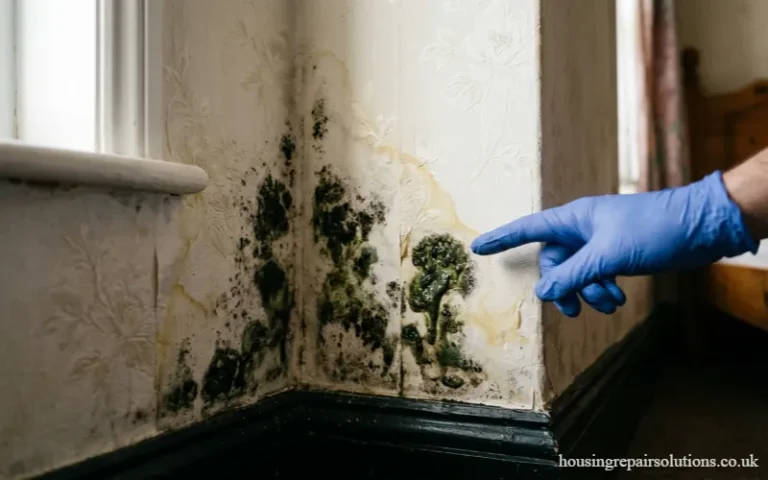

Every breath you take inside a damp home contains more than just air. It carries microscopic particles, fungal fragments, and mould spores in the air that you cannot see but which your body certainly feels. These spores, released by mould colonies growing on walls, ceilings, and hidden cavities, float freely through every room. They settle on your pillow, drift into your lungs, and, for many tenants across the UK, become the invisible trigger behind a persistent cough that will not shift.
The quality of the air inside your home matters. In fact, indoor air can be up to five times more polluted than outdoor air, and airborne mould spores are a major contributor. In our work surveying damp British properties from Bristol to Glasgow, we have measured spore concentrations that would alarm any respiratory specialist. Understanding what these spores are, how they spread, and what you can do about them gives you the power to protect your family.
Airborne Mould Spores: Key Facts at a Glance

| Fact | Detail |
|---|---|
| Spore size | Typically 2 to 20 microns, small enough to penetrate deep into the lungs |
| How they spread | Air currents, convection from radiators, opening doors, even walking across a room |
| Peak concentrations | Winter months, poorly ventilated rooms, after disturbing mouldy materials |
| Health effects | Allergic reactions, asthma attacks, respiratory infections, neurological symptoms from mycotoxins |
| Detection signs | Musty smell, visible mould growth, persistent condensation, health symptoms that improve outdoors |
| Legal context for tenants | Landlords have a duty under the Homes (Fitness for Human Habitation) Act 2018 to address damp and mould that affects health |
How Mould Releases Spores into Your Air
Mould reproduces by producing spores, millions of them, which become airborne at the slightest disturbance. A colony growing behind your wardrobe does not stay put. As warm air rises from a radiator, it carries spores upward. When you open a door, the pressure difference pushes them into the hallway. Even the simple act of pulling back a curtain can release a cloud of invisible particles into your breathing zone.
For this reason, the air throughout a mould-affected home is rarely clean. You can have a pristine living room and still inhale a high dose of spores every night because the bedroom ceiling, out of sight, houses an active colony. If you already see visible growth, the mould in house air quality will almost certainly be poor, and the spore count will be highest near the damp source and in areas with poor ventilation.

Health Effects of Breathing Mould Spores
The health risks of inhaling mould spores in the air go far beyond a runny nose. The spores themselves can trigger allergic rhinitis, asthma, and hypersensitivity pneumonitis. However, the real hidden danger comes from mycotoxins, toxic chemicals that attach themselves to the surface of spores and fungal fragments. When you breathe them in, these toxins can damage lung tissue and enter the bloodstream, causing systemic inflammation.
Common short-term symptoms include:
- Coughing, wheezing, and shortness of breath
- Nasal congestion and sinus pressure
- Itchy, red, watery eyes
- Sore throat and hoarseness
- Headaches and fatigue
Long-term exposure to airborne mould spores has been linked to the development of new asthma, chronic sinusitis, and, in some individuals, a debilitating multi-system illness. For a comprehensive look at the full range of effects, our guide on symptoms of mould exposure covers the physical and neurological signs in detail. Children, older adults, and anyone with an existing respiratory condition face the greatest risk, but no one is immune.
Who Is Most Vulnerable?
Infants and toddlers breathe more air relative to their body weight than adults. Their immune systems are still developing, and their lungs are growing rapidly. The tragic case of Awaab Ishak showed the extreme end of this vulnerability: prolonged exposure to mould in a poorly ventilated home led to his death at just two years old.
For the elderly, the risks are also serious. The immune system weakens with age, and pre-existing conditions such as COPD can be dramatically worsened by airborne mould. If you live with a vulnerable person and you suspect poor air quality, act on the signs without delay.
How to Tell If You Have a Mould Spore Problem
Visible mould is the most obvious indicator, but you can also have a serious airborne spore problem without seeing a single patch. The clues include:
- A persistent musty, earthy smell that does not clear with cleaning
- Condensation on windows every morning, especially in bedrooms
- A damp, stuffy feeling in certain rooms, even when the heating is on
- Health symptoms that improve when you step outside or stay away from home
If you can see black mould, the mould in house air quality is already compromised. However, even if you cannot see it, the smell and the health reactions are enough to warrant action. For advice on spotting hidden colonies, our article on identifying black mould explores the visual clues.
How to Reduce Mould Spores in the Air
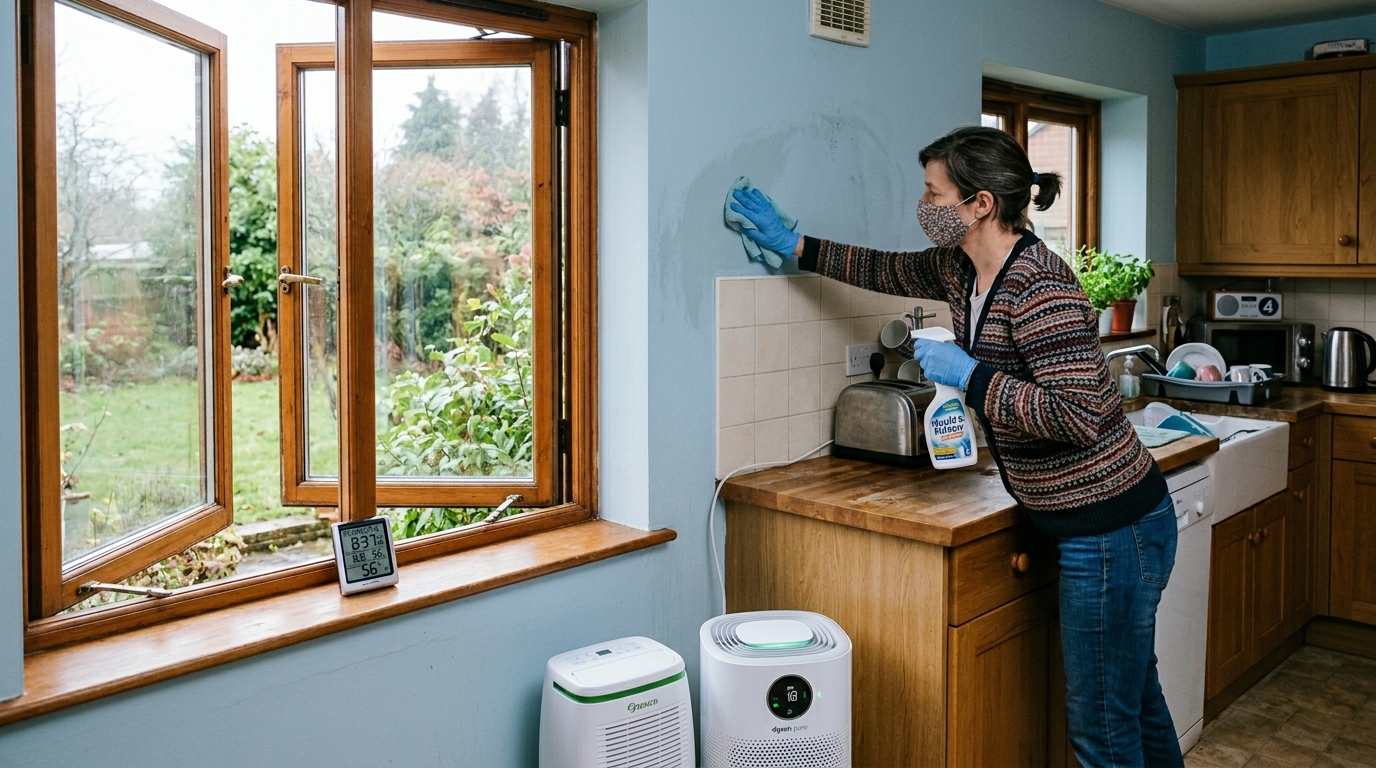
You cannot eliminate mould spores entirely, but you can bring the concentration down to safe levels. The most important step is to remove the source: fix the leak, improve the insulation, and, crucially, control condensation. Ventilate the property daily. Open windows for at least 10 to 15 minutes each morning, especially in bedrooms and the kitchen. Use extractor fans when cooking or showering, and consider installing a positive input ventilation system if condensation persists.
Air purifiers fitted with true HEPA filters can capture a significant proportion of airborne spores, but they are a supplement, not a cure. They will not stop mould growing on your walls. Cleaning surfaces with a specialist mould spray removes spores that have settled, but if you disturb a large colony, wear a mask, gloves, and goggles to avoid inhaling a concentrated burst. For practical cleaning advice, see our guide on removing mould from walls. And if the damp itself is the root cause, our article on fixing a damp house provides long-term solutions.
Landlord Responsibilities for Air Quality
If you rent your home, you have a legal right to air that does not damage your health. The Homes (Fitness for Human Habitation) Act 2018 states that a property must be free from hazards that are prejudicial to health, including damp and mould. Since it is the mould spores in the air that carry the health risk, the landlord’s duty extends to ensuring the property is sufficiently ventilated and free from the moisture problems that feed fungal growth.
Awaab’s Law now mandates that social housing landlords in England investigate and repair significant damp and mould within strict timescales, with emergency hazards requiring a response within 24 hours. For private tenants, the same principles apply: if you report damp and mould and the landlord fails to act, the law is on your side. Our guide on landlord mould responsibilities outlines your rights and the steps to take. If you have suffered illness as a result, you may also be able to claim compensation, which our overview of housing disrepair claims explains.
When to Seek Medical Advice
If you regularly wake with a blocked nose, cough persistently, or find your asthma harder to control when you are at home, book an appointment with your GP. Be explicit: tell them you have visible mould or a damp problem in your home, and ask them to record this in your medical notes. These records can later support a housing disrepair claim if your landlord has been negligent.
Frequently Asked Questions