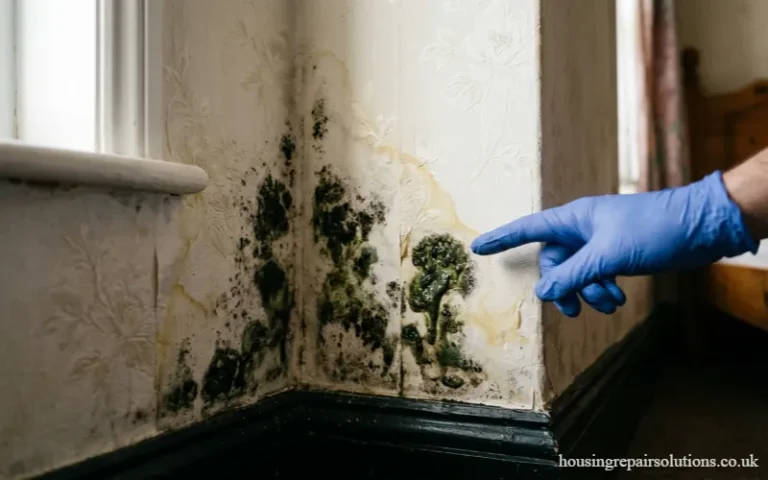

Thousands of UK tenants live with broken heating, leaking roofs, black mould, and structural damage — yet never claim the compensation they are legally entitled to. Most simply do not know how compensation works, what it covers, or how much their specific situation is worth.
This guide answers all of those questions directly. You will find out exactly how courts and solicitors calculate housing disrepair compensation, what the realistic figures look like for different types of disrepair, and — critically — what most tenants overlook that actually reduces their final award.
Quick Reference: Housing Disrepair Compensation Amounts (UK 2026)
| Disrepair Type | Duration | Severity | Typical Compensation Range |
|---|---|---|---|
| Damp and mould | 6 months | Moderate | £1,500 – £4,000 |
| Damp and mould | 1–2 years | Severe, health affected | £5,000 – £15,000+ |
| Broken or no heating | 3–6 months | Severe (winter) | £2,000 – £6,000 |
| Leaking roof or windows | 6–12 months | Moderate | £2,500 – £7,000 |
| Structural defects (subsidence, cracks) | 12+ months | Severe | £5,000 – £20,000+ |
| Faulty electrics | 6+ months | Serious safety risk | £3,000 – £10,000 |
| Pest infestation (structural cause) | 3–12 months | Moderate–severe | £1,500 – £6,000 |
| Multiple issues simultaneously | Any | Any | Combined — significantly higher |
These figures represent general damages combined with rent reduction and special damages. Every claim depends on its specific facts.What Is Housing Disrepair Compensation?

Housing disrepair compensation is the financial award a court or pre-court settlement grants to a tenant when a landlord fails to repair or maintain a rented property — causing the tenant to suffer loss, inconvenience, or harm as a result.
Importantly, compensation in disrepair claims works across three distinct heads of claim. Understanding all three helps you avoid undervaluing your case at the very beginning — a mistake that costs tenants significant money every year.
1. General Damages (Loss of Enjoyment and Health Impact)
General damages cover the non-financial impact of living with disrepair. Courts assess this head of claim using two components: pain, suffering, and loss of amenity from health conditions directly linked to the disrepair, and loss of enjoyment of the property — including inability to use rooms, persistent unpleasant smells, embarrassment in front of visitors, and the day-to-day misery of living in a property that fails to meet basic standards.
Courts calculate general damages primarily using the rent percentage method. Specifically, they award a percentage of the rent paid during the entire period of disrepair. The percentage varies according to severity:
- 25% of rent paid — moderate disrepair affecting some rooms or amenities
- 33–50% of rent paid — serious disrepair affecting daily life significantly
- 50–100% of rent paid — severe disrepair making the property substantially uninhabitable
For example: a tenant paying £900 per month who endures severe damp and mould for 18 months, with 50% of the property affected, could receive £8,100 in general damages alone (18 × £900 × 50%).
2. Special Damages (Quantifiable Financial Losses)
Special damages cover every provable, documented financial loss the disrepair directly caused. This head of claim adds considerably to the total award — yet many tenants underestimate it because they fail to keep records.
Special damages typically include:
- Damaged personal belongings — clothing, bedding, electronics, and furniture destroyed by damp, flooding, or mould
- Higher energy bills — documented increases caused by broken heating forcing use of portable heaters, or draughts from defective windows increasing heat loss
- Medical expenses — GP consultation fees, prescription costs, and over-the-counter medication purchased specifically because of disrepair-related health conditions
- Temporary accommodation costs — hotel or alternative lodging costs if the property became unsafe to inhabit temporarily
- Cleaning products and materials — expenditure on mould-treatment sprays, dehumidifiers, and similar items purchased to manage a problem the landlord caused
- Lost earnings — documented salary loss from days taken off work due to disrepair-caused illness or to attend repair appointments that the landlord then missed
To recover special damages effectively, you need receipts, bank statements, and medical records. Furthermore, document every expense at the time it arises — retrospective estimates carry far less weight than contemporaneous records.
3. Rent Reduction / Abatement
Alongside general and special damages, tenants can claim a formal rent reduction (sometimes called “abatement of rent”) for the period during which the property fell below the standard they contracted and paid for. In practice, many solicitors fold this calculation into the general damages rent percentage calculation — however, presenting it as a separate head of claim often produces a higher overall award.

Housing Disrepair Compensation Calculator: How to Estimate Your Claim
While every housing disrepair claim ultimately depends on its individual facts, the following formula gives you a working estimate of what your claim may be worth before you speak to a solicitor.
The Rent Percentage Method (Step by Step)
Step 1: Establish your monthly rent during the entire period of disrepair.
Step 2: Count the total number of months your landlord knew about the disrepair but failed to repair it — starting from the date you first notified them in writing.
Step 3: Choose the appropriate severity percentage:
- 25% for one or two rooms affected, moderate inconvenience
- 33% for several rooms or key amenities affected
- 50% for widespread disrepair or habitability seriously compromised
Step 4: Multiply: Monthly rent × Months of disrepair × Severity percentage = General damages estimate.
Step 5: Add your documented special damages on top.
Worked Examples for 2025
Example 1 — Heating failure, winter period: Tenant pays £750 per month. Boiler fails in October, landlord notified immediately but fails to repair until March — 5 months later. Severity: 40% (property habitable but cold weather made conditions severely uncomfortable). Calculation: £750 × 5 × 0.40 = £1,500 general damages + special damages (portable heater rental, higher electricity bills): £600. Total estimate: £2,100.
Example 2 — Damp and mould, health affected: Tenant pays £900 per month. Black mould first reported 14 months ago, landlord acknowledged but never acted. Tenant’s child diagnosed with asthma during this period. Severity: 50%. Calculation: £900 × 14 × 0.50 = £6,300 general damages + damaged mattress and clothing: £450 + medical expenses: £320. Total estimate: £7,070 — rising significantly with a medical report linking the asthma to mould exposure.
Example 3 — Multiple simultaneous issues: Tenant pays £1,100 per month in a housing association property. Leaking roof, broken extractor fan, and rising damp all reported 24 months ago, none repaired. Severity: 60%. Calculation: £1,100 × 24 × 0.60 = £15,840 general damages + possessions damaged: £1,200 + additional energy costs: £800. Total estimate: £17,840+.
Understanding how your claim value breaks down helps you approach negotiations with clarity. Before starting a claim, familiarise yourself with the full range of common housing disrepair issues in council and housing association properties that qualify under UK law — you may have more grounds to claim than you initially realise.
Landlord Compensation for Inconvenience: What Courts Actually Award
“Inconvenience” as a standalone element confuses many tenants, because it sounds vague. In practice, however, courts take inconvenience very seriously — and it forms a meaningful part of the general damages award in almost every housing disrepair case.
Inconvenience compensation covers:
- Loss of room use — if a bedroom, living room, or bathroom became unusable due to disrepair, courts award compensation for every week you could not use that space normally
- Disruption from failed repair appointments — landlords who book and cancel repairs repeatedly cause documented, compensable disruption to tenants’ working and family lives
- Embarrassment and social impact — being unable to have visitors because of the condition of the property, or feeling shame about where you live, represents a genuine and compensable loss
- Stress and anxiety — the psychological toll of living in a poorly maintained property, particularly where the landlord ignores repeated complaints, contributes meaningfully to the overall award
Additionally, if the emotional and psychological impact of the disrepair rises to the level of a recognised psychiatric condition — anxiety disorder, depression, or post-traumatic stress caused by prolonged hazardous conditions — you may have grounds for a separate personal injury award on top of the standard disrepair compensation. This is a more complex claim type, but our guide to suing for emotional distress under UK housing law explains exactly when this applies and what evidence you need.
Council House Disrepair Claims vs Housing Association Claims
Many tenants assume that claiming against a council or housing association works exactly the same way as claiming against a private landlord. In fact, important procedural and practical differences exist — and understanding them improves both the outcome and the speed of your claim.
Council Disrepair Claims
When you make a council disrepair claim, the local council acts as the defendant landlord. Councils carry statutory repair obligations under the same legislation as private landlords — Section 11 of the Landlord and Tenant Act 1985 and the Homes (Fitness for Human Habitation) Act 2018 both apply equally.
However, council tenants face an additional strategic option: referring serious disrepair complaints to Environmental Health. Environmental Health Officers carry independent statutory power to inspect council properties and issue improvement notices. When an EHO formally identifies a Category 1 hazard, the council faces legal obligations to act that go beyond its own internal complaints process.
Furthermore, council tenants who exhaust internal complaints procedures can escalate to the Local Government and Social Care Ombudsman, which has the power to order both repairs and compensation.
Claiming Compensation from a Housing Association
Housing association tenants follow a broadly similar path, with one significant difference: the Housing Ombudsman Service handles complaints against registered social landlords (RSLs), including housing associations. Since the introduction of Awaab’s Law in November 2024, housing associations now face strict statutory timescales for investigating and repairing reported damp and mould — and failure to meet those timescales directly supports a compensation claim.
In our experience, housing association disrepair cases settle pre-litigation more often than private landlord claims, partly because housing associations carry reputational risk with the Housing Ombudsman. Consequently, well-documented claims with a clear evidence trail often produce faster settlements.
Social Housing Disrepair: Higher Compensation?
Tenants sometimes ask whether social housing disrepair claims — against councils or housing associations — produce higher compensation than private landlord claims. The answer is: not automatically. Compensation amounts reflect the impact of the disrepair on the tenant, regardless of who owns the property. Nevertheless, prolonged social housing disrepair cases often run for longer periods (because tenants in social housing tend to stay in the same property for many years), and therefore the accumulated calculation period produces substantially higher awards in practice.

What Reduces Your Housing Disrepair Compensation
Most guides focus entirely on what maximises your claim. Equally important, however, is understanding what reduces it — because several common errors cost tenants thousands of pounds every year.
Delayed reporting is the single biggest claim reducer. Your landlord’s repair obligation only starts from the date you formally notify them of the problem. If you complained verbally a year ago but never followed up in writing, you may only be able to claim from the date of your first written notification. Always report disrepair in writing immediately, even if you have already mentioned it verbally.
No evidence of landlord notification weakens every head of claim. Without proof that you notified your landlord, the entire claim becomes contested. Email creates an automatic date-stamped record. Text messages and letters sent by recorded post also serve as evidence. Verbal-only complaints, however, are easily denied.
Failing to document damaged belongings. Courts award special damages only for losses you can prove with evidence. Disposing of a mould-damaged mattress or set of clothing before photographing it and obtaining a replacement receipt removes it from your claim entirely.
Allowing a landlord to partially repair then abandoning the claim. If a landlord makes a partial repair — for example, painting over mould without fixing the underlying damp — the disrepair continues. Document the recurring problem from the date it reappears and restart the evidence trail.
Exceeding the limitation period. You have 6 years from the date your landlord should have carried out repairs to bring a housing disrepair claim. For personal injury claims linked to disrepair, the limitation period reduces to 3 years from the date you became aware the condition caused your health problem. Missing either deadline extinguishes your right to claim entirely.
How Housing Disrepair Claims Work in Practice
Starting a housing disrepair claim involves a structured process. Understanding the stages helps you know what to expect and where the compensation agreement typically arises.
Stage 1 — Letter of Claim. Your solicitor sends a formal pre-action protocol letter to the landlord, setting out the disrepair, attaching your evidence, and giving the landlord a defined period (typically 20 working days for an initial response) to acknowledge liability and propose repairs.
Stage 2 — Expert inspection. An independent surveyor inspects the property and produces a schedule of dilapidations — a technical document listing every defect, its cause, and the required repair. This report carries significant weight in negotiations and in any court proceedings.
Stage 3 — Medical evidence (where applicable). If the disrepair affected your health, an independent medical expert prepares a report linking your condition to the conditions in the property. This evidence significantly increases the general damages award.
Stage 4 — Negotiation and settlement. In most cases, landlords agree to settle before court proceedings begin. Settlement typically covers repairs, general damages, special damages, and legal costs. Over 80% of housing disrepair claims settle at this stage, which means tenants receive their compensation without a court hearing.
Stage 5 — Court proceedings (if settlement fails). If the landlord disputes liability or refuses a reasonable settlement, your solicitor issues court proceedings. Courts hearing housing disrepair cases on the fast track or multi-track have broad powers to order repairs, award compensation, and require the landlord to pay all legal costs. For a detailed step-by-step breakdown of the claim process, our housing disrepair claim guide covers each stage in full.

Disrepair Compensation Cases: Real Settlement Examples (2024–2025)
Real-world settlements provide the clearest picture of what housing disrepair compensation actually looks like in practice. The following reflect outcomes from housing disrepair claims across England and Wales in 2024–2025:
| Case Type | Disrepair Duration | Key Issues | Settlement Amount |
|---|---|---|---|
| Damp and mould, council flat | 14 months | Black mould, child with asthma | £6,500 |
| Heating failure, housing association | 7 months | No hot water or central heating, winter | £4,200 |
| Roof leak, private landlord | 18 months | Water ingress, ceiling collapse, damaged furniture | £9,800 |
| Multiple defects, council house | 3 years | Damp, broken windows, structural cracks | £18,500 |
| Severe damp causing respiratory illness | 2 years | Hospital admissions, GP evidence | £45,000 |
| Pest infestation from structural gaps | 9 months | Rat infestation, damaged food and belongings | £3,100 |
The £45,000 settlement illustrates the upper range of cases where sustained disrepair causes serious, documentable personal injury. Cases involving hospital admissions, specialist referrals, and a clear clinical link between the property conditions and the health outcome command significantly higher awards than standard general damages calculations suggest.
Does Compensation Come on Top of Repairs?
Yes — and this surprises many tenants. Housing disrepair compensation covers your losses, while the court simultaneously orders the landlord to carry out all required repairs. You receive both: the repairs you should have received all along, and financial compensation for the period your landlord failed to act.
This dual remedy means a successful housing disrepair claim delivers two outcomes simultaneously. Consequently, even tenants who primarily want the repairs done — rather than money — benefit from pursuing a formal claim, because it creates legal pressure that guarantees the repairs actually happen rather than continuing to be delayed indefinitely.
Who Can Make a Housing Disrepair Claim?
To bring a valid disrepair claim, you need to satisfy three conditions:
- You rent the property — from a private landlord, housing association, or local council
- The property suffers from disrepair — a condition that has deteriorated from its state at the start of the tenancy or from the standard required by law
- You notified your landlord — in writing, giving them a reasonable opportunity to repair before pursuing a claim
Importantly, disrepair claims work regardless of whether you pay rent yourself or through Housing Benefit. The rental amount — however it is paid — forms the basis of the compensation calculation. Additionally, you do not need to be in a secure tenancy to claim. Assured shorthold tenants, assured tenants, and secure tenants all carry the same right to compensation under Section 11 of the Landlord and Tenant Act 1985 and the Homes (Fitness for Human Habitation) Act 2018. Understanding the specific rights your tenancy agreement provides is equally important — our guide to your rights under a tenancy agreement breaks down exactly what landlords must provide and what you can hold them to.
How Much Does It Cost to Make a Housing Disrepair Claim?
Nothing upfront. Nearly all housing disrepair solicitors in the UK operate on a Conditional Fee Agreement — commonly called no win no fee. Under this arrangement, you pay no legal fees at all if your claim fails. If your claim succeeds, your solicitor recovers most of their costs from the landlord directly. You pay a success fee — a percentage of your compensation — only upon winning.
This structure removes all financial risk from tenants with valid claims. It also explains why you need to choose a regulated solicitor carefully: a genuine no win no fee arrangement is regulated by the Solicitors Regulation Authority and must be set out clearly in a written agreement before your case begins. Find out more about how no win no fee housing disrepair claims work and what to check before signing any agreement.
Frequently Asked Questions
Living in a rented property with unresolved disrepair? Housing Repair Solutions handles housing disrepair compensation claims across the UK on a no win, no fee basis — with no upfront costs and no financial risk to you. Contact our team today for a free, no-obligation assessment of your claim.