
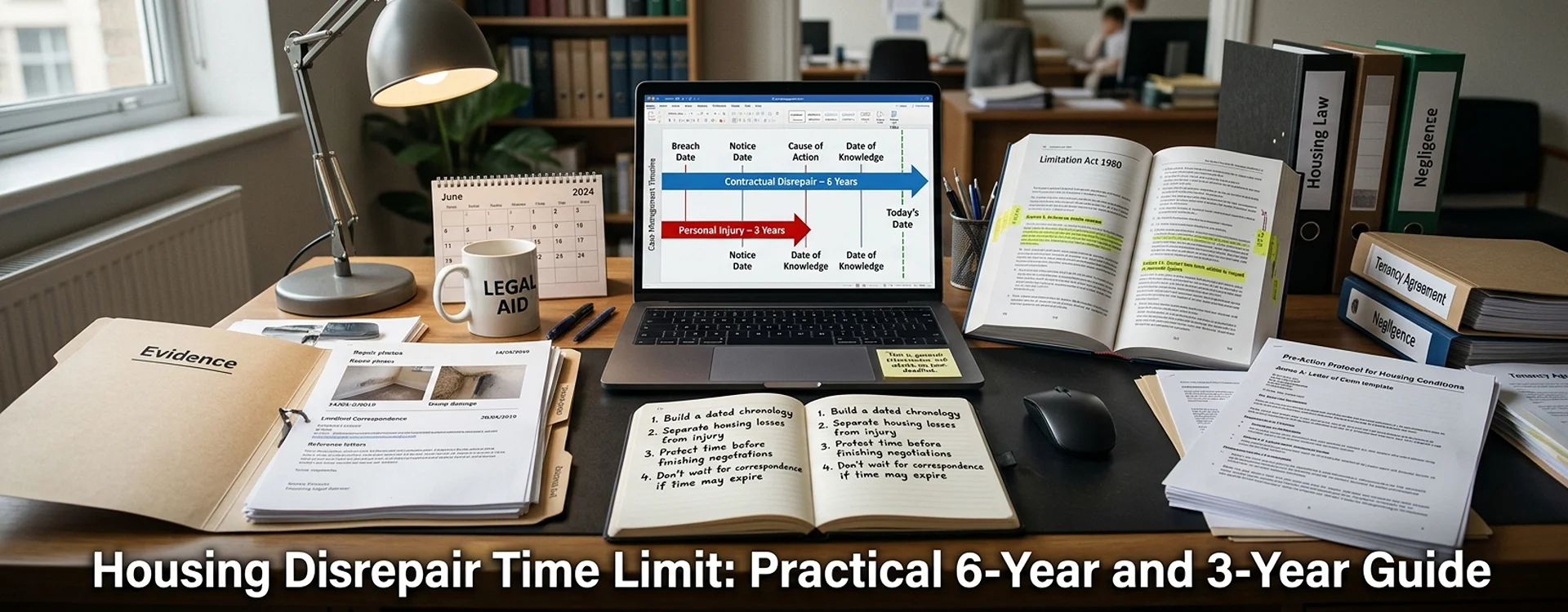
In England and Wales, a contractual claim for housing disrepair usually has a six-year limit. Personal injury is different: three years is the norm. What sets the clock running depends on the claim. For disrepair it’s when the landlord’s breach arose, and for injury it’s when the cause of action accrued, or when you gained the relevant knowledge, if that came later.
This is general information, not advice on your own deadline. Scotland and Northern Ireland work under different legal frameworks, so don’t apply any of this to them. The pre-action procedure below covers England only.
Which housing disrepair time limit applies?
| Situation | Usual period | Relevant starting point | Main warning |
|---|---|---|---|
| Contractual disrepair claim | Six years | When the cause of action accrued | Not automatically the first sighting of mould |
| Continuing failure to repair | Six-year rules apply to each accruing breach | Needs analysis of the continuing failure | Older losses may fall outside recovery |
| Personal injury claim | Three years | Accrual, or a later date of knowledge | Don’t assume six years covers injury |
| Repairs already completed | A claim may still be possible | Breaches before the work was finished | Repairs don’t wipe out compensation rights |
| Tenancy has ended | A claim may still be possible | The original breach dates still matter | Moving out doesn’t restart time |
The six-year contractual rule sits in section 5 of the Limitation Act 1980, while section 11 deals with personal injury. Shelter also points out that tenants can pursue compensation once repairs are done, or after they’ve left the property.
The date that matters: notice, then breach
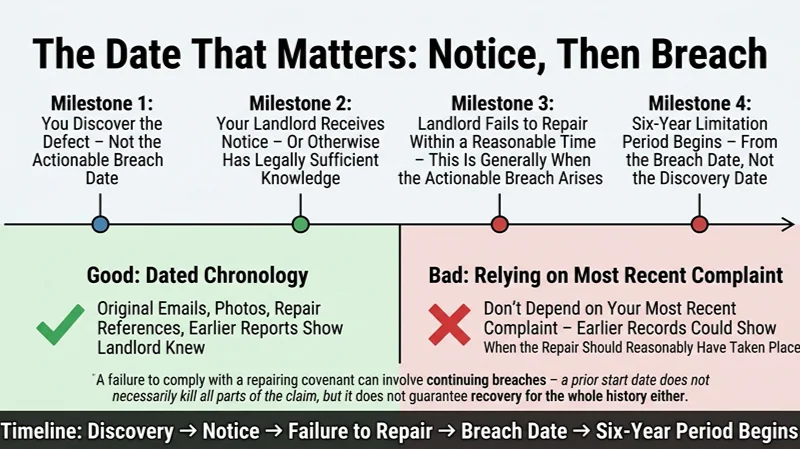
Take a typical repairing-obligation claim. Three separate events need pulling apart:
- You discover the defect.
- Your landlord gets notice, or otherwise knows enough in legal terms.
- The landlord doesn’t repair within a reasonable time.
Usually it’s that third event, not the day you spotted a stain, that creates the actionable breach. Shelter describes contractual action as open to you once the landlord has been told and still hasn’t put things right within a reasonable time.
Repairs take different lengths of time, so “reasonable” shifts from case to case. And a formal complaint, particularly one made long after the problem began, isn’t necessarily the first notice. The English protocol asks for the full history of defects and earlier notifications for exactly that reason.
What if the problem has gone on for eight years?
A failure to meet a repairing covenant can be a continuing breach. So an early start date doesn’t necessarily sink every part of your claim. It doesn’t guarantee recovery for the whole eight years either. If you’re in that position, request an adviser who can sort the recoverable periods from the older losses.
How to protect your deadline: 3-step implementation plan
1. Build a dated chronology
Write down when each defect appeared, when you reported it, when inspections happened, what repair attempts were made and when the work finished. Add the original emails, photos and repair references. Your latest complaint shouldn’t be the only thing on file, because earlier records can show the landlord knew sooner and help pin down when the repair should reasonably have been done.
2. Separate housing losses from injury
Set out your damaged belongings, extra costs and loss of enjoyment clearly, and keep any illness or injury apart from them. Hold on to relevant medical records. A claim that includes personal injury needs its own limitation analysis under section 11. Calling everything “disrepair compensation” doesn’t buy the injury part a six-year deadline.
3. Protect time before negotiations wrap up
Ask a housing solicitor to work out the earliest arguable deadline. In England, paragraph 10 of the housing conditions protocol covers agreements not to rely on limitation, and proceedings issued before the protocol steps are complete. A letter of claim alone isn’t protective proceedings. If time could run out, don’t sit waiting for the other side to reply.
Practical evidence tips
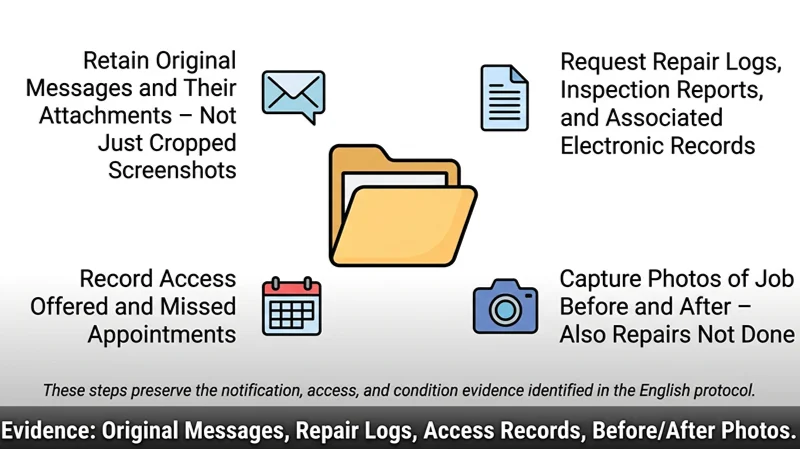
- Keep original messages with their attachments, not only cropped screenshots.
- Ask for repair logs, inspection reports and any related electronic records.
- Note every time access was offered and every appointment that got missed.
- Take before-and-after photos of each job, and photograph repairs that never happened.
Doing this preserves the notification, access and condition evidence the English protocol looks for. It also helps show the difference between a ticket closed as “no issue” and one closed because the defect was actually fixed.
Frequently asked questions
How long do I have to make a housing disrepair claim?
For an ordinary contract claim in England and Wales, it’s six years from the date the cause of action arose. Personal injury usually gets three. The legal basis of each part matters, so look at your tenancy agreement and the losses you’re claiming before letting anyone fix a date for you.
When does the six-year limitation period start?
Generally, it runs from the point the landlord’s breach arose. That’s normally after they’ve been told about the defect and haven’t repaired it within a reasonable time. The day you first reported the problem is strong evidence, but it isn’t the breach date in itself. Inspection and communication records can change the sequence, too.
Can I claim if the disrepair started more than six years ago?
Possibly. With a continuing repair breach, more recent breaches can stay actionable even when the original problem is older. That doesn’t make every historic loss recoverable, though. How long the condition lasted, whether any repairs worked, and when each loss accrued all need individual assessment.
Does complaining to my landlord stop the clock?
Don’t assume it does. Complaints, negotiations and a letter of claim don’t automatically suspend limitation. The English protocol itself says a case may have to start before its steps are finished. A solicitor can tell you whether a properly drafted limitation agreement or protective proceedings is the safer route.
Can I claim after moving out?
Yes, potentially. According to Shelter, compensation claims can be made during a tenancy or after it. Leaving doesn’t usually wipe out a claim you already have, but it doesn’t hand you a fresh six years either. Keep every document and piece of evidence from your time in the property.
What happens if I miss the deadline?
Your landlord may raise limitation as a defence. Courts do have discretion under section 33 to disapply the personal injury limit, but they don’t generally extend time in disrepair claims. So don’t presume the case is hopeless, and don’t count on discretion rescuing it. Ask for advice.
Does a medical diagnosis automatically start the three years?
No. The “date of knowledge” under section 14 turns on specific facts, including that the injury is significant and that it can be attributed to the alleged act or omission. It can also take in knowledge you could reasonably have got with appropriate advice. A diagnosis may be useful evidence, but it isn’t automatically the decisive starting date.
What to do now
Build your chronology, keep the original evidence safe, and get an adviser to confirm your housing disrepair time limit. Use the Annex A letter template from the English protocol where it fits. If limitation is close, though, seek urgent advice rather than waiting on a reply.