
If you’re asking how housing disrepair compensation is calculated, the short answer is that there’s no fixed tariff. A court or relevant housing body usually considers how serious the problem was, how long it lasted, which parts of the property were affected, when the landlord knew about it, and whether you suffered financial loss, damaged belongings or illness.
What compensation is based on
Housing disrepair compensation is intended to put you, as far as money can, in the position you would have been in if the landlord had dealt with the problem properly.
That doesn’t automatically mean getting all your rent back. A leaking bathroom, persistent mould in one bedroom and a home with no usable heating will affect a tenant differently. The award should reflect that difference.
Usually, the calculation considers:
The key date is often not when the defect first appeared. It is generally when the landlord was told, or should reasonably have known, about it and had a fair opportunity to investigate and repair it.
That distinction matters. A landlord cannot usually be held responsible for a hidden defect they genuinely knew nothing about. Once a repair has been reported, however, missed appointments, poor inspections and repeated temporary fixes can increase the seriousness of the claim.
The rent reduction approach
For loss of comfort and use, courts often start by considering a notional reduction in rent. In plain English, they ask: what proportion of the rent reflects the reduced value of living in the property during the affected period?
A simplified calculation might look like this:
For example, if the weekly rent is £120, a 25% reduction is considered appropriate, and the problem continued for 20 weeks:
That is only an illustration, not a guaranteed award. Courts do not apply a universal formula, and several defects are not always added together mechanically. If damp, mould and a failed extractor fan all affect the same bathroom, applying three separate percentages could overstate the actual loss.
What often gets missed is the difference between an affected room and a completely unusable room. A bedroom with mould on one wall may still be usable, although unpleasant and potentially harmful. A bedroom with extensive mould, damaged plaster and a persistent leak may be treated as substantially unavailable for its intended purpose.
The Housing Ombudsman’s current compensation guidance gives a useful reference for social housing complaints. It identifies percentages of weekly rent for substantially affected rooms, including 20% for a living room or bedroom and 30% for a kitchen or bathroom. Where the whole property is affected, the figure may reach 100% of the rent, subject to the facts and any mitigating factors.
Those figures are guidance, not an automatic housing disrepair compensation calculator. A court may reach a different figure, particularly in a private tenancy claim or where the evidence shows that the room remained partly usable.

What can be added to the claim?
A rent based award is only one part of the picture.
You may also be able to claim for actual financial losses. Keep receipts, bank statements and photographs where possible. Examples include:
If you claim for illness, the medical evidence needs to connect the condition to the disrepair. A GP record that mentions the housing conditions can be useful, although it does not automatically prove legal responsibility. The timing of symptoms, the nature of the defect and other possible causes may all be examined.
Shelter explains that compensation claims can include delayed repairs, poor housing conditions, damaged belongings, financial loss and health effects. Social tenants may also have the option of complaining to the Housing Ombudsman, depending on the circumstances.
A practical calculation guide
In practice, the most common mistake is calculating compensation from the date the tenant first noticed the problem, without proving when the landlord was notified. Emails, repair reference numbers, portal messages, inspection reports and call logs can make a substantial difference.
Council and housing association tenants
If you rent from a council or housing association in England, you may have two possible routes: a formal complaint through the landlord’s complaints procedure and, where appropriate, a court claim.
The Housing Ombudsman can consider maladministration, repair delays, poor communication and failures to follow the landlord’s policies. Its remedies may include compensation, an apology, a repair order or a review of the landlord’s procedures. The Ombudsman’s remedy guidance explains how the impact on the resident is considered when deciding redress.
An Ombudsman award is not necessarily the same as damages awarded by a court. The Ombudsman may compensate for inconvenience, distress, time and trouble, whereas a court claim may also address rent reduction, personal injury and specific financial losses.
There are also limited statutory schemes for certain urgent council repairs. These should not be confused with a full disrepair claim. They apply only in defined situations and usually involve relatively small sums.
Private tenants and legal limits
Private tenants can also have rights where the property is not fit for human habitation or the landlord has failed to comply with repairing duties. The legal route, evidence requirements and funding arrangements can differ from a social housing complaint.
Do not stop paying rent simply because repairs have not been completed. Rent arrears can create a separate problem and may weaken your position. A tenant should normally continue paying rent unless they have received specific legal advice about another arrangement.
Time limits can matter too. The relevant deadline depends on the type of claim, the losses involved and the facts of the case. Delaying action may make evidence harder to obtain, especially where the landlord has carried out repairs and the original condition is no longer visible.
Evidence that makes a difference
Strong evidence tends to be ordinary and consistent rather than dramatic.
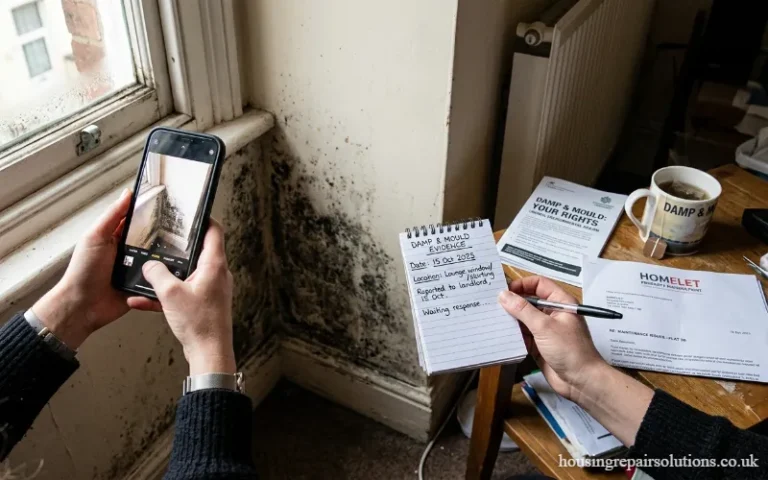
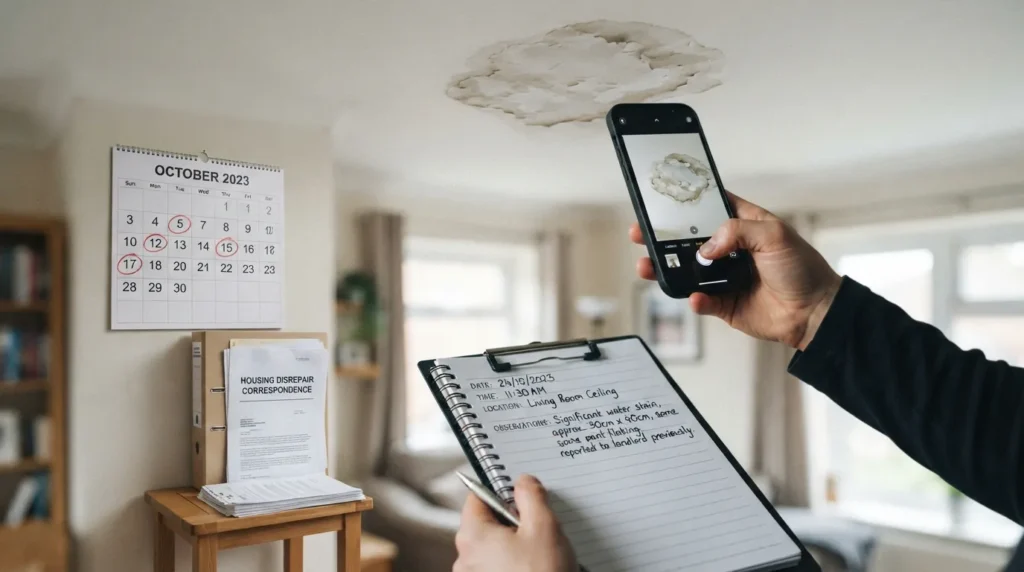
Take dated photographs and short videos. Keep copies of every report to the landlord, along with replies and appointment details. Write down when rooms could not be used, when heating or hot water failed, and what you had to do as a result.
A repair log can be especially helpful:
Photographs should show context, not just close ups. A mould mark on a wall is useful, but a wider image showing the room, damaged furnishings and the scale of the affected area may explain the impact more clearly.
How [Service/Business Name] can help
If you’re dealing with unresolved damp, leaks, mould or other serious repair problems, Housing Repair Solutions can help assess the evidence, explain the possible routes and support tenants across England and Wales, including local housing issues affecting residents in London, Manchester, Birmingham and other UK areas. The first step is usually a sensible review of what was reported, when it was reported and how the property was affected.
Questions tenants often ask
Is there a fixed amount for housing disrepair compensation?
No. There is no universal fixed amount. Compensation depends on the seriousness and duration of the disrepair, the rooms affected, the landlord’s response and any proven financial or health related losses.
Can I claim compensation for damp and mould?
Yes, potentially. A claim may include reduced enjoyment of the property, inconvenience, damaged belongings, extra expenses and health effects. You’ll need evidence showing the condition, when it was reported and how it affected you.
Is compensation based on the rent I pay?
Often, rent is used as a reference point for assessing loss of use and enjoyment. The court may apply a percentage reduction for the affected period, but it will also consider the actual condition of the property and whether rooms remained usable.
Can I claim if the landlord has now completed the repairs?
You may still be able to claim for the period when the disrepair existed and the landlord had notice of it. Take photographs and keep correspondence from before the repairs, because the original evidence may otherwise be difficult to prove.
Does the landlord have to pay compensation for every missed repair appointment?
Not automatically. Missed appointments can support a compensation claim, particularly where they caused inconvenience, lost earnings or prolonged the disrepair. The amount depends on the evidence and the overall impact.
Should I stop paying rent while waiting for repairs?
Generally, no. Stopping rent can create arrears and may lead to possession action. Get case specific legal advice for damp and mould compensation claims before changing how you pay rent or attempting to deduct repair costs.
How is housing disrepair compensation calculated?
Usually by combining a proportionate assessment of the property’s reduced use with any separately proven losses, health effects and inconvenience. The strongest claims are not necessarily the ones with the most dramatic wording. They are the ones that clearly show what happened, when the landlord knew, how long it continued and what it cost the household.