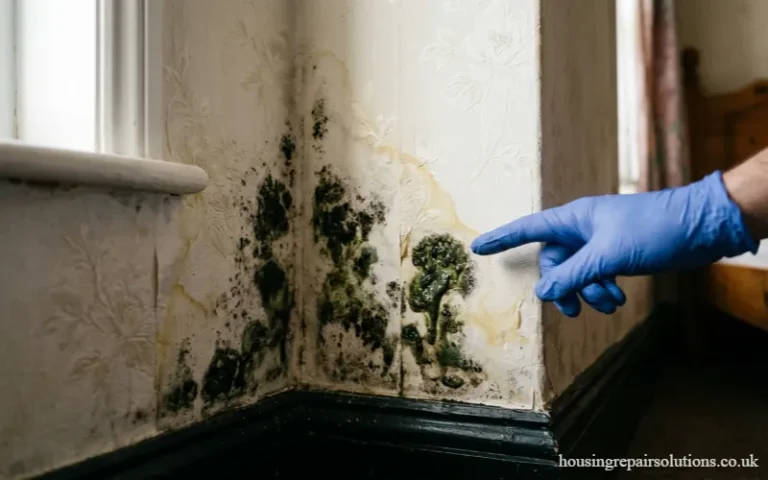

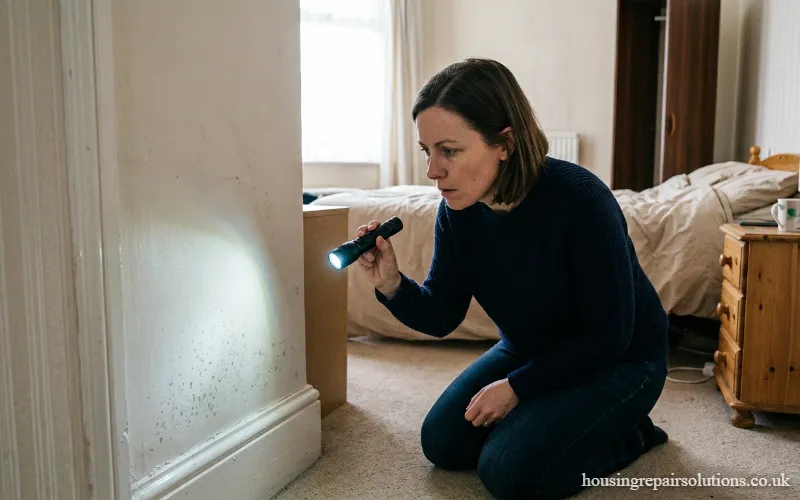
Most people only notice mould once it becomes a large, fuzzy black patch that is impossible to ignore. In our experience across thousands of UK property inspections, however, mould announces its arrival much earlier. It gives off clues that are often dismissed as condensation, dirt, or just a room feeling a bit stale. Catching the early stages of mould on walls is the difference between a one-hour clean and a multi-thousand-pound remediation. The signs are there. You simply need to know what you are looking for.
https://featured-early-stages-of-mould-on-walls.jpg
Snippet Winner: 7 Early Signs of Mould on Walls Every UK Home Should Check
| Sign | What You Notice | Where It Appears First |
|---|---|---|
| Pinhead speckling | Tiny black, grey, or green dots resembling pepper grains | External wall corners, above skirting boards, window reveals |
| Faint discolouration | Pale yellow, grey, or brown clouding without defined edges | Painted walls, particularly older paint jobs near cold spots |
| Musty, earthy smell | Persistent damp odour that air fresheners cannot mask | Behind furniture, inside cupboards, alcoves with poor airflow |
| Bubbling or lifting paint | Small blisters, cracks, or paint lifting away from the plaster | Lower wall edges, bathroom ceilings, around window frames |
| Cold, clammy patches | Areas of wall that feel colder and damper than surrounding surfaces | External-facing walls, chimney breasts, corners below ground level |
| Condensation beads | Water droplets forming regularly; surfaces staying wet for hours | Single-glazed windows, bathroom walls after showering, behind sofas |
| Peeling wallpaper seams | Wallpaper edges lifting or curling at joins; paste losing adhesion | Fitted wardrobes on outside walls, stairwells, hallway ceilings |
If you spot any of these, act quickly. The longer mould develops, the harder and more expensive it becomes to remove, as professional remediation specialists consistently warn.
Why the Earliest Stage Is the Most Dangerous Stage to Ignore
A small speckled cluster or a faint musty smell might seem trivial now, but mould grows exponentially. Under ideal damp conditions, spores can germinate and begin feeding within 24 to 48 hours of landing on a wet surface. Visible colonies typically appear within 3 to 12 days depending on temperature, humidity, and the surface material. Once established, a colony releases thousands more spores into the air, seeding fresh growth in other rooms.
In our experience, what begins as a few pepper-like dots behind a bedroom wardrobe can, over a single winter, spread into a colony that covers several square metres of hidden plasterwork. Plasterboard and wallpaper absorb moisture readily and provide an ideal food source, so mould spreads across them faster than on painted concrete or tile. The NHS has confirmed that living with damp and mould significantly increases the likelihood of respiratory problems, respiratory infections, allergies, and asthma.
Pinhead Speckling: The Visual Clue Most People Miss
The single most overlooked visual sign in the early stages of mould on walls is pinhead speckling. It looks like someone lightly flicked a paintbrush loaded with black, dark grey, or dark green paint across the surface. The dots are tiny, typically 1 to 3 millimetres across, and scattered rather than forming a solid patch. They commonly appear on external-facing walls, around window frames, and in the corners where walls meet ceilings or skirting boards. Similar speckled patterns have been noted as one of the earliest visible indicators before larger blotches develop.
At this stage, many tenants mistake the dots for household dirt, dust accumulation, or splash marks. The key difference is persistence. Dirt wipes away with a dry cloth. Early mould speckling does not. It may smear slightly if damp, but it will not lift cleanly. The surface around the dots may also feel slightly rough or powdery to the touch. A patch of mould in a dormant or early stage may look dry, powdery, or speckled, and in its earliest form can closely resemble dirt.
Faint Discolouration and Water Stains: The Shadow Before the Patch
Before mould produces the fuzzy, three-dimensional growth most people recognise, it often appears as a faint stain. Look for pale yellow, brown, or grey clouding on painted walls, especially around window frames and lower wall edges. These stains may appear in streaks or irregular cloudy shapes rather than defined circular patches. Brown or yellowish water stains on walls or ceilings are a particularly clear sign of a water leak from above or within the wall cavity that will inevitably lead to damp and mould if not addressed.
On older paintwork, discolouration may be the only visible sign for weeks because the paint film temporarily contains the growth beneath the surface. Pay close attention to areas that never fully dry out. A wall that still feels cold or clammy hours after the heating has been on is holding moisture, and where there is persistent moisture, mould is either already growing or about to.
The Musty Smell: Your Nose Knows Before Your Eyes Do
In hundreds of the properties we have inspected, the musty smell appeared weeks before any visible growth. It is an earthy, damp odour similar to rotting leaves or wet socks forgotten in a laundry basket. It tends to be strongest in corners, inside cupboards, and behind large pieces of furniture where air does not circulate freely.
That smell is not harmless. It comes from mVOCs (microbial volatile organic compounds), which mould releases as it digests its food source, such as wallpaper paste, plasterboard, or timber. The odour travels through the air long before the colony itself becomes visible. If you notice a musty smell that gets stronger near a particular wall or corner, that is a strong indicator that mould is present, even if it is not visible yet. The Housing Ombudsman has confirmed that musty smells and condensation issues should be reported to landlords just as promptly as visible mould.
Peeling Paint and Bubbling Wallpaper: What Is Happening Behind the Surface
When moisture seeps into a wall from behind, whether from a leaking pipe, failed pointing, or rising damp, it breaks the bond between the paint or wallpaper and the plaster beneath. The result is bubbling, blistering, or flaking that may appear weeks before any mould spores become visible on the room-facing surface. Paint or wallpaper that bubbles or lifts near the skirting board or around windows is a distinct warning sign, as mould often grows beneath these surfaces before breaking through.
Bubbling wallpaper is another red flag that mould might be hiding behind your walls. While bubbles can sometimes be caused by poor adhesive or old wallpaper, they are often a sign of trapped moisture. When water seeps into the wall, it loosens the adhesive holding the wallpaper, causing it to lift and form bubbles. Do not simply press the bubble flat and ignore it. By the time you see surface-level bubbling, the cavity behind the paper may already hold an active mould colony feeding on the wallpaper paste itself.
Living Clues: Health Symptoms That Point to Hidden Mould
Sometimes the first sign of early-stage mould is not something you see or smell, but something you feel. If you or a family member experiences unexplained sneezing, a runny nose, red or itchy eyes, or a persistent cough that consistently improves when you leave the property, hidden mould should be on your radar. Children living in damp homes are up to three times more likely to have breathing problems.
Inhaling or touching mould spores may cause an allergic reaction, including skin rashes. Moulds can also trigger asthma attacks and worsen eczema. If your symptoms follow a pattern, worse at home and better when you are out, tell your GP. Mention that you suspect mould in your home so that a medical record is created. That record can later serve as evidence in a housing disrepair claim. For a fuller picture of the health implications, read our guide to the warning signs of mould toxicity.
The Hotspot Checklist: Where to Check First
Based on years of inspecting UK rental properties, these are the locations where the early stages of mould on walls most frequently appear:
| Hotspot | Why It Happens | What to Look For |
|---|---|---|
| Behind furniture on external walls | Cold walls + trapped still air = condensation that never fully dries | Speckled dots, musty smell, cold clammy plaster |
| Window reveals and frames | Cold bridging draws condensation; failed seals allow water ingress | Grey or black dots in corners, peeling paint, damp silicone |
| Bathroom ceilings and above showers | Steam condenses on the coolest overhead surface | Pink, orange, or black speckles; peeling ceiling paint |
| Skirting boards on ground floors | Rising damp or spills trapped beneath flooring edge | Dark staining along the timber, soft or spongy skirting |
| Kitchen wall corners near sinks | Splashback moisture and poor ventilation behind appliances | Faint yellow or brown clouding, musty smell in cupboards |
| Built-in wardrobes on outside walls | No airflow, cold wall surface, organic materials inside | Musty clothes, white or green bloom on shoes and leather |
| Chimney breasts (blocked) | Hygroscopic salts draw moisture; blocked flue traps damp air | Brown or yellow tide marks, salt deposits, peeling plaster |
Active vs Inactive Mould: Why the Difference Matters
Not all mould you find on walls is actively growing. The distinction matters because inactive mould requires different treatment from active mould. The first step in any survey is to determine whether the mould is active or inactive. Active mould typically appears fuzzy, velvety, slimy, or wet to the touch. It may smear when wiped and has a strong, distinctive musty odour.
Inactive or dormant mould looks dry, powdery, or crusty. It may be a faded grey, brown, or black stain with no discernible smell. It can still trigger allergic reactions, however, because dead spores remain allergenic. Inactive mould often indicates a past moisture problem that has since been resolved, but the staining and spore residue remain. If you wipe an area and the stain smears dark and wet, the mould is almost certainly active. If the stain is dry and powdery, the colony may be dormant, but a damp surveyor should still investigate the moisture levels in the wall to confirm the problem has genuinely been resolved.
What to Do Immediately If You Spot These Early Signs
| Step | Action | Why It Matters |
|---|---|---|
| 1 | Photograph everything with a date stamp | Documents the condition before it worsens |
| 2 | Note when you first noticed the signs and any health symptoms | Establishes a timeline that links the mould to wellbeing |
| 3 | Report to your landlord or letting agent in writing | Triggers their legal duty to investigate under Section 11, Landlord and Tenant Act 1985 |
| 4 | Keep all emails, texts, and photographs | Evidence of what was reported and how the landlord responded |
| 5 | Do not paint over, bleach, or scrub dry mould | Disturbing colonies without containment launches spores airborne; painting traps moisture |
| 6 | If you are a social housing tenant, cite Awaab’s Law in your report | Your landlord must investigate significant damp and mould within 10 working days |
Reporting the problem in writing is essential. A dated written report to your landlord or letting agent, with a copy kept for your records, creates a paper trail that can be used in a tribunal or housing disrepair claim. If you have already reported the issue and your landlord is not responding, our guide to landlord mould responsibility and your rights explains the next steps.
Awaab’s Law: What It Means for Tenants in 2026
The most significant legal change for UK tenants facing damp and mould is Awaab’s Law, which came into force in England on 27 October 2025 for the social housing sector. Under Phase 1, social landlords must investigate emergency hazards and make homes safe within 24 hours. For significant damp and mould hazards, they must investigate within 10 working days and complete the repair work within a further 5 working days. Landlords must also provide tenants with a written summary of their investigation findings within 3 working days of completing the investigation.
Phase 2, which extends Awaab’s Law to hazards including excess cold, excess heat, fire risks, electrical dangers, and structural collapse, will come into force in October 2026. Phase 3, covering all remaining HHSRS hazards except overcrowding, will follow in October 2027. In Scotland, equivalent regulations (the Investigation and Commencement of Repair (Scotland) Regulations 2026) will take effect from 6 October 2026, requiring landlords to investigate damp and mould within 10 working days and begin repairs within set timescales.
Private tenants also have strong protections. Damp and mould that pose a risk to health are classified as Category 1 hazards under the Housing Health and Safety Rating System (HHSRS). Local authorities can serve improvement notices, and civil penalties can reach £30,000 for non-compliance. The Decent Homes Standard in the private rented sector has also been introduced in England, setting five mandatory criteria including a reasonable state of repair, adequate facilities, thermal comfort, and specific damp and mould standards.
If your landlord has ignored your reports, you may be entitled to compensation. Our housing disrepair claim guide walks you through the full process, and our damp and mould compensation guide outlines typical UK claim values.
When to Call a Professional Damp Surveyor
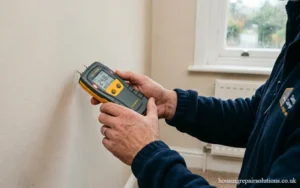
If the mould covers more than 1 square metre, if it returns within days of cleaning, if you can smell mould but cannot see it, or if anyone in the household has a respiratory condition that is worsening, you need a professional diagnosis. A qualified RICS surveyor uses moisture meters, thermal imaging cameras, and sometimes borescope cameras to investigate inside wall cavities without opening the plasterwork. A RICS Level 2 or Level 3 survey can identify damp and mould issues, even hidden ones, using moisture meters, thermal imaging, and local knowledge to assess cause and severity.
A full damp and mould survey on a typical UK flat or two-bedroom house generally costs between £150 and £400, rising to £400 to £800 for comprehensive surveys that include thermal imaging. Look for a surveyor accredited by RICS or the Property Care Association (PCA). If the mould is caused by a structural defect, that professional diagnosis may be the strongest evidence you have in a housing disrepair claim.
Frequently Asked Questions
[custom_Faqs]