
Condensation on windows is the most common moisture problem in UK homes — and also one of the most misunderstood. Most people wipe it away every morning and hope it improves. Unfortunately, that approach does nothing to address the root cause, and the moisture keeps coming back, eventually leading to mould, rotting window frames, and damp walls.
So instead of managing the symptom, this guide tackles the actual problem. You will learn exactly what causes condensation on windows, how to remove moisture from windows quickly, and — most importantly — how to stop condensation from returning for good.
Quick Reference: Condensation on Windows — Cause, Location and Fix
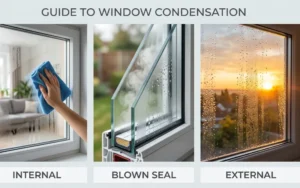
| Where Condensation Appears | What It Means | Best Fix |
|---|---|---|
| On the inside surface of the glass | High indoor humidity + poor ventilation | Improve ventilation, use dehumidifier, maintain heat |
| Between the two panes (mist inside windows) | Failed window seal — “blown” double glazing | Replace the sealed unit |
| On the outside surface in the morning | Windows are highly energy efficient (normal) | No action needed — this is a good sign |
| On window frames and sills | Ongoing surface condensation causing damp | Reduce indoor humidity, wipe daily, improve airflow |
What Causes Condensation on Windows?
To stop condensation effectively, you first need to understand why it forms. The science behind it is straightforward: condensation appears when warm, moist indoor air meets a cold surface — in most cases, your window glass.
Warm air holds far more water vapour than cold air. When that warm, humid air touches a cold window pane, the air cools rapidly, loses its ability to hold moisture, and deposits water droplets onto the glass. This process happens at a temperature scientists call the dew point — the precise temperature at which the air can no longer hold its moisture content.
Several everyday activities raise indoor humidity and dramatically increase the chances of condensation forming:
- Cooking, especially boiling water without lids on pans
- Showering and bathing
- Drying clothes indoors on radiators or airers
- Breathing — a typical household of four produces around 8–12 litres of water vapour per day just from respiration
- Houseplants releasing moisture into the air
- Gas and paraffin heaters, which generate water vapour as a by-product of combustion
Additionally, the colder your windows, the lower the dew point of the air near them — and therefore the easier condensation forms. That is why moisture on windows in winter worsens so dramatically, particularly at night and in the early morning when outdoor temperatures drop to their lowest.
Three Types of Condensation on Windows (Each Needs a Different Fix)
Before you reach for any product or tool, identify which type of condensation you are dealing with. Each type has a completely different cause — and treating the wrong one wastes both time and money.
Type 1 — Condensation on the Inside Surface (Most Common)
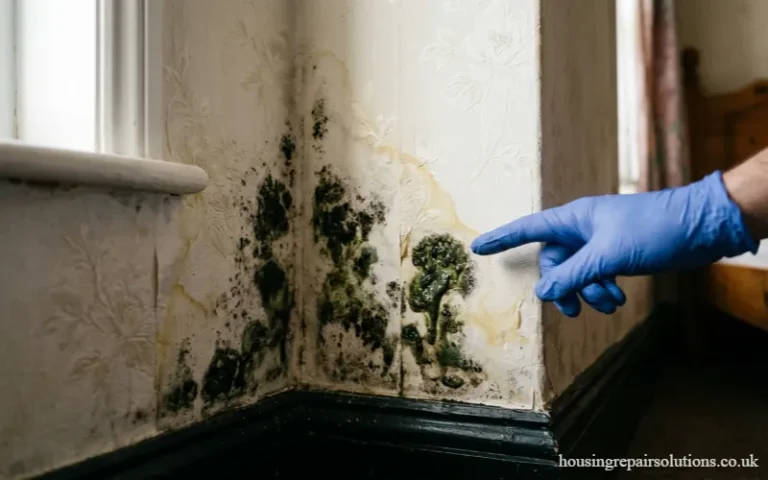
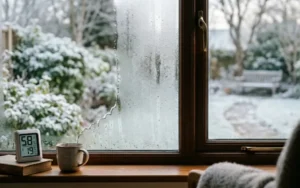
Condensation inside windows, on the room-facing surface of the glass, comes entirely from excess moisture in your indoor air. This is the type that runs down the glass, puddles on the windowsill, and drives mould growth in the corners of window frames.
You can touch this condensation with your fingertip. It disappears when you wipe it, comes back overnight or in the early morning, and typically worsens in winter. Because warm, moist air rises and circulates toward the coldest surfaces in the room — usually the windows — moisture buildup on the inside of windows is most severe during cold weather when you seal the house up tightly.
The good news is that this type responds well to ventilation and humidity-control measures. We cover the full fix process in the next section.
Type 2 — Mist Inside Windows Between the Panes
Condensation forming between the two panes of a double-glazed unit tells you something very different. This type — sometimes called “misted windows” or “blown double glazing” — appears as a hazy, foggy, or wet film trapped inside the glass that you cannot wipe away.
This happens because the hermetic seal around the sealed unit has failed. Once the seal breaks down, humid air from outside enters the cavity between the panes. The desiccant material inside the spacer bar initially absorbs this moisture, but eventually it becomes fully saturated and can hold no more. As a result, water vapour condenses on the inner surfaces of the glass, creating the permanently cloudy appearance.
Importantly, no amount of ventilation or dehumidifying will fix blown double glazing. The only lasting solution is to replace the sealed glass unit — in most cases without needing to replace the entire window frame.
Tip: Check whether your double-glazing unit is still under warranty. Most manufacturers offer a 10-year guarantee on sealed units. If so, contact your installer rather than paying for a replacement yourself.
Type 3 — Condensation on the Outside of Windows in the Morning
Seeing condensation on the outside of windows in the morning can feel alarming, but it is actually excellent news. External condensation shows that your windows work very efficiently and prevent heat from escaping outward. Because the outer pane stays cold (the window keeps the heat inside), outdoor air cools when it touches the glass — and if outdoor air is humid enough, condensation forms on the external surface.
This type of condensation evaporates naturally as the sun rises and temperatures climb. You do not need to fix it, treat it, or worry about it.
How to Stop Condensation on Windows: 10 Proven Methods
Now that you understand what you are dealing with, here are the most effective ways to reduce condensation on windows, ranked from quick wins to longer-term investments.
1. Improve Ventilation Throughout the House
Ventilation is the single most effective condensation treatment available — and it costs almost nothing to implement. Stale, humid air builds up inside sealed homes because it has nowhere to escape. By creating airflow, you give moisture a route out of the building before it reaches its dew point on your windows.
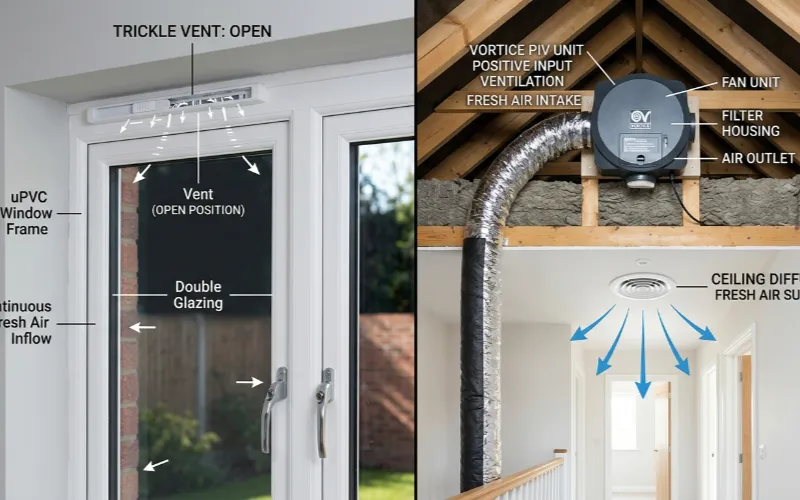
Open windows for at least 10–15 minutes every morning, even in winter. This brief burst of fresh air flushes out the moisture-laden indoor air built up overnight. Furthermore, open trickle vents on your window frames and leave them open permanently — they move small quantities of air continuously without creating draughts.
Close bathroom and kitchen doors while cooking or showering to contain moisture at its source. Then, open the window in that room afterward to push the moisture outside rather than letting it spread through the rest of the house.
2. Run a Dehumidifier in High-Humidity Rooms
A dehumidifier pulls water vapour directly from the air, actively lowering indoor humidity before it reaches the windows. Place it in the rooms where condensation on windows is worst — typically bedrooms, bathrooms, and kitchens.
Target an indoor relative humidity of 40–55%. Below 40%, the air feels uncomfortably dry; above 60%, condensation and mould become highly likely. A mid-range dehumidifier costs between £60 and £150 to purchase and approximately 50p per day to run. Given that it also protects your walls, windows, and health, this is excellent value.
3. Maintain a Consistent Background Temperature
Temperature swings cause condensation spikes. When a room cools sharply at night, the windows cool rapidly too, and the dew point drops — causing heavy condensation in the morning. Keeping a consistent background temperature throughout the home, even in unused rooms, dramatically reduces condensation on windows overnight.
Set your thermostat to a minimum of 18°C in rooms you use regularly and 15°C in rooms you rarely heat. Consistently warm walls and windows stay above the dew point far more reliably than rooms that cycle between cold and warm.
4. Use Extractor Fans Properly in Kitchens and Bathrooms
Kitchens and bathrooms generate more moisture than any other room in the house. However, many homeowners underuse their extractor fans — switching them off the moment they finish cooking or showering, when in reality the fan needs to keep running for at least 15–20 minutes afterward to clear residual steam.
Install a humidity-sensing extractor fan if possible. These fans detect elevated humidity levels and run automatically until the air drops below the target threshold, removing the guesswork entirely. In a bathroom without any natural ventilation, a high-quality humidity-sensing fan is one of the most impactful investments you can make against condensation in the room.
5. Stop Drying Clothes Indoors on Radiators
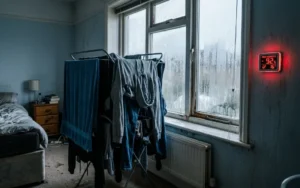
A single load of wet laundry releases approximately 2 litres of water into the air as it dries. If you dry clothes on radiators, that moisture distributes directly through every room in the house — dramatically raising humidity and causing moisture buildup on the inside of windows throughout the property.
Instead, dry clothes outside whenever weather allows, or use a condenser tumble dryer that collects moisture internally. If you must dry indoors, place the airer in a well-ventilated room, close the door, and open the window until the clothes dry fully.
6. Keep Pans Covered When Cooking
Boiling a pan of pasta without a lid releases a significant volume of steam into the kitchen air. Simply covering pans while cooking cuts kitchen steam production by more than half. Additionally, use your extractor hood every time you cook — not just when something burns — to actively remove moisture at the source.
7. Move Furniture Away from External Walls
Large wardrobes and sofas pushed tightly against external walls block airflow behind them, creating cold spots where condensation forms and mould thrives. Even a 50mm gap between furniture and the wall makes a noticeable difference because it allows air to circulate and prevents moisture from accumulating in one cold zone.
8. Install Positive Input Ventilation (PIV)
For homes with persistent, severe condensation that simple ventilation does not resolve, a Positive Input Ventilation system (PIV) offers a more powerful solution. A PIV unit typically sits in the loft and continuously draws fresh, filtered air from outside, gently pressurising the house and pushing stale, humid air out through natural gaps and vents.
PIV systems cost between £400 and £800 installed and run very quietly in the background. Consequently, they suit older properties with limited ventilation options and homes where occupants cannot manage condensation through daily habits alone.
9. Upgrade to Double or Triple Glazing
Single-glazed windows are extremely cold — they barely insulate at all, so the glass drops rapidly toward outdoor temperatures. As a result, warm indoor air condenses on single-glazed panes far more aggressively than on double or triple-glazed units.
Modern double glazing keeps the internal pane significantly warmer by trapping an insulating layer of argon gas between the panes. Triple glazing improves this further. While upgrading windows is a substantial investment, it delivers dramatically lower condensation, better energy efficiency, and reduced heating bills simultaneously.
10. Apply Anti-Condensation Window Film
For a lower-cost interim solution, apply an insulating window film to the inside of existing single-glazed or older double-glazed windows. This film traps a thin layer of still air between the film and the glass, raising the surface temperature of the pane and pushing it above the dew point. As a result, moisture in the air no longer reaches the glass as frequently.
Window film costs between £10 and £30 per window and lasts one to two seasons before needing replacement. It is not a permanent fix, but it provides immediate relief from condensation inside windows while you address the underlying humidity or upgrade your glazing.
How to Stop Condensation on Windows Overnight
Overnight condensation on windows in the morning is one of the most frustrating problems for UK homeowners. Temperatures drop sharply after midnight, windows cool rapidly, and you wake up to streams of water running down the glass.
Here is how to reduce condensation on windows in winter overnight specifically:
Before bed, ventilate every room briefly. Open windows for five minutes before you sleep to flush out the humid air that accumulated throughout the evening. This simple habit alone produces a measurable reduction in morning condensation.
Keep bedroom doors slightly open. A closed, unventilated bedroom with two sleeping people becomes very humid very quickly. Leaving the door ajar allows a gentle air exchange that dilutes moisture through the night.
Run a dehumidifier overnight in your bedroom. Place it near the window if possible. Many modern dehumidifiers operate almost silently and cost just a few pence per night to run — far less than the damage condensation causes to window frames and walls over time.
Avoid drying clothes in your bedroom. A damp towel or gym kit draped over a chair releases moisture all night directly into the room, spiking overnight humidity. Keep all damp laundry in ventilated spaces only.
Use thermal or insulated curtains carefully. Thick curtains trap warm air against the window glass when closed at night, which sounds helpful — but in practice, they also trap humid air in the same space, often making condensation inside windows in the morning significantly worse. Pull curtains away from the glass slightly at the bottom if possible, to allow some air movement.
How to Remove Condensation from Windows Quickly
Sometimes you just need to clear the glass fast. Here are the quickest ways to get rid of condensation on windows right now:
- Squeegee or window vac: Run a rubber-bladed squeegee or electric window vacuum down the glass and catch the water in a container. This is the most effective tool for daily moisture removal. Window vacuums cost £20–£50 and prevent pooling on the sill entirely.
- Microfibre cloth: Wipe the glass from top to bottom, then dry the windowsill and frame immediately. Always dry the frame — pooled water on wooden frames causes rot within months.
- Hairdryer (short-term): A hairdryer heats the glass and evaporates surface moisture in seconds. However, this is purely cosmetic — it does nothing to lower humidity, so condensation returns quickly.
- Anti-condensation spray: Specialist condensation prevention sprays leave a thin coating on glass that inhibits droplet formation. They provide 2–4 weeks of surface protection and work well as a short-term measure alongside proper ventilation.
Room-by-Room Guide: How to Prevent Condensation on Windows
Bedroom Windows
Bedrooms are the worst room for overnight condensation because people breathe out roughly one litre of water vapour while sleeping. Moreover, many people dry clothes in their bedrooms and keep the door closed all night, trapping moisture with no escape route.
Open bedroom windows for 10 minutes every morning. Use a dehumidifier on a timer overnight. Keep furniture away from external walls, and never dry laundry in the bedroom. These four changes alone eliminate the majority of bedroom condensation problems.
Kitchen Windows
Kitchens produce enormous amounts of steam. Always use lids on pans, run the cooker hood extractor during and after cooking, and keep the kitchen door closed to prevent steam spreading to the rest of the house. Because kitchens also tend to have smaller windows, condensation can run down and damage tiled surfaces and grouting quickly — so wipe down sills daily.
Bathroom Windows
After showering or bathing, leave the extractor fan running for at least 15 minutes with the door closed. Then open the window fully for five minutes to exchange the air. This sequence removes far more moisture than simply opening the window mid-shower, when steam is still being produced.
Living Room and Conservatory
Living rooms accumulate moisture slowly from breathing, plants, and everyday activity. Trickle vents in window frames handle most of this passively. However, a conservatory that connects to the main house can funnel large quantities of cold air against warm indoor air — causing intense condensation on the connecting windows. Keep the conservatory door closed in winter to prevent this cold air from penetrating the main house.
Condensation on Windows and Your Health
Left untreated, condensation in the house leads directly to damp walls, black mould growth, and serious air quality problems. According to NHS guidance, prolonged mould exposure causes respiratory infections, worsens asthma, triggers allergic reactions, and weakens the immune system — particularly in children, elderly people, and anyone with a pre-existing lung condition.
Consequently, persistent condensation is not a cosmetic inconvenience. It is a health issue that demands action. If you rent your property and poor ventilation, inadequate heating, or structural problems cause the condensation, your landlord carries the legal responsibility to address those root causes.
If condensation in your rented home has led to damp, mould, or health problems that your landlord refuses to fix, you may have a valid damp and mould compensation claim under the Homes (Fitness for Human Habitation) Act 2018.
Condensation on Windows in Rented Properties: Who Is Responsible?
This is where many tenants and landlords disagree — and where understanding your legal rights matters enormously.
Tenants carry reasonable responsibility for managing condensation through daily habits: ventilating rooms, using extractor fans, avoiding drying clothes on radiators, and keeping the property adequately heated.
Landlords, however, carry legal responsibility for structural causes of condensation — including inadequate ventilation systems, poor insulation, missing or broken extractor fans, insufficient heating systems, and single-glazed windows in properties where the design itself prevents tenants from managing moisture normally.
Under the housing disrepair framework and the Homes (Fitness for Human Habitation) Act 2018, a landlord cannot simply blame a tenant for condensation caused by a poorly designed or inadequately equipped property. If the building genuinely cannot manage normal levels of moisture produced by a reasonable number of occupants, the landlord must address the structural issues.
Tenants in council or housing association properties facing persistent condensation, mould, and damp that their landlord ignores can find out more about their rights by reading our guide to common housing disrepair issues in council and housing association properties.
Condensation Treatment Cost Guide (UK 2025)
| Solution | DIY Cost | Professional/Installed Cost | Effectiveness |
|---|---|---|---|
| Daily ventilation (open windows, trickle vents) | Free | N/A | High for mild cases |
| Anti-condensation spray | £5 – £15 | N/A | Moderate (short-term) |
| Window dehumidifier sachet | £5 – £10 | N/A | Low — for very minor cases |
| Electric dehumidifier | £60 – £250 | N/A | Very high |
| Humidity-sensing extractor fan | £25 – £80 | £100 – £250 installed | Very high in wet rooms |
| Window insulating film | £10 – £30 per window | N/A | Moderate |
| Positive Input Ventilation (PIV) | Not DIY | £400 – £800 | Very high for whole house |
| Double glazing upgrade | Not DIY | £300 – £800 per window | High — long-term solution |
| Sealed unit replacement (blown glazing) | Not DIY | £80 – £200 per unit | Permanent fix for misted panes |
Living with persistent condensation, damp, or mould in a rented property that your landlord refuses to address? Contact the Housing Repair Solutions team today for a free, no-obligation consultation. We handle housing disrepair claims across the UK with no upfront fees and no financial risk to you.