
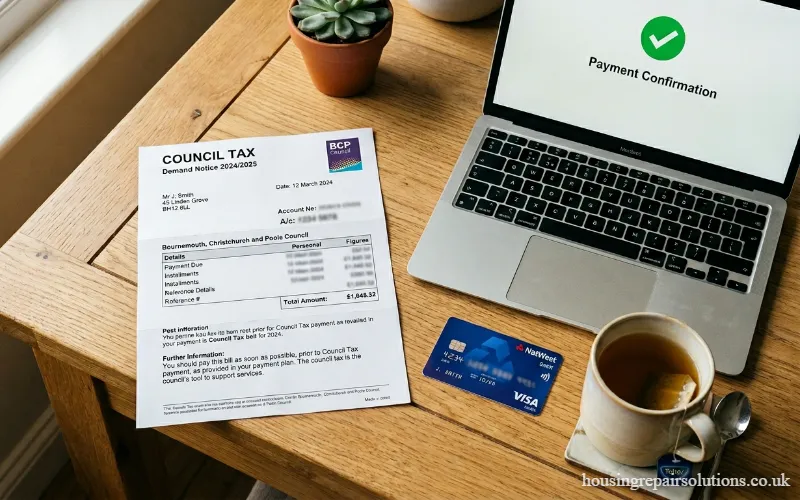
Council tax is a priority bill that every household in the UK needs to stay on top of. Whether you have just moved into a new property or you are looking for a more convenient way to manage your payments, knowing exactly how to pay council tax can save you time, stress and potential penalty charges.
We have researched every payment method available across local authorities in England, Scotland and Wales. Below is a quick reference table that answers the most common question straight away.
Not every household has to pay the full amount, and some do not pay anything at all. If you want to check this before working through the payment methods below, our guide on who is exempt from paying council tax covers the full rules.
All Ways to Pay Your Council Tax
| Payment Method | How It Works | Processing Time | Best For |
|---|---|---|---|
| Direct Debit | Automatic monthly deductions from your bank account | Instant on due date | Set and forget convenience |
| Online Payment | Single card payment via your council’s website | 1 to 3 working days | Quick one off payments |
| Phone Payment | Automated 24 hour payment line using debit or credit card | 1 to 3 working days | Paying without internet access |
| Internet Banking or Standing Order | Transfer from your bank using the council’s sort code and account number | 2 to 4 working days | Those who prefer banking apps |
| Post Office or PayPoint | In person payment with cash, cheque or card using your bill barcode | 3 to 6 working days for cheque, same day for cash | Cash payers |
| By Post | Cheque sent to the council’s address | 6 or more working days | Last resort |
Now let us walk through each method in detail so you can choose the one that works best for you.
How to Pay Council Tax Online
Paying council tax online is the fastest way to clear your bill without leaving home. Every local authority in the UK offers a secure online payment portal, and the process is largely the same regardless of where you live.
To pay council tax online, you will need three things. Your council tax account number, found on your latest bill. Your debit or credit card. The amount you wish to pay.
In our experience, the online payment process takes less than three minutes once you have your bill to hand. Head to your local council’s website, find the “Pay Council Tax” page, and enter the requested details. Most councils accept Visa, Mastercard, Maestro and Visa Electron. Some councils do not accept American Express or Diners Club cards, so it is worth checking before you start.
One thing we found particularly useful. Once you have made your first online payment, bookmark the payment confirmation page. It makes future payments even quicker since many councils let you store your account reference.
Setting Up a Direct Debit for Council Tax
Direct Debit is hands down the easiest way to pay your council tax bill. Based on our research across dozens of council websites, Direct Debit is universally recommended because it eliminates the risk of missing a payment date.
When you set up a Direct Debit, your council tax payment is automatically taken from your bank account on a date that you choose. Most councils offer multiple payment date options, typically the 1st, 8th, 15th, 18th, 22nd or 25th of the month. Wandsworth Council, for example, lets Direct Debit customers choose from five different dates.
The Direct Debit Guarantee also protects you. If the council or your bank makes an error, you are entitled to an immediate refund.
To set up a Direct Debit, you will need your bank account details and your council tax account reference number. Most councils let you do this entirely online through their self service portal. Some also accept setup by phone or by posting a paper form. In our testing, the online method typically takes under five minutes.
Paying Council Tax by Phone
If you prefer speaking to someone or do not have reliable internet access, paying by phone is a solid alternative. Most councils operate a 24 hour automated payment line, meaning you can call at any time, including weekends and bank holidays.
You will need a touch tone telephone, your council tax account reference, and your debit or credit card details. The automated system will guide you through entering your details. The call usually lasts around two minutes.
Numbers vary by council. Wandsworth residents can call 0800 021 7763 for payments, while Hackney uses 020 8356 5050. You can find your local payment line number on your council tax bill or your council’s website.
One limitation we noticed. Phone payment lines generally do not accept American Express. If that is your only card, you may need to use internet banking instead.
Paying at a Post Office or PayPoint
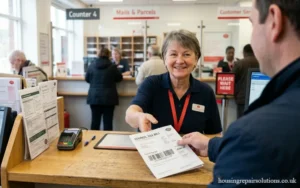
For those who prefer paying in person or using cash, Post Office and PayPoint outlets provide a convenient solution. You can pay free of charge at any Post Office branch or PayPoint location across the UK.
To pay at a Post Office or PayPoint, take your council tax bill with you. The cashier will scan the barcode printed on your bill, and you can then pay by cash, cheque or debit card. Post Offices accept payments up to £999.
If you do not have a barcode on your bill, contact your council to request a payment card or an updated bill that includes one. Some councils are phasing out dedicated payment cards in favour of barcoded bills, so check what your local authority currently uses.
Important. Allow extra processing time when paying at a Post Office. Cheque payments can take up to six additional days to reach your council account, and even cash payments may take three extra working days.
Paying by Internet Banking or Standing Order
If you are comfortable using your bank’s app or online banking portal, this method gives you full control. You transfer money directly from your bank account to your council’s account using their bank details.
To pay by internet banking or standing order, you will need your council’s sort code, account number and your council tax account reference as the payment reference. For example, Hackney Council uses Lloyds Bank, sort code 30-00-02, account number 00644620. Wandsworth Council uses sort code 60-22-28, account number 69612544.
Always include your council tax account reference number in the payment reference field. Without it, the council may not be able to match your payment to your account.
A standing order is useful if you want to control the exact amount and date of payment from your side, rather than letting the council pull funds via Direct Debit. However, remember that a standing order does not automatically adjust when your bill changes each year, so you will need to update it manually.
Paying Council Tax by Post
Sending a cheque by post is the slowest method and we only recommend it if no other option is available. Make your cheque payable to your local council, the exact name will be on your bill, write your name, address and council tax account reference on the back, and send it to the council’s payment address.
Never send cash through the post. If your cheque arrives after the due date, you may receive a reminder notice, so allow at least a week for delivery and processing.
Council Tax Payment Dates and Instalments
Understanding when your council tax is due helps you avoid missed payments and the consequences that follow. Most councils issue annual bills in March, with payments spread across 10 monthly instalments running from April to January. This means you typically do not pay anything in February and March.
However, you can request to spread your payments over 12 months instead of 10. This reduces each monthly instalment, which can help with budgeting. All English councils must allow you to pay over 12 months if you ask. Looking ahead, upcoming rule changes mean that 12 month instalments will soon become the default across England, which is expected to lower monthly repayments for many households.
If you pay by Direct Debit, you can often choose your preferred payment date, such as the 1st, 8th, 15th, 18th, 22nd or 25th. For other payment methods, instalments are typically due on the 1st of each month.
Some councils also offer alternative schedules, including weekly, fortnightly or half yearly payments. Contact your local council if you need a payment plan that better matches your income pattern.
Understanding Your Council Tax Band
Every property in England, Scotland and Wales is placed into a valuation band, and the band decides how much council tax you actually pay. Properties in England and Scotland were valued as they would have sold in April 1991, while properties in Wales were revalued more recently, based on April 2003 values. This is one reason the bands look different depending on where you live.
England and Scotland each use eight bands, from A to H. Wales uses nine bands, from A to I, because the later 2003 revaluation added an extra band for higher value homes.
| Band | England | Wales | Scotland |
|---|---|---|---|
| A | Up to £40,000 | Up to £44,000 | Up to £27,000 |
| B | £40,001 to £52,000 | £44,001 to £65,000 | £27,001 to £35,000 |
| C | £52,001 to £68,000 | £65,001 to £91,000 | £35,001 to £45,000 |
| D | £68,001 to £88,000 | £91,001 to £123,000 | £45,001 to £58,000 |
| E | £88,001 to £120,000 | £123,001 to £162,000 | £58,001 to £80,000 |
| F | £120,001 to £160,000 | £162,001 to £223,000 | £80,001 to £106,000 |
| G | £160,001 to £320,000 | £223,001 to £324,000 | £106,001 to £212,000 |
| H | Over £320,000 | £324,001 to £424,000 | Over £212,000 |
| I | Not applicable | Over £424,000 | Not applicable |
These figures are valuation ranges, not your actual bill. Your council works out a yearly charge for a Band D property and then scales every other band up or down from that, so your monthly amount depends on your council’s own rates for the year as well as your band. For a full breakdown of where that money actually goes each year, see our guide on what council tax pays for.
Your band is shown on your council tax bill. If you do not have it to hand, you can check for free on the GOV.UK website if you live in England or Wales, or on the Scottish Assessors Association website if you live in Scotland, using just your postcode.
If you believe your property sits in the wrong band, you can challenge it with the Valuation Office Agency in England and Wales, or with your local assessor in Scotland. You must keep paying your current council tax while any challenge is being looked at.
Discounts, Exemptions and Who Has to Pay
Not everyone pays the full council tax bill for their band, and a number of common questions come up about who qualifies for help.
Single Person Discount
If you are the only adult living in a property, you are entitled to a 25 percent discount on your bill. You need to apply for this through your council, it is not applied automatically.
Students
Full time students do not pay council tax while everyone in the household is also a full time student. If a student lives with one other adult who is not a student, that household may still get a discount, so it is worth checking with your council rather than assuming the full charge applies.
Pensioners
There is no automatic exemption simply for being of pension age. Pensioners on a low income, particularly those receiving Pension Credit, may qualify for a large reduction or even a full exemption through their council’s Council Tax Support scheme, and a pensioner living alone still gets the 25 percent single person discount like anyone else.
Empty Properties and Second Homes
An empty and unfurnished property is not automatically exempt from council tax. Many councils now apply a premium once a property has been empty for a year or more, and this premium increases the longer it stays empty, sometimes reaching 300 percent on top of the standard bill for homes empty for over ten years. Councils are also introducing similar premiums on furnished second homes. Because these rules are set locally and have changed recently, always check the current position with the specific council for the property.
Council Tax Reduction
If you are on a low income or receiving certain benefits, you can apply for Council Tax Reduction, sometimes called Council Tax Support, directly through your local council’s website. The amount you get depends on your income, savings, who else lives with you and your council’s own scheme, since each council in England sets its own rules for working age claimants.
Does Everyone Have to Pay, Whatever Their Background
Council tax liability depends only on things like who lives in the property, their income, their age and whether they are a full time student or have a disability. There is no discount or exemption in UK law based on someone’s religion, and no council operates a scheme that lets any faith group avoid paying. Claims suggesting otherwise, including ones sometimes shared online about Muslim households, are not supported by any government policy or local authority scheme.
How to Set Up an Online Council Tax Account
Most local authorities now offer an online self service portal where you can manage your council tax account. Setting one up gives you far more control than simply making one off payments.
With an online account, you can typically check your balance, view your payment history, set up or amend a Direct Debit, apply for discounts and exemptions, switch to paperless billing, and report changes to your circumstances.
To register, you will need your council tax account number and some personal details to verify your identity. The registration process varies by council but generally follows these steps.
Visit your council’s website and look for “My Account” or “Self Service.” Click register and enter your council tax account reference number. Verify your name, address and postcode. Create a username and password. Confirm your email address.
Once registered, you can log in 24 hours a day, seven days a week. In our experience, having an online account makes managing council tax significantly easier, especially if you need to check past payments or apply for a discount.
Where to Find Your Council Tax Account Number
Your council tax account number is essential for almost every payment method. You can find it in several places.
On your paper or digital council tax bill, typically at the top right or top left corner. On any letters or reminders the council has sent you about your account. On your bank statement if you pay by Direct Debit or standing order, where it appears as part of the payment reference. By logging into your online council tax account if you have already registered.
Account numbers vary in length depending on the council. Chelmsford uses an eight digit number starting with an eight, while Blaby uses a nine digit number. If you cannot locate your account number, contact your council directly. They can post a copy of your bill to your property address.
What Happens If You Miss a Council Tax Payment
Missing a payment triggers a specific sequence of events, and it is important to understand the timeline so you can act quickly.
The first missed payment results in a reminder notice. You will typically have seven days to bring your account up to date. At this point, you lose the right to pay by instalments, and the full remaining balance for the year becomes due immediately.
If the final notice goes unpaid, the council applies to the Magistrates Court for a summons. Court costs, often around £80 to £125, are added to your bill at this stage. If the court grants a liability order, the council gains additional enforcement powers, including deductions from your wages or benefits, or sending enforcement agents to your property.
The most important step if you are struggling to pay is to contact your council immediately. Do not wait for reminders to arrive. Councils can often set up a special payment arrangement, spread your payments over 12 months, or check if you qualify for Council Tax Support or other discounts.