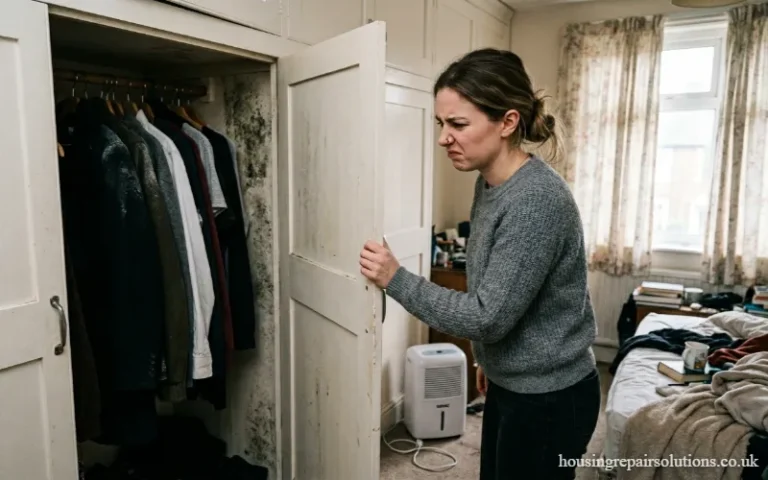

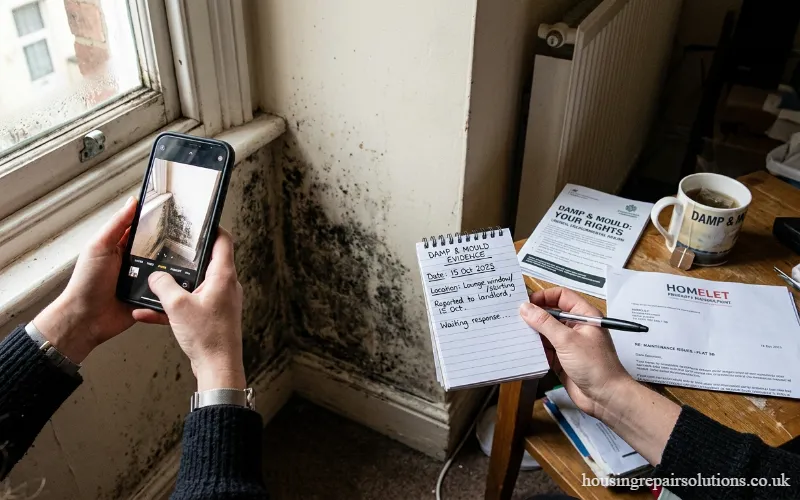
Living with a broken boiler, black mould creeping up your bedroom wall, or a ceiling that leaks every time it rains is not just frustrating—it can damage your health. If your landlord refuses to fix serious problems, you have every right to file a complaint against your landlord. Most tenants hesitate because they don’t know where to start. This guide walks you through every step, from your first email to escalating to the Housing Ombudsman or court.
In our experience guiding thousands of tenants across the UK, the single biggest mistake is waiting too long. The moment you report a problem in writing, the clock starts. Use the process below to protect your health, your home, and your legal rights.
If you want to understand what your case could be worth before you start, try our housing disrepair compensation calculator.
Why You Need to File a Complaint Against Your Landlord
Landlords have legal duties under the Landlord and Tenant Act 1985 and the Homes (Fitness for Human Habitation) Act 2018. Your landlord must keep the structure and exterior of your home in repair, ensure heating and hot water work, and keep electrical and gas systems safe. If your home has damp, mould, leaks, broken heating, or unsafe wiring, your landlord is almost certainly breaching their legal obligations.
Filing a formal complaint is the first step toward getting repairs done and claiming compensation for the time you have already spent living in poor conditions. You cannot skip this step and expect the council or ombudsman to act first.
What You Can Complain About
Most complaints fall into these categories:
| Complaint Type | Examples |
|---|---|
| Disrepair | Damp and mould, leaking roof, broken boiler, no hot water, unsafe electrics, structural cracks |
| Harassment | Illegal eviction threats, cutting off utilities, entering without notice, verbal abuse |
| Unlawful fees | Illegal charges, excessive deposits not protected, banned letting fees |
| Gas safety breach | No annual Gas Safety Record provided, unregistered Gas Safe engineer |
| Housing conditions | Pest infestation, unsafe stairs, inadequate ventilation, fire safety defects |
Step 1: Report the Problem in Writing
Before you file a complaint against your landlord, you must give them a chance to fix the issue. Always put your complaint in writing—email counts. Do this even if you have already mentioned the problem in person or over the phone.
Your written complaint should include:
- Your name and the property address.
- A clear description of each problem.
- Photos or video evidence (dated).
- Dates when you first reported the problem (if you have them).
- What you want your landlord to do, including a reasonable deadline.
- A request for a written response.
Keep a copy of everything you send. If you use a landlord complaint form, save a screenshot or PDF.
Step 2: Follow Up and Escalate if Needed
Your landlord must respond to your complaint. If they do not reply within a reasonable time—normally 14 days for non-urgent repairs—send a follow-up letter or email. Tell them you will escalate the matter to your local council’s Environmental Health team or the Housing Ombudsman if they do not respond.
Some landlords try to ignore complaints or delay repairs until tenants give up. Do not let this happen. Every day you delay is another day of paying full rent for a home that may not be fit to live in.
If the problem is an emergency, such as no heating in winter, a major gas leak, or exposed live wiring, your landlord must act within 24 hours. If they do not, contact your council’s emergency duty team straight away.
Step 3: Use the Council’s Environmental Health Team
If your landlord ignores your complaint or fails to carry out repairs within a reasonable time, contact your local council’s Environmental Health team. Under the Environmental Protection Act 1990, councils must investigate complaints about conditions that could harm your health or cause a nuisance. Serious damp, mould, pests, and structural hazards all fall into this category.
Once you contact Environmental Health, an officer may inspect your home. If they find Category 1 hazards under the Housing Health and Safety Rating System (HHSRS), the council can serve an improvement notice requiring your landlord to complete repairs within a set deadline. If the landlord still refuses, the council can carry out the work itself and bill the landlord.
You can find your local Environmental Health team by searching for your council’s name and “environmental health housing.” Many councils accept online reports.
Step 4: Social Housing Tenants – Use the Housing Ombudsman
If you rent from a council or housing association, you have an additional route: the Housing Ombudsman. Every social landlord must be a member of the Ombudsman scheme and follow the statutory Complaint Handling Code.
To file a complaint against your landlord through the Ombudsman:
-
Complete your landlord’s internal complaints process (usually two stages).
-
If you are still unhappy after the final response, refer your case to the Housing Ombudsman.
-
Use the online complaint form or call 0300 111 3000.
The Ombudsman can order your landlord to complete repairs, apologise, and pay compensation. Their investigation is free and impartial, and you no longer have to wait eight weeks before contacting them.
Step 5: Private Tenants – Your Options
If you rent from a private landlord, there is currently no single ombudsman for the private rented sector in England. However, the Renters’ Rights Act 2025 will introduce one, expected to be ready in 2028. In the meantime, you can:
-
Report serious hazards to Environmental Health.
-
Take legal action using the Pre-Action Protocol for Housing Conditions: send a Letter of Claim, allow access for inspection, and give your landlord 20 working days to respond.
-
Use a solicitor or no win no fee claims service.
If you decide to pursue a legal claim, visit our no win no fee solicitors page to understand your options and what to look for.
Awaab’s Law: New Timeframes for Social Housing Tenants
Awaab’s Law came into force on 27 October 2025. It applies to social housing tenants and sets strict deadlines for landlords to respond to damp, mould, and emergency repairs.
| Type of Issue | Landlord’s Deadline |
|---|---|
| Emergency damp or mould | Investigate and start work within 24 hours |
| Significant damp or mould | Investigate within 10 working days |
| Repairs after investigation confirms an issue | Begin within 5 working days |
If your social landlord fails to meet these deadlines, you should file a complaint against your landlord through the Housing Ombudsman.
Free Complaint Letter Template
Copy and paste this template into an email or letter. Fill in your details and send it to your landlord or letting agent.
Subject: Complaint about my tenancy – [Your Address]
Dear [Landlord Name or Agency Name],
I am writing to make a formal complaint about the condition of my home at [Your Address].
I have previously reported the following problems:
[List each problem clearly, e.g. “The heating has not worked since 10 December 2025.”]
[Add dates and attach photos if possible.]
These conditions affect my health and my family’s wellbeing. I have already allowed a reasonable amount of time for you to address these issues, but no action has been taken.
I need you to:
[State what you want, e.g. “Arrange for a Gas Safe engineer to repair the boiler within 7 days.”]
[Add any additional requests.]
Please respond to this complaint in writing within 14 days. If I do not hear from you, I will escalate this matter to my local council’s Environmental Health team and seek further advice from Shelter.
You can contact me by email at [your email] or by phone on [your number].
Yours sincerely,
[Your Name]
[Your Address]
What Evidence You Need
When you file a complaint against your landlord, strong evidence is your best weapon. Gather and keep:
- Dated photographs and videos of the disrepair.
- Copies of all emails, letters, and text messages between you and your landlord.
- A log of phone calls with dates, times, and summaries.
- Receipts for any costs you have incurred because of the disrepair, such as replacing damaged belongings.
- Medical records if you or a family member has become ill due to damp, mould, or cold temperatures.
- Your tenancy agreement.
Can I Withhold Rent While I File a Complaint?
No. Withholding rent is risky and can give your landlord grounds to evict you. Instead, follow the proper complaints process. If the disrepair is serious and your landlord refuses to act, speak to Shelter or a solicitor before making any changes to your rent payments.
Regional Differences Across the UK
Housing law differs between England, Scotland, Wales, and Northern Ireland.

| Region | Key Differences |
|---|---|
| Scotland | Use the Housing Tribunal instead of county court for many disputes. Shelter Scotland provides tailored advice. |
| Wales | Public Services Ombudsman for Wales handles council and housing association complaints. |
| Northern Ireland | Housing Rights helpline provides specialist advice at 028 9024 5640. |
How Long Does the Complaints Process Take?
The timeline depends on the route you take.
- Internal landlord complaint: 14 to 28 days for a response.
- Environmental Health inspection: Usually within 2 to 4 weeks.
- Housing Ombudsman: Can take 3 to 9 months for a formal investigation.
- Legal claim: 3 to 12 months, depending on complexity.
The key is to start immediately. Every week your landlord delays is another week you live in potentially harmful conditions.
When to Get Legal Help
If your landlord continues to ignore your complaint and the council or ombudsman routes are not getting results, you may need to take legal action. You can claim compensation for the inconvenience, health impacts, and damage to your belongings caused by the disrepair.
Our team has handled thousands of housing disrepair claims across the UK. Visit our guide for tenants page to understand your legal options. If you are ready to speak to someone directly, use our contact page.
What to Do If Your Landlord Harasses You
If your landlord threatens illegal eviction, cuts off your utilities, enters your home without notice, or harasses you in any way, call the police on 999 if you are in immediate danger. For non-urgent cases, report the harassment to your council’s tenancy relations team and call 101.
Harassment is a criminal offence. Your council must investigate and can prosecute your landlord. Keep a log of every incident, including dates, times, and what was said or done.
How We Have Helped Tenants
Our clients have successfully filed complaints and received compensation for:
- Damp and mould affecting children’s respiratory health.
- Broken boilers left unfixed for months during winter.
- Leaking roofs that damaged furniture and belongings.
- Landlords who refused to carry out gas safety checks.
We keep a record of what our clients say about working with us on our reviews page. Read them if you are still deciding who to trust with your case.