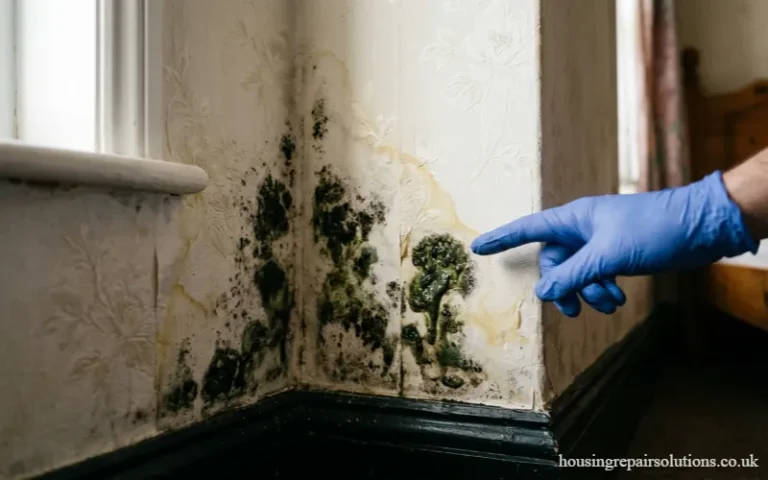

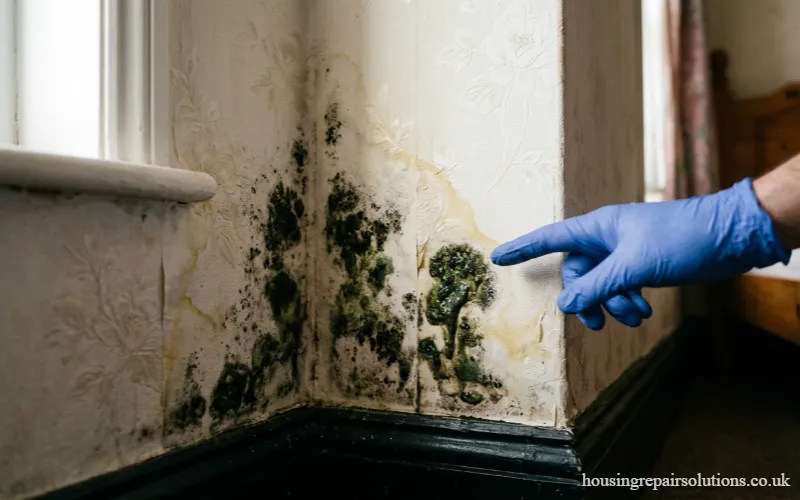
You might think mould is easy to spot: black patches crawling across the bathroom ceiling or dark staining around the window frame. In flats and apartments, however, the earliest signs of mould in apartment living are often far more subtle. They hide behind furniture, under flooring, or inside built-in wardrobes. In our experience across thousands of UK rental inspections, the warning signs appear long before visible spores take hold. If you catch them early, you can protect your health and your legal rights as a tenant.
Snippet Winner: 8 Signs of Mould Every Apartment Tenant Must Check
| Sign | What to Look For | Where to Check First |
|---|---|---|
| Musty or earthy smell | Persistent damp, soil-like odour that air fresheners won’t mask | Behind wardrobes, under carpets, inside cupboards |
| Discolouration on walls or ceilings | Grey, yellow, brown, or faint green stains; not always black | External walls, corners near windows, ceiling edges |
| Peeling, bubbling, or flaking paint | Paint or wallpaper lifting, blistering, or cracking | Lower walls near skirting boards, bathroom ceilings |
| Damp patches that don’t dry | Cold-to-touch patches, dark stains that persist after heating | External walls, chimney breasts, around pipework |
| Condensation on windows | Water droplets or fogging on the inside of glazing, especially mornings | Bedroom and living room windows, patio doors |
| Fuzzy or slimy surface texture | White, green, black, or orange growth that feels damp to touch | Window seals, silicone around bath/shower, behind furniture |
| Health symptoms that improve outdoors | Sneezing, itchy eyes, cough, or blocked nose that eases when you leave | Track symptoms: note which room triggers them |
| Musty clothes in wardrobes | Fabrics smell damp; shoes or leather goods develop white bloom | Fitted wardrobes on external walls, under-bed storage |
If any of these sound familiar, do not dismiss them as “just condensation.” They are your apartment telling you there is a moisture problem, and where there is persistent moisture, mould is either already growing or about to.
The Musty Smell: Your Earliest Warning Sign
In our experience, a persistent musty or earthy smell is the single most overlooked sign of a hidden mould problem. You walk into your flat and notice a damp, stale odour that lingers no matter how much you clean. It might be stronger in one room, or you might only notice it when you open a wardrobe or cupboard.
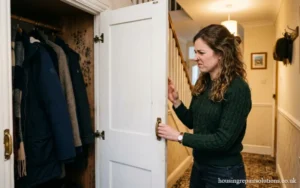
That smell comes from mVOCs (microbial volatile organic compounds), which mould releases as it grows and multiplies. The odour travels through the air even when the mould colony itself is completely hidden behind wallpaper, inside wall cavities, or under floorboards. A 2025 survey by Homebase found that behind furniture and in poorly ventilated corners are among the top hidden mould hotspots in UK homes. If you can smell it, you can be confident there is a damp problem somewhere, even if you cannot see it yet. The Housing Ombudsman specifically lists musty smells as a valid reason to report damp and mould to your landlord immediately.
Visual Signs You Can See Right Now
Once moisture has built up for several weeks, visible clues start appearing. Walk through each room slowly, paying close attention to surfaces you normally ignore.
Black, green, white, or grey patches are the classic visual giveaway. Mould often starts as tiny specks that look like pepper or soot before spreading into larger fuzzy or slimy colonies. However, mould is not always black. We have identified green Aspergillus on window frames, white Penicillium on leather sofas, and orange-pink mould around bathroom tiles. The colour alone does not tell you whether it is dangerous. What matters is the amount and how long it has been there.
Peeling wallpaper and blistering paint are equal warning signs. When moisture gets trapped beneath the surface, it breaks the adhesive bond, causing paper to lift at the seams and paint to bubble or flake. Pay particular attention to the lower edges of walls above skirting boards and to corners where external walls meet the ceiling. Damp patches that feel cold to the touch and never fully dry out, even with the heating on, point to penetrating damp or rising damp rather than simple condensation. Those patches need a professional diagnosis, not a wipe-down with bleach. The NHS explicitly warns that living with untreated damp significantly raises the risk of respiratory illness, especially for children and the elderly.
Hidden Hotspots: Where Mould Hides in Apartments
Apartments and flats present unique challenges because of shared walls, limited ventilation, and compact layouts. Over years of inspections, we have found the same hidden hotspots causing problems across every type of rental property.
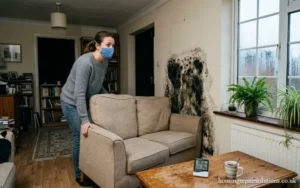
Behind furniture and fitted wardrobes on external walls is the number one hiding place. When a wardrobe or large sofa sits flush against a cold outside wall, it traps still air and creates a pocket where condensation never fully evaporates. In one Camberwell flat we investigated, the tenant had complained of a musty bedroom smell for two winters. When we removed the fitted wardrobe, installed against a solid brick external wall, the plasterwork behind it was covered in Cladosporium and Aspergillus. There was no leak or penetrating damp. The furniture had simply turned a manageable cold wall into an unventilated moisture trap.
Under carpets and laminate flooring is another hidden hotspot. Mould that starts beneath flooring can spread for months before staining becomes visible on the surface. You may notice a spongy feeling underfoot or a persistent musty smell at floor level. Lift a corner of the carpet near external walls or windows if you suspect a problem. Behind washing machines, under kitchen sinks, and inside bathroom vanity units are also prime spots because even a tiny, unnoticed drip from a supply pipe or waste seal can create the constant moisture that mould needs.
Health Symptoms That Signal Hidden Mould
Sometimes the first sign is not something you see or smell. It is something you feel. We have met tenants who told us they felt fine at work or outdoors but developed a cough, itchy eyes, or a blocked nose within an hour of getting home. That pattern is a strong indicator of an indoor air quality problem, and in UK flats, hidden mould is one of the most common causes.
The NHS has set out clearly that mould produces allergens, irritants, and sometimes toxic substances. Inhaling or touching spores can trigger sneezing, a runny nose, red eyes, and skin rashes. For people with asthma, it can cause severe attacks. Mould can also worsen eczema and has been linked to fungal skin infections. Babies, young children, elderly people, and anyone with a weakened immune system or pre-existing chest condition face the highest risk. If your symptoms consistently improve when you leave your apartment and return when you get back, do not ignore your body. Tell your GP and mention you suspect mould at home. This creates a medical record that can be essential evidence if you need to bring a housing disrepair claim later.
What to Do Immediately: Your Tenant Checklist
If you have spotted any of the signs above, act quickly. Delay allows the mould to spread and can weaken your legal position.
| Step | Action | Why It Matters |
|---|---|---|
| 1 | Photograph everything with date stamps | Creates evidence of the condition as it is right now |
| 2 | Write down when you first noticed each sign and any health symptoms | Establishes a timeline linking the mould to your wellbeing |
| 3 | Report the issue to your landlord or letting agent in writing | Triggers their legal duty to investigate under the Landlord and Tenant Act 1985 |
| 4 | Keep all emails, texts, and letters | Proves you reported the problem and how the landlord responded |
| 5 | Do not paint over or bleach large patches before inspection | Hiding the evidence can weaken any future claim |
| 6 | If you are in social housing, cite Awaab’s Law | Your landlord must investigate significant damp and mould within 10 working days |
Under the Landlord and Tenant Act 1985, your landlord has a legal duty to keep the structure and exterior of the property in repair, including addressing damp and mould caused by disrepair. If the mould is due to a leaking pipe, failed damp-proof course, missing roof tile, or broken extractor fan, the responsibility sits squarely with them. If you have already reported the problem and your landlord is not acting, you can read our guide to landlord mould responsibility and your rights to understand the next steps.
Your Legal Protections: Awaab’s Law and Beyond
The legal landscape for tenants facing damp and mould has been transformed. The most significant change is Awaab’s Law, which came into force in England on 27 October 2025 for the social housing sector. Under this law, social landlords must investigate emergency hazards and make homes safe within 24 hours. For significant damp and mould hazards, they must investigate within 10 working days and complete the repair work within a further 5 working days. Landlords must also provide a written summary to tenants within 3 working days of completing the investigation. If repairs cannot begin within these timeframes, work must physically start within 12 weeks, and where appropriate, alternative accommodation must be offered at the landlord’s expense.
Awaab’s Law currently applies to social housing in England and Wales. The government has confirmed it will be extended to the private rented sector in phases through 2026 and 2027. In Scotland, equivalent legislation (the Investigation and Commencement of Repair (Scotland) Regulations 2026) will come into force from 6 October 2026, requiring landlords to investigate damp and mould and start repairs within set timescales.
Private tenants also have strong existing protections. Damp and mould are classified as Category 1 hazards under the Housing Health and Safety Rating System (HHSRS). That means the local authority can serve improvement notices and, in serious cases, issue fines of up to £30,000 against landlords who fail to act. If your landlord has ignored your reports, you may be entitled to claim compensation. Our housing disrepair claim guide walks you through the full process.
When to Call a Professional Damp Surveyor
If the mould keeps returning after cleaning, or if you can smell it but cannot find it, you may need a professional damp survey. A qualified surveyor uses tools you do not have at home: moisture meters, thermal imaging cameras, and hygrometers that detect humidity inside walls. Some specialists also offer qPCR DNA mould swab testing, which identifies microscopic spores invisible during a normal visual inspection.
A full damp survey on a two-bedroom flat typically costs between £150 and £400, depending on the property size and your location. More comprehensive surveys with thermal imaging can range from £400 to £800 for multi-room assessments. In our experience, this is money well spent. An accurate diagnosis prevents you from spending on the wrong fix. If your landlord is the one arranging the survey, check that the surveyor is accredited by RICS or the Property Care Association.
Frequently Asked Questions