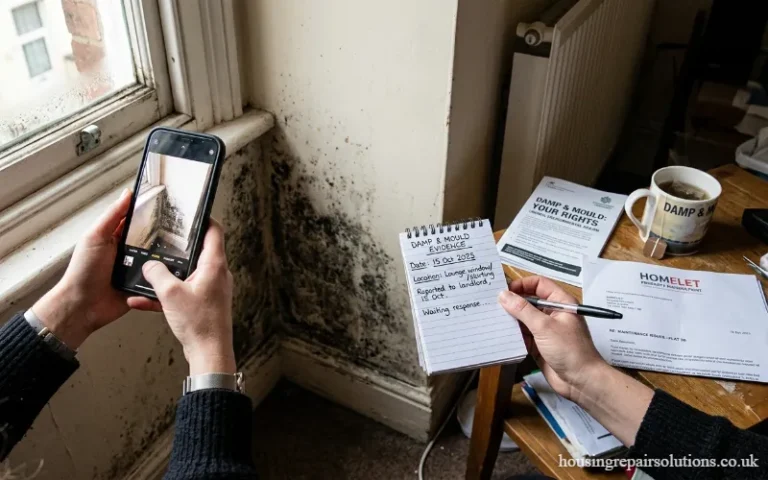


Facing eviction is one of the most stressful experiences a renter can go through. Whether you are being evicted by a private landlord, a housing association, or a council, a single pressing question dominates: Will I have somewhere to live? The honest answer depends on your circumstances, the reason behind the eviction, and how quickly you act. This guide explains the eviction process, your legal rights, and the housing options available to you so you can take the right steps before it is too late.
What Does Eviction Mean and What Happens When You Are Evicted?
Eviction means a landlord legally removes a tenant from a rented property. Being evicted does not happen overnight. UK landlords must follow a formal legal process before a tenant is required to leave. Understanding each stage of the eviction process helps you know your rights and where to act.
The Eviction Process at a Glance
| Stage | What Happens | Your Action |
| 1. Notice Served | Landlord issues Section 21 or Section 8 notice | Read the notice carefully; check if it is valid |
| 2. Notice Period | You have a set time to vacate (usually 2 months) | Contact the council and seek legal advice immediately |
| 3. Court Order | Landlord applies to court if you do not leave | Attend court; you may be able to challenge |
| 4. Bailiff Enforcement | Court sends bailiffs to enforce possession | Contact council for emergency housing support |
Types of Eviction: Section 21 vs Section 8
There are two main legal routes a landlord can use to evict a tenant in England. Knowing the difference is critical because it affects whether you can challenge the eviction and how the council will treat your housing application.
| Feature | Section 21 (No-Fault Eviction) | Section 8 (Fault-Based Eviction) |
| Reason Required? | No reason needed | Yes — specific legal grounds required |
| Common Cause | Landlord wants property back | Rent arrears, property damage, anti-social behaviour |
| Notice Period | Typically 2 months | 2 weeks to 2 months depending on ground |
| Can It Be Challenged? | Yes, if notice is procedurally invalid | Yes, on legal grounds |
| Council View | Treated as no fault; more sympathetic | May be treated as intentional if rent arrears |
What Is a No-Fault Eviction?
A no-fault eviction occurs when a landlord asks you to leave without any wrongdoing on your part. In England, this is carried out using a Section 21 notice. Landlords can use this to reclaim their property, for example to sell it or move back in, without giving a specific reason. Many tenants find themselves in the difficult position of being evicted by a private landlord through this route despite paying rent on time and maintaining the property.
If you receive a Section 21 notice, you should check whether the notice is legally valid. Common grounds for challenging it include the landlord failing to protect your deposit, not providing a valid EPC or gas safety certificate, or the property having serious disrepair issues. If the landlord has neglected repairs, you may also have the right to make a housing disrepair claim.
Will the Council Rehouse You After Eviction?
This is the most pressing question for anyone facing eviction. Local councils in England have a legal duty under the Housing Act 1996 (as amended by the Homelessness Reduction Act 2017) to assist people who are homeless or at risk of becoming homeless within 56 days. However, council rehousing after eviction is not automatic. The council will assess you against three key tests.
The Three Tests for Council Rehousing
1. Are You Legally Homeless?
You are considered legally homeless if you have nowhere safe to go when your tenancy ends, your home is genuinely uninhabitable due to severe disrepair, or you are at risk of losing your home within 8 weeks. Receiving a valid Section 21 or Section 8 eviction notice is typically enough to trigger a homelessness assessment.
2. Are You in Priority Need?
Councils must secure accommodation for homeless applicants who fall into a priority need category. These include:
- Families with dependent children
- Pregnant women
- People who are vulnerable due to age, disability, or serious health conditions
- Victims of domestic abuse or violence
- People made homeless through fire, flood, or other emergency
- Individuals with mental health conditions that make them vulnerable
3. Were You Intentionally Homeless?
If the council decides you caused your own homelessness, they can significantly limit the help they provide. Intentional homelessness is usually found where you accumulated rent arrears without good reason, refused a reasonable offer of housing, or deliberately broke your tenancy agreement. Being evicted through no fault of your own, such as via a Section 21 notice, means you are far less likely to be classed as intentionally homeless.
What Help Can the Council Actually Provide?
| Type of Help | Who Qualifies | What You Get |
| Prevention Duty | Threatened with homelessness within 56 days | Mediation, financial help, housing advice |
| Relief Duty | Already homeless | Active assistance finding accommodation for 56 days |
| Main Housing Duty | Homeless, priority need, not intentionally homeless | Temporary or longer-term accommodation secured |
| Emergency Housing | Homeless tonight with nowhere to go | Emergency bed and breakfast or hostel placement |
What If You Are Evicted From a Council House or Housing Association?
The question of what happens if you get evicted from a council house is different from private sector eviction. If you are a council tenant, the council is both your landlord and the body responsible for rehousing. This creates a conflict, but you still have legal protections.
Can a housing association evict you? Yes. Housing associations follow a similar eviction process to private landlords and can apply for possession through the courts. Housing association eviction policy typically sets out clear grounds, including rent arrears, anti-social behaviour, and tenancy breaches. If you are facing eviction from a housing association, you should request a copy of their eviction policy and check whether the correct process has been followed.
If you are evicted from a council house due to serious rent arrears or anti-social behaviour, the council can treat you as intentionally homeless, making it much harder to secure rehousing. However, if the eviction was due to circumstances beyond your control, such as a domestic abuse situation or a mental health crisis, you may still qualify for housing support.

Getting Evicted and Nowhere to Go: Your Immediate Steps
If you are getting evicted and have nowhere to go, acting fast dramatically improves your options. Do not wait until the bailiff is at the door.
Step 1: Contact Your Local Council Immediately
You do not need to wait until you are actually homeless. As soon as you receive an eviction notice, contact your council’s housing department. Under the Homelessness Reduction Act, they must begin helping you as soon as you are threatened with homelessness within 56 days. Waiting until the last minute reduces the time they have to find solutions.
Step 2: Check Your Eviction Notice for Errors
Many Section 21 notices are invalid due to procedural mistakes. A housing solicitor or Citizens Advice can check whether your landlord has complied with all legal requirements. If the notice is flawed, it buys you more time and may even result in the eviction being stopped entirely.
Step 3: Seek Legal Advice
Contact Shelter UK, Citizens Advice, or a local housing solicitor. They can help you understand whether you can challenge the eviction, whether you qualify for council rehousing, and whether a housing disrepair claim is appropriate if your landlord failed to maintain the property.
Step 4: Explore All Housing Options After Eviction
Housing options after eviction are broader than most people realise. In addition to council housing, consider:
- Applying to local housing associations for affordable rental schemes
- Looking at private rentals where housing benefit is accepted
- Checking whether a Discretionary Housing Payment can cover a deposit
- Asking family or friends whether a temporary stay is possible while you secure new housing
- Registering with housing charities who provide supported accommodation
Can the Council Evict You?
Yes, the council can evict you if you are a council tenant and you breach your tenancy agreement. Common reasons include persistent rent arrears, anti-social behaviour affecting neighbours, subletting without permission, and using the property for illegal purposes. Council evictions follow the same legal process as private landlord evictions and require a court order before possession can be taken.
If you receive an eviction notice from the council as your landlord, you should seek immediate legal advice. You may be able to negotiate a repayment plan for arrears, apply for hardship funds, or challenge the eviction in court depending on the grounds being used.
Quick Reference: Eviction Scenarios and Council Rehousing Likelihood
| Eviction Scenario | Priority Need? | Likely Council Help |
| Section 21 no-fault eviction, family with children | Yes | High — full housing duty likely |
| Section 8 for rent arrears, single person, no vulnerability | Unlikely | Limited — may be classed as intentionally homeless |
| Evicted by housing association, disability present | Yes | High — vulnerability increases priority |
| Council tenant evicted for anti-social behaviour | Assessed individually | Lower — intentional homelessness possible |
| No-fault eviction, pregnant woman | Yes | High — pregnancy is priority need |
Conclusion
Whether the council will rehouse you after eviction depends on your individual circumstances, including the type of eviction, whether you are in priority need, and whether the council considers you intentionally homeless. The good news is that acting early gives you the best chance of securing support and finding stable housing options after eviction.
If you are currently facing eviction and believe your landlord has failed to maintain the property properly, you may also have grounds for a housing disrepair claim. Poor housing conditions should never be used against you, and the law provides clear routes to hold landlords to account.
For personalised housing advice or to explore whether a disrepair claim could support your case, visit our housing repair solutions page or contact our team directly.