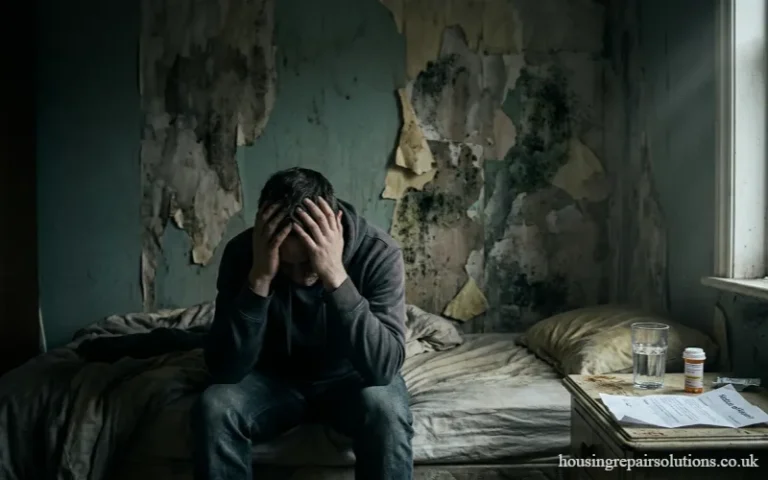

When you spot dark patches spreading across a wall or ceiling, you are right to ask, is mould in your home dangerous enough to worry about immediately? The short answer is yes, it can be. We have walked into homes across the UK where residents had been living with toxic black mould for months without realising the damage it was doing to their lungs, skin, and immune systems. Is mould in your home dangerous only if you have asthma? Absolutely not. The health risks extend far beyond what most people assume, and the legal duties on landlords are far stronger than many tenants believe.
In our experience dealing with damp and mould problems in properties from Edinburgh tenements to London flats, the question is mould in your home dangerous often comes up only after someone in the household has already become unwell. That is a dangerous delay. Black mould dangers include chronic respiratory conditions, severe allergic reactions, and in some cases, life-threatening infections for vulnerable people. The truth about mould health risks UK residents face is that no amount of visible mould is safe to ignore.
If you are a tenant living with damp and mould that your landlord refuses to treat, you may be entitled to claim compensation. Our guide on damp and mould claims explains the full process.

| Health Risk Category | At-Risk Groups | Severity |
|---|---|---|
| Respiratory infections and worsened asthma | Children, elderly, asthmatics | High |
| Allergic reactions (sneezing, skin rashes, eye irritation) | Anyone exposed daily | Moderate to High |
| Mycotoxin poisoning from toxic black mould | Those with prolonged exposure to Stachybotrys | Severe (rare but documented) |
| Fungal infections (aspergillosis) | Immunocompromised individuals | Critical |
What Types of Mould Are Most Dangerous in UK Homes
Not all mould is equally hazardous, but answering is mould in your home dangerous means knowing which type you are dealing with. In UK properties, the following species are the most concerning.
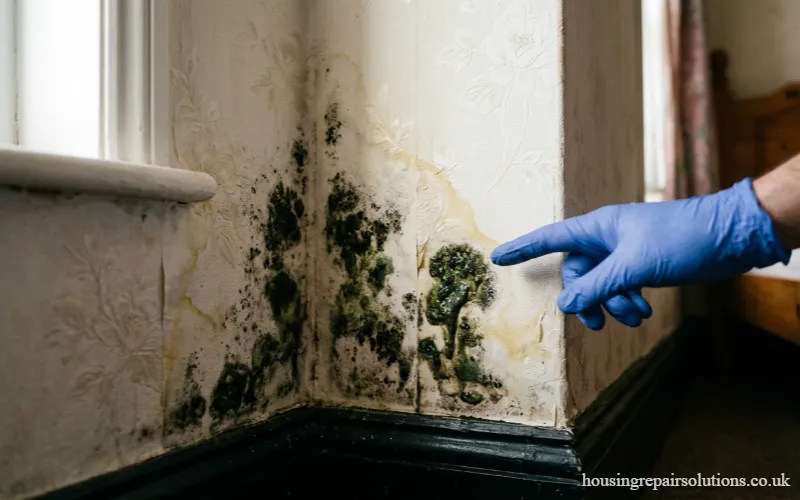
Stachybotrys chartarum (toxic black mould). This is the one that generates headlines. It produces mycotoxins that can cause serious neurological and respiratory symptoms. It thrives on consistently damp cellulose materials like plasterboard, wallpaper, and ceiling tiles. If you see slimy black patches that smell musty, treat them as an immediate health risk.
Aspergillus. Common in damp homes, Aspergillus can cause aspergillosis in people with weakened immune systems or pre-existing lung conditions. It appears as a powdery green or grey growth on walls, insulation, and old food.
Penicillium. Often blue or green, Penicillium spreads rapidly on water-damaged materials. It can trigger severe allergic reactions and is a known asthma trigger in children.
Cladosporium. This is a dark green or black mould that grows on damp window frames, carpets, and soft furnishings. It is a major cause of respiratory allergies in UK homes.
If you are facing any of these, and your landlord has failed to take action, you are likely dealing with a statutory nuisance. Our housing disrepair specialists regularly assist tenants in exactly this situation. See our full list of housing disrepair issues we handle to understand your rights.
Is Mould in Your Home Dangerous? The Specific Health Risks
When we ask, is mould in your home dangerous, we are really asking what it does to the human body over weeks, months, and years of exposure. The NHS UK recognises several mould-related conditions that are frequently seen in primary care across the country.
Respiratory problems. Inhaling mould spores causes inflammation in the airways. For asthmatics, this can trigger severe attacks. Even in previously healthy individuals, prolonged exposure can lead to a persistent cough, wheezing, and shortness of breath. Children growing up in damp, mouldy homes are statistically more likely to develop asthma.
Allergic reactions. Mould spores act as allergens. Symptoms include a runny nose, red and itchy eyes, sneezing, and skin rashes. These symptoms often worsen at night or first thing in the morning because spore concentrations are higher in poorly ventilated bedrooms.
Immune system suppression. People undergoing chemotherapy, organ transplant recipients, and those with HIV/AIDS are at extreme risk. For these groups, is mould in your home dangerous becomes a life-and-death question because aspergillosis can become invasive and fatal.
Mental health deterioration. Living in a mouldy home is demoralising. The smell, the unsightly patches, and the constant worry about health create chronic stress. We have seen tenants develop anxiety and depression directly linked to the poor condition of their property.
Toxic effects. Mycotoxins from black mould are linked, though less commonly, to neurological symptoms including memory loss, confusion, and chronic fatigue. While these cases are rare, they are devastating when they occur.
If a mould problem has already caused you or a family member to become ill, you may be able to pursue a personal injury from housing disrepair claim. Do not assume you have no recourse.
The Legal Position: Landlords Must Protect You
If you rent your home, the law is clear. Is mould in your home dangerous enough to be your landlord’s legal problem? Yes, almost certainly. Under the Landlord and Tenant Act 1985, Section 11, landlords are required to keep the structure and exterior of the property in repair, including the roof, walls, windows, and drainage. If defective structure is causing damp and mould, the landlord must fix it.
The Housing Health and Safety Rating System (HHSRS), which operates under the Housing Act 2004, classifies damp and mould as a Category 1 hazard if it poses a serious threat to health. Local councils have a duty to inspect properties reported to them and can issue improvement notices, emergency remedial action, or prohibition orders.
The Environmental Protection Act 1990 also comes into play. If mould growth constitutes a statutory nuisance, meaning it is prejudicial to health or a nuisance, the council can force the landlord to act.
We have supported tenants across the UK who have had to live in mouldy conditions for far too long. If you are in social housing, our council housing disrepair claims page explains how to get the council to act. For private tenants, our guide for tenants on housing disrepair claims sets out the steps you can take.
How Quickly Should a Landlord Remove Dangerous Mould
The question is mould in your home dangerous takes on a new urgency when you consider timescales. Landlords have a legal responsibility to act without unreasonable delay. What that means in practice depends on severity.
For less acute cases, repairs should be investigated within 14 days, with work starting within a further 7 days where a hazard exists. This is not best practice guidance. It is the minimum expected under the law.
If you have been waiting weeks or months and nothing has been done, you are not powerless. Our housing disrepair compensation calculator can help you estimate what you might be owed.
The Underlying Causes of Dangerous Mould in UK Properties
To fully answer is mould in your home dangerous, we need to understand why it grows in the first place. In UK properties, the causes are almost always a combination of moisture and poor ventilation, but structural defects are the most common culprit.
Penetrating damp. Water entering through leaking roofs, damaged gutters, cracked render, or faulty window seals soaks into walls and creates the perfect environment for black mould. Our roof windows gutters drains claims page covers the repairs that should be done.
Rising damp. Missing or failed damp-proof courses allow ground moisture to rise through brickwork. This type of damp is particularly destructive and often leads to toxic mould growth at the base of walls.
Condensation. This is the most common source of mould in UK homes, but that does not mean it is always the tenant’s fault. Poor insulation, inadequate heating systems, and lack of mechanical ventilation in a property can make condensation inevitable, no matter how often windows are opened. Landlords are responsible for providing adequate heating and ventilation.
Leaks and flooding. Burst pipes, leaking appliances, and flooding create immediate and severe damp problems. If the property was not properly dried out afterwards, mould will follow. If you have experienced water damage that your landlord failed to remediate, our flooding and water leak claims page explains your options.
Structural defects. Cracks in walls, failed cavity wall ties, and defective roofing all let water in. These are always the landlord’s responsibility to repair. See our structural defects claims guide for more information.
For social workers and housing officers helping vulnerable tenants, we offer a dedicated resource at our page for social workers, schools, and charities.
How Much Does Professional Mould Removal Cost in the UK
If you own your home, the cost of tackling dangerous mould falls on you. The following table represents average UK prices for professional mould remediation.

| Mould Removal Service | Typical Cost (GBP) | What It Includes |
|---|---|---|
| Small area treatment (up to 1m²) | £150 to £300 | Antifungal wash, stain block, redecoration |
| Medium area (whole wall, 1–4m²) | £400 to £800 | Full removal of affected plaster, antifungal treatment, replastering |
| Whole room remediation | £800 to £1,800 | Multiple walls, ceiling, underfloor inspection, full treatment and restoration |
| Full property damp and mould survey | £250 to £500 | Independent surveyor report with cause identification and remediation plan |
| Ventilation system installation (PIV unit) | £600 to £1,200 | Positive input ventilation unit supply and installation |
| Air quality mould spore testing | £80 to £200 | Lab analysis of air or swab samples to identify mould species |
If the mould in your home is the result of a landlord’s failure to repair, you should not be paying these costs. Start by reporting the issue formally. If you get no response, we can help. Contact us to discuss your situation.
How to Identify If Mould in Your Home Is Dangerous Right Now
Even before professional help arrives, there are ways to assess the severity. Ask yourself these questions.
-
Does the mould have a strong, musty, earthy smell that does not disappear with ventilation?
-
Is the affected area larger than one square metre?
-
Is the mould slimy, black, or dark green rather than dry and powdery?
-
Has anyone in the household developed new or worsening respiratory symptoms, unexplained rashes, or chronic fatigue?
-
Is the mould returning within days of being cleaned?
If you answered yes to two or more of these, is mould in your home dangerous is no longer a question. It is a fact. You need professional intervention now.
If you are a leaseholder and the freeholder is responsible for the building structure but refuses to address a damp problem, our leaseholder disrepair claims page explains your legal position.
Steps to Take Immediately if You Have Dangerous Mould
While waiting for a permanent fix, these actions can reduce the immediate health risk.
First, do not touch or disturb the mould. Brushing or vacuuming it releases millions of spores into the air. If you must clean a small area as a temporary measure, wear a mask, goggles, and gloves, and dampen the mould first to minimise airborne particles.
Second, ventilate the room as much as possible without spreading spores to other parts of the house. Keep the door closed and open windows. Use a dehumidifier if you have one.
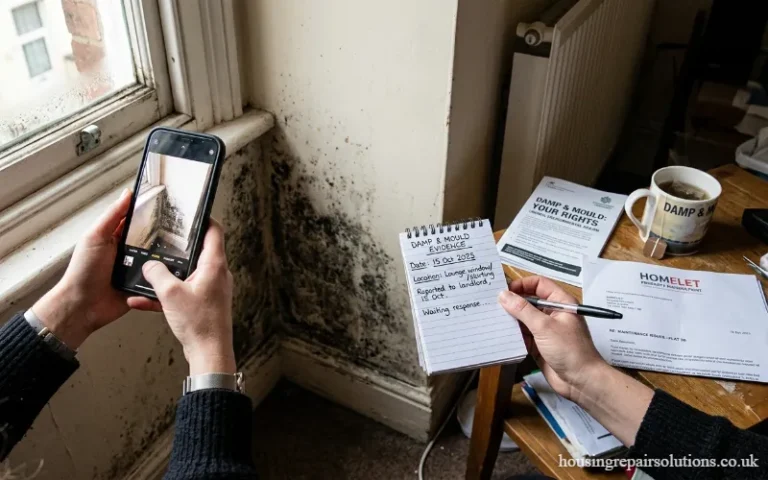
Third, document everything. Take dated photographs of the mould and any water damage. Keep copies of all correspondence with your landlord or letting agent. This evidence is crucial if you later need to pursue a no win no fee claim.
Fourth, contact your local council’s environmental health team if the landlord does not respond within 14 days. They have the legal power to compel action.
We have seen cases where dangerous mould has spread behind furniture and wallpaper for months, undetected until a child was hospitalised. Do not wait for a crisis. Our blogs contain further real-world advice from the cases we have handled.
Common Myths About Mould That Put UK Residents at Risk
Several dangerous misconceptions circulate among UK tenants and even some landlords. We need to address them directly because believing them can make you seriously ill.
Myth: “A bit of mould is normal in old British houses.”
Reality: While condensation is common, visible mould growth is never acceptable. The HHSRS sets a clear standard: any mould that poses a health risk is a Category 1 hazard.
Myth: “Just paint over it with anti-mould paint.”
Reality: Painting over active mould without treating the underlying damp is like putting a plaster on a broken leg. The mould grows straight through the paint.
Myth: “It is the tenant’s fault for not ventilating enough.”
Reality: If the property lacks adequate heating, insulation, or mechanical ventilation, no amount of window-opening will prevent condensation. The landlord has a duty to provide a property you can keep warm and dry.
Myth: “Black mould is the only dangerous type.”
Reality: All indoor mould exposure can harm health. Aspergillus and Penicillium are significant allergens and pathogens.
The Link Between Spray Foam Insulation and Dangerous Mould
A growing problem we are seeing across the UK is severe mould and rot caused by incorrectly installed spray foam insulation. While marketed as an energy-saving solution, spray foam can trap moisture in roof timbers, leading to widespread fungal decay and dangerous mould growth inside the loft space.
The mould spores from a rotting loft can filter down into the living spaces below. If your property has spray foam insulation and you are now experiencing unexplained damp or health symptoms, this may be the cause. Our spray foam insulation claims page explains the problem and how to seek redress.
We have also seen cases where pest infestations have contributed to damp and mould problems. Rodents can damage pipework and ventilation, creating moisture sources. If pests are part of your disrepair situation, see our rodent pest infestation claims page.
A Mould-Free Home Is a Legal Right, Not a Luxury
Is mould in your home dangerous enough to justify compensation for the suffering it causes? The courts across the UK have repeatedly said yes. Tenants have been awarded thousands of pounds in damages for respiratory illness, ruined belongings, and the stress of living in a hazardous property.
If you are a homeowner, the danger is financial as well as physical. Untreated damp and mould devalue your property and make it far harder to sell. Mortgage lenders may refuse to lend on a property with a known damp problem.
We have helped thousands of residents hold landlords, councils, and housing associations to account. Our track record is documented in our reviews. To understand more about who we are and how we operate, visit our Who Are We page.
If you are concerned about your right to light being affected by mould remediation or other property works, see our right to light claims information.
The Statutory Nuisance Threshold for Mould
Under the Environmental Protection Act 1990, a statutory nuisance is defined as any matter that is prejudicial to health or a nuisance. Damp and mould that cause significant health effects clearly meet this threshold.
Local authorities must investigate complaints and, if the mould constitutes a statutory nuisance, issue an abatement notice requiring the landlord to carry out works. Failure to comply with an abatement notice is a criminal offence and can result in prosecution and a fine of up to £5,000 for domestic premises.
We have supported tenants through this process from initial complaint to tribunal. If you need to understand the claims process from start to finish, contact us for a free, confidential discussion.
Frequently Asked Questions
A Final Word on Mould and Your Health
Is mould in your home dangerous? After everything we have seen in properties across the UK, we answer that question with an unequivocal yes. It damages lungs, triggers asthma, depresses immune systems, and makes homes uninhabitable. No one should have to live with it.
If your landlord has left you living in a mould-infested property, you have rights that are worth enforcing. Our no win no fee solicitors have recovered significant compensation for tenants just like you. Start by reading our boilers and electrics claims page if your mould problem stems from a faulty heating system, or visit our archive for more case studies and guidance.
Your home should be a safe space. If it is not, we are here to help change that.